So much song and dance over the APC’s Presidential Campaign Council, by Rotimi Fasan
It is not quite clear if the ruling All Progressives Congress party has indeed withdrawn the membership list of its Presidential Campaign Council for the January 16, 2027 elections. What is not in doubt is that the list has run into a storm of criticism in which certain members of the opposition parties have taken the lead. […]

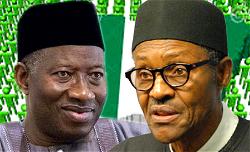

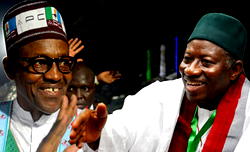
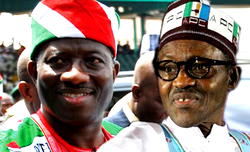
Did I hear Buhari does not want to debate Jonathan?
These are political times and like in a war the first casualty is truth. There have, in the last few days and the many weeks leading to the February 14 presidential election, been a whole lot of untruths being peddled out there as the Gospel, and that too in the name of God. Not even so-called men and women of God who have become more partisan than the politicians they are ranged behind are exempt.
When are the 2015 presidential debates?
ONE of the cherished traditions of developed democracies is the creation of fora for contestants to public office to sell their programmes to the electorate before live audiences. Contestants present their party’s manifestoes and planned activities on attaining power in form of debates that are often transmitted live to audiences via the broadcast media. These events are organized and moderated by select members of the mass media and others, not party partisans. This is especially the case for contestants to high offices like that of president. Since the 1960s, no presidential election takes place in America without a presidential debate. It is just a convention of American democracy that is now widely accepted and practiced the world over. It may not be a constitutional requirement but no candidate into elective office who wishes to be taken seriously spurns it.
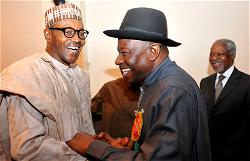
‘Issue-based’ campaign? When, where?
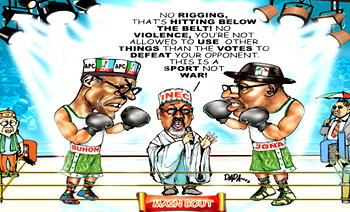
ONE can say that the general feeling among Nigerians, even without the benefit of a survey or an opinion poll, is that the February elections will be violent. Those who say this or think this way are not without their reasons. History tells us so. Our recent political experience confirms it. Even now, the fault lines are already manifesting. There have been violent skirmishes among supporters of the leading political parties in different parts of the country. Campaign posters have been torn. Party offices have been invaded, houses have been burnt and lives have been lost.
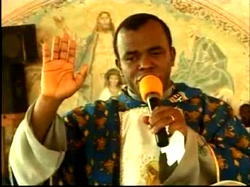
Other side of Rev. Father Mbaka’s prayer
REPORTS of Rev. Father Ejike Mbaka’s New Year’s Eve sermon had for a short while been generating excited responses in the media before I looked to know what it was all about. I didn’t think it worth my while to pay attention to yet another religious leader making one of their increasingly forgettable remarks on Nigerian politics and the February elections. I could see that the Rev. Father was supposed to have made what appeared to be this explosive remark at one Adoration Ground.
A prayer for my land
IN just over a month, Nigerians will be going to the polls to elect a new president. Even though the stakes are quite high it does not look like a presidential election is around the corner. The campaign period seems all too short. More so for President Goodluck Jonathan whose presidency seems to be running on oxygen for the few weeks left, with little room to manoeuvre to say nothing of convincing the alienated voter.