
Saying it as it is (3)
By Douglas Anele Many Nigerians are wondering why more than three weeks since the current fuel scarcity began nobody has been sanctioned. Maybe what is playing out is the sacred cow syndrome in which certain individuals because of their connections with people in power can do anything and get away with it, which is why […]







Femi Aribisala and his errand boy God
In his essay entitled “The God Who Does Not Exist”, published in Sunday Vanguard of March 31st, Pastor Femi Aribisala responded to an article I wrote several months ago in which I declared arguments for the existence of an intelligent divine creator or First Cause invalid. More pointedly, I defended my conviction that God does not exist, and cited briefly the views of some philosophers and scientists to back my claim. I would have ignored Aribisala’s opinionated response, but doing so might create the erroneous impression in the minds of readers that probably he is right or that I find his arguments (insofar as he marshalled any) so compelling that I decided, as the old idiom says, “to let the sleeping dogs lie”.
Demise of the eagle on the tallest Iroko tree
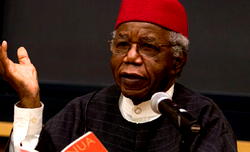
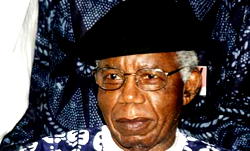
Having concluded the discourse on “The trouble with Nigerians,” it is time to pay tribute to the recently-departed icon of African literature, Prof. Chinualumogu Albert Achebe. Of course, the heading of that discourse was cloned from the title of Achebe’s pamphlet, The trouble with Nigeria, and a few of his views were used to buttress some major points made therein. Achebe was an accomplished intellectual, Africanist, humanist and teacher.

The trouble with Nigerians (3)
This means that the President will make more decisions that, in his own calculations and those of his ardent supporters who are benefiting from the present situation, will bolster his reelectability inspite of how Nigerians will vote in 2015. Now, if the promises President Jonathan made to Nigerians when he was campaigning for election in 2011 are compared with his actual performance, campaigning for a second term would be suspect because he has not delivered on most of those promises.
The trouble with Nigerians (2)
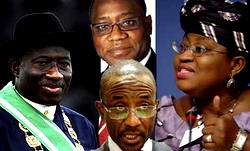
Therefore, in my opinion, the most important challenge for Jonathan is not ethnic inequality per se in the distribution of key positions, but to justify his choices on the criteria of excellence and performance in spite of ethnicity.
The trouble with Nigerians (1)
In his thought-provoking riposte on Nigeria entitled The Trouble with Nigeria, Prof. Chinua Achebe explained that the principal reason for the horrible state of affairs in the country has nothing to do with geography or climate or the kind of food Nigerians eat. Rather, he says, the trouble with Nigeria is the recurrent blizzard of mediocre and corrupt leadership.