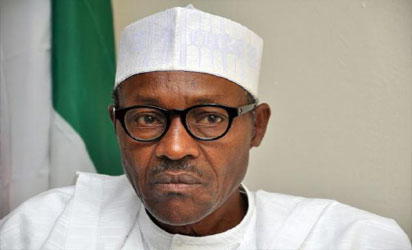
President Muhammadu Buhari
By Morenike Taire
Long before the modern people of Northern Nigeria came to be associated with herds of cattle running rampage and destroying farms across the country (a complete mis-categorization), they had been associated with portable transition radios. Without regard for religion, education, creed or class, the transition radio appeared to be a part of every Nigerian Northerner’s life, and the picture of a man in traditional gear with a radio on his slim shoulder became iconic long before the advent of social media.
That little machine, powered mostly by lead batteries, has remained his major link to a world he cannot see, yet agrees is important to his fortunes.
Of course his interaction with it is in the language he is most likely to understand- Hausa. Yet Northern Nigeria’s relationship with the BBC Hausa service goes beyond the region’s need to stay in the loop of the world beyond it.
The radio as the ultimate tool for mass communication has not been displaced, even as social media has sought and failed to displace it. Proliferated as mobile and handheld devices have been, the tools for listening to the radio remain in abundance, including mobile phones and tablets themselves. The ability to interact freely on social media also detracts somewhat from its influence, as opposed to the radio, on which you the listener cannot interact unless the broadcaster gives you permission.
If anyone knows this, the BBC does; and has kept the Hausa service going while it remains the number 1 go-to resource for all seeking information in Northern Nigeria. It has become the culture.
Digital communication however goes far beyond the vituperations that the constancy of social media affords. Twitter, Facebook, their cousin Instagram and their neighbours Pinterest, Youtube and GooglePlus are simply the means by which internet technology has enhanced social interactions and are by no means defining of it.
Beyond affording ordinary people the world over the stimulus which arises from being able to express their every thoughts and instincts, digital technology is also a means by which information can be manipulated beyond recognition. A video can be edited until it is no longer recognizable. Photographs can be arranged with backgrounds imposed or superimposed; they can be made brighter or darker such that those taken during the day can be mistaken for those taken in the night, or vice versa. Contexts and timings can be altered. Voices can be made slower, faster, lower, louder.

President Muhammadu Buhari
In other words, propaganda can be more efficiently achieved via social media than through radio; and both have been employed with the President’s Eid-el Fitri message to Nigeria in Hausa.
During the Jonathan administration, the First Lady, Dame Patience, had often been advised to stick to Pidgin English- which is just as widely spoken in the country as the English language- or her native Kirike/Ijaw with the assistance of an able translator rather than the constant onslaught suffered by the psyche of her listeners on account of her excessive creativity with the English language.
Neither was Aisha Buhari criticized last year when an interview went viral, which she had granted to the BBC Hausa service, warning us of the dire imminence of ‘a cabal’ taking over power from Mr. President. It had been in hhHhbghg
Hausa, and there was room for criticism, considering she is the wife of the president of the Federal Republic of Nigeria.
The trouble with the Eid-el Fitri message is not with its contents or even the language via which it was delivered- it is with the context and the contentious issues with which our nationhood currently grapples.
It is an extremely dangerous narrative regardless of the explanations that have been proffered for the publication of the president’s exchange with the BBC Hausa service, particularly taking into consideration the very fragile peace which we currently enjoy within the context of ethnic relations in the country today. If there are sections of the country which feel they have been marginalized, it is nothing short of political suicide for a leader to give the impression that only people with whom he shares a language should be communicated with at any time.
In Ambode’s Lagos State, we will give hope to children with disability
By Morenike Taire, Sola Ogundipe, Funmi Ajumobi, Anino Aganbi and Chris Onuoha
Mrs. Joyce Onafowokan is the Special Adviser on Social Development to his Excellency Gov. Akinwunmi Ambode, with the mandate to put a system in place that addresses the issue of disability in Lagos state especially in children. A certified early intervention specialist from the department of public health in the state of Massachusetts, USA, she has worked in the early intervention field for over 25 years. She has a passion and the passion arises from the phrase: “a stitch in time saves nine”.
A warm family woman and a consummate public servant, Mrs. Onafowokan has degrees from the University of Ife (now Obafemi Awolowo University), Smith University, Massachusetts, USA; as well various professional certifications.
She recently paid a courtesy call to the Vanguard where she had an interactive session with Editors. Excerpts:-
What is the governor’s position on the intervention you propose?
What the governor is passionate about is, how do we begin to treat disability especially in infancy so that when the kids grow up we can maximize their potentials? He is seeing ability in disability. My job is to help him showcase the ability in the children.
Can you elaborate on the importance of your mandate to the development of the state?
The importance of the mandate is that there are too many abandoned children that you may not know who rely on churches, individuals, some of the states. Despite all the child laws in the country, you see children on the streets begging and you want to say, how do we put a system in place that even if a mother has a child that has disability you can dream. Almost every parent has a dream for their children, whether they are disabled or not. We want to bring back the dream; we want to bring back the fact that yes, there is a disability but perhaps there is a silver lining in the cloud. We also want to begin to let families understand that a disabled child is not punishment from the lord. It’s not your mother in law; it is not your neighbour that you had a quarrel with a month ago before you had the child. Only God knows but the child is here. Yes there is a process that you have to grieve; we won’t allow you to grieve, walking with you through the grieving process into acceptance. That, ok, the child is here, what do we do? It is most times the lack of professional treatment that allows the parents to fold their arms and they abandon because they become so helpless. When they are abandoned, they become the ward of the state.
And again science tells us now that 85% of the brain is completed by age three. If 85% of our brain is completed by age 3, can we capitalize on the younger age to manipulate the brain to do what we want it to do? Can it be a situation whereby it is not as bad as it could be? I have worked with children who have cerebral palsy. Most of them are working, they are feeding themselves; even those who are on wheelchair are able to navigate the wheelchairs themselves. They are in school. There is still hope that something good can come out of it.
I have a kid now who was diagnosed by age 1 with autism but he is on his way to the University right now to study music. We determined at a very early age that music is his passion so what we did was to capitalize on his music. He does not have great social skills but he is going to be able to take care of himself. His parents have gotten to a point that they can breathe and not say “if I die, what is going to happen to him”? That is what most parents think about. What is going to happen to my child when I am no longer there? We want to give them that reprieve. We say, you know what; it is going to be okay. We will hold their hands; we will work on their skills.
How can you evaluate the progress so far?
I am very new in the country. What I have done so far is familiarizing myself with the homes that are in the system. We are talking to businesses just to remind them about their civic responsibilities to each other. I am not going to say social responsibility to the state but it is the social responsibility with each other that makes us our brothers’ keepers so that everybody can brace up and understand that disability is here to stay.
How do we create the awareness for the main people who are to benefit from such interventions to know, especially indigents in the remote parts of the city so that it doesn’t become a big deal for only the rich?
Where I come from, we typically already have something in the works for continuity. We are working with LASUTH presently. We met them to help us have a data on the exact number of people with disability, especially children and to know the level of their disabilities. To categorize by age, area and by disability, to see exactly how many kids have Down syndrome in Lagos, how many with cerebral palsy and there is also the forgotten – sickle cell anemia that nobody talks about but it is a disability because it results in seizures and from seizures something else can happen. There are those with fetal alcohol syndrome that nobody talks about; that people don’t even know about. There is a lot of malnutrition in children, if it is not taken care of and the brain is starved of fat that is needed, it may result in disability or even death.
We just heard in Europe that they place babies on vegan diet that does not give them fat for brain development.
What I am thinking about is a situation whereby we will have family centers in all the local government areas that become treatment facilities. Because if we are with you in the hood, we get to know you, we get to know your neighbours and it is easier for you to access. Again, what is really lacking is the specialists. We need specialists, speech pathologists, occupational therapists, physiotherapists and we need speech and language pathologists.
I am not talking just sign language. Sign Language is just a tool for language development. Kids whose limbs are restricted cannot sign, so we have to begin to think of other ways to give language. I have met some speech pathologists, but those I have seen are all sign language. We have to think of communicative methods that somebody else who cannot use their limbs can talk to you with. Do we begin to learn to read the eyes? Do I get to know your ‘yes or no’ from your eyes? There are picture exchanges, there are tools we can use but we need those specialists.
We are in the process of talking to Universities. I know that University of Lagos, last year, just revamped their school of special needs education. We are going to start by training Para-professionals.
If the competence is lacking, how do you plan to fill it?
We are in the process of talking to the University of Ife. Ife used to have a solid department of Education. I am going to talk to the new Pro chancellor to see how that can be revamped. To see how we can have a quick summer programme, probably 3 or 4 months that the Para-professionals can be trained at least to begin so there will be continued in- service training while the Universities begin to look into training the specialists proper.
Are you beginning from the scratch noticing it involves a lot of things? How do you create a sense of ownership judging by the fact that public initiatives are always perceived with levity? What is the state’s policy on children living with disability?
I think we have data to some point but what I have come to see is that our data is not housed here. What we want LASUTH to do is, when it is all done, a copy will be housed in the governor’s office, a copy will be housed in the ministry, and they will house it and develop on it. We see it as a living thing but we want it to be housed in a way that if you are in Australia and you click, you will get up-to-date data. Even when I look for data, most data are those done by the white man. You live in London and are a white man, did you go to Ajegunle to see, did you go to Agege or did you just stop in Ikoyi, Victoria Island?
I am collaborating with the NGO’s. I have gotten to know them. This is Nigeria, it is not all of them that want to collaborate with the state and they have their rights. There is a freedom of association. I am glad that quite a number of them also want to move further than where they are. They also want to have their schools open to the less privileged. It is in that line that I am saying I am collaborating with them. And I just keep reminding them that there is a new sheriff in town. I am not the sheriff but there is the governor who is very passionate and you can see that he is a silent worker who wants it done. And he has said this train has to leave the station so what I ask people is: are you coming on board? And if you do not come on board, this train is going to leave you.
Is there a policy?
There were policies with the Child’s Rights Act and there is a policy that you must not discriminate. You must not abuse.
Is there a quota given? If the state is employing, does it have a certain percentage for people with disability?
Right now, there is a process. Some people living with disability are being hired as we speak. I also know that the process of ensuring that every building in Lagos is handicapped accessible- that also is on-going. Unfortunately, with the nation as a whole, enforcement has not been our greatest strength in this country. The laws are there but we all go to the market to buy things and we see their children and wonder why a child is not in school. We all have to wake up and sensitize ourselves and indeed become our brother’s keeper. Unfortunately, the Western world has taken our concept: it takes a village to raise a child.
This administration means well but what happens when another administration comes along? What plans do you have for continuity?
For instance, if you give us a building, and we just say, Vanguard Early Intervention Centre, it is already there. People are already coming from Apapa to this centre, there is no government that is going to come and close it down, except the parents cannot rise up and protest. So we want to put something solid in place that it can no longer be touched.
Most of the parents who go to South Africa, who come to the US for summer, would look inward. I am telling you, if it existed in Nigeria, they will pay top dollar to receive it right here. So what I want to do is put something that is carved in stone and that is why I am being very meticulous and going incrementally to put in a system. Even in the US, nobody does it alone because it is bigger than all of us. These are things that we want to build. I just want to bring my wealth of experience
We always think about children who are less privileged, there are also so many children living with learning disability from privileged background who are hidden away. How do you reach them?
I think when we all begin to scream from the roof top, maybe we can reawaken their conscience. For me, if I can reach one, I have done something. We may not reach every child.
Is there a place for compassion? Is it everybody that is trainable to look after a child with disability?
I don’t think so. Even in the US we hire people and after two months they quit. So what I tell people is, there is no money in it. You either have the passion or you don’t. You don’t fake passion, no matter how you try. I keep saying this: if there is one passionate human being in Lagos state, it is Akinwunmi Ambode.
I see it in his eyes when he talks about these kids. I see it in his eyes when he says, “I have not done enough”. I see it because I have the same passion and I see those who fake it too. I know them but for me, they are a distraction because I have a mandate. I just need to forge ahead with the person who has hired me.
Who believes in me that I can get something done but it is bigger than me. I need the man on the street, I need the companies. Schools have to be ready to integrate them- the Governor wants integration. Businesses have to be ready so that when they leave school, there is something for them to do. Kids with Down syndrome are the friendliest human beings on the face of the earth.
Disclaimer
Comments expressed here do not reflect the opinions of Vanguard newspapers or any employee thereof.