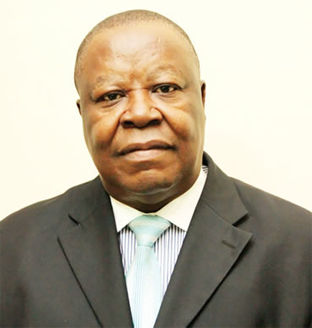
Managing Director and Chief Executive Officer of Solid -Rock Securities and Investment Plc, Mr. Patrick Ezeagu
The Managing Director and Chief Executive Officer of Solid -Rock Securities and Investment Plc, Mr. Patrick Ezeagu, in this interview spoke on what regulators and the government can do to attract diversified investors to boost the Nigerian capital market.
By Peter Egwuatu
WHAT kind of actions would you like the regulators to adopt that can attract investors to the market?
If the Federal Government remains committed to the financing of infrastructure deficit; this can done through the capital market. One of the major challenges businesses are facing is poor infrastructure which consume a large chunk of their revenues. The Federal Government should ensure that the capital expenditure of the 2017 budget is dedicated to improving infrastructure to enhance the ease of doing business in the country and for businesses to become productive and move towards economic recovery.
In addition, a time has come when the federal Government should involve the capital market regulators and operators in the build -up to budgetary processes and procedures in view of the pivotal role of the market to the growth and development of the economy.
The market is a reservoir of cheap and long term funds which is required for long term development of any nation. The capital market serves as a buffer zone for the government to finance budget deficit and there is a correlation between the development of the economy and its capital market.

Managing Director and Chief Executive Officer of Solid -Rock Securities and Investment Plc, Mr. Patrick Ezeagu
What are the effects of high exchange rate and inflation rate on investment in the stock market?
High exchange rate and inflation are the twin evils that afflict the capital market and indeed every economic endeavour. For a start, these two variables introduce a high level of uncertainty to the price structures of the market. Secondly, they stifle savings which is the fulcrum of investment. Any phenomenon that negatively impacts on savings reduces the quantum of available investible fund for Capital Market investment. Thirdly, it hits the foreign portfolio investors as they face Exchange rate risk with their investment, especially, with respect to repatriation of dividend or capital or both.
As a result, one of the main reasons why our capital market has been witnessing low patronage is attributable to the impact of both inflation and the uncomfortable high exchange rate regime. However, I am glad that the CBN is coming to terms with the need to free the strangulating hold it has on the rate to enable the Naira find its market determined exchange rate with the other currencies.
In this way, both investors in the capital market and other users of FX can be relatively assured of a band within which they can benchmark their exchange rate. The flip side is that inflation shall also be contained in the process as the economy and particularly the capital market inches towards a full free market determined price structures.
How can the governments at all tiers utilize the Capital Market to finance the economy?
Government at all levels utilizes the Capital Market to finance the economy because it provides an alternative source of funding that can complement Internally Generated Revenue (IGR). Capital Market fund is relatively cheaper than any other means of funding and has a longer maturity period.
There are various investments/windows available to both Federal and States governments in accessing funding from the market, these include asset sale, bond issuance such as Sovereign, Sub-national, green bonds, etc. These debt instruments are available and governments at various tiers are at liberty to fund infrastructural development using either or a combination of these types of instruments.
Disclaimer
Comments expressed here do not reflect the opinions of Vanguard newspapers or any employee thereof.