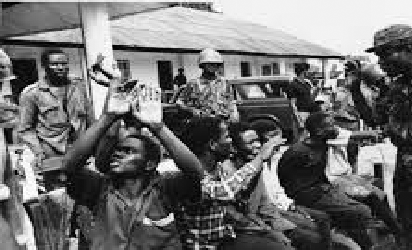
• A documentary of civil war
By Prisca Sam-Duru
THE exposition on why the military during its reign, expunged history from school curriculum adds to the reason the country is still in the sorry state it is presently. Aside removing history from the curriculum, Nigeria has been described largely as a country that lacks good memory of her past and as such, may continue to find it difficult to grow except she retraces her steps.
The importance of history and language in the documentation of memories about the country’s past, formed the backbone of an event organised by an Initiative of Centre for Memory and Heritage, held at Freedom Park, Lagos.
Numerous programmes
It was one of the numerous programmes that wrapped up 2016 and was put together by Kayode Samuel to prevent Nigerians from continuing to live as a country without memory.
Tagged, “A Convening on Memory Initiatives in Nigeria”, speakers took their turns in lamenting the negative effect of not having good memory about the country. They unanimously insisted that “Until we tell our stories, it is only stories told by others about us that will be available.” Also the role of indigenous languages in documenting histories, was brought to the fore as they decried how bad Nigerian languages have been abandoned for foreign ones.

• A documentary of civil war
In line with the initiatives’ commitment to preservation of cultural heritage, Starlight Home of Entertainment, performed the Atilogu dance, a rich cultural display that set the mood right for discussions on way forward. Former Nigerian Permanent Representative to UNESCO, Professor Michael Omolewa, in his 14 slide presentation, went down memory lane to recount the devastating effect of the civil war in the country and insisted that war must be documented.
He said that though he was studying in the UK when the war broke out, the devastating effect could still be felt having lost some good friends and colleagues in the grueling but avoidable war. He stressed the need to retrieve those basic things considered important and document them for generations to come.
Memory of past failures
“I’m glad that history is gradually returning to school curriculum. The military is responsible for the country’s woes and they expunged history from the school curriculum because they did not want memory of their past failures or activities documented and recalled to the glaring world.
“That history is being restored does not yet call for celebration. Historians must begin the process of reconstructing the past through autobiographies, biographies and monographs. The promotion of the ultimate truth as goal and object of history must be their priority, rather than spend precious time on propaganda, entertainment, sensational and sentimental history. We must remember and celebrate our heroes not villains,” he intoned.
Quoting President of Senegal, Leopold Senghor’s reference to Dostoevsky, he said that “A nation that does not heed the message of history is finished, …ready to be replaced in a museum.” He advised that history must be narrative, creative and authentic for it to serve its purpose.
Representative of the Ford Foundation- office for West Africa, Innocent Chukwuma, said he hopes the initiative would help Nigeria begin a process on remembering history of the country, stressing that “this will help us know things to be expunged, and how to prevent bad history from reoccurring and then, make good ones continue to happen.”
Going down memory lane on the civil war and its devastating effect on Biafra land, Innocent stated, “since I joined Ford as an organisation, I have helped to collect and preserve history in Umuahia war museum. After the war in 1971, I couldn’t go to school because schools were destroyed. I was five years then.
Relics of war
“National War Museum which was called Ojukwu Bunker, was one of the places I first saw. I was devastated by the relics of war which depicted the level of destruction the war brought on my people. The collections in that place need to be documented. We need to document what happened in that place, this will help us reject anything that may want to cause a re-occurrence.”
UK-based historian, Ed Emeka Keazor who spoke on the topic, “How Social Media Demystified Nigeria’s History and the Way Forward” said, “in the beginning, history was the spine or heart beat of traditional society. Who our ancestors were, were the interior of who we were. Oral traditions, communal interactions all formed part of what shaped our history. The myth that Nigeria had no history because of colonisation, is false.
Disclaimer
Comments expressed here do not reflect the opinions of Vanguard newspapers or any employee thereof.