By Imanuel Jannah
The 2016 edition of the annual Abuja Carnival came to an end last week Tuesday with as little fanfare as it began. If anything, the dismal attendance at this year’s carnival was a loud testimony to the state of affairs of the economy in most states of the federation as only few states were able to send a contingent to this festival which has been running for about ten years. This year’s edition with the theme: “The Creative Industry: A Pivot to Economic Growth and Development” was packaged as part of President Muhammadu Buhari’s drive towards removing emphasis from oil as the main stay of Nigeria’s economy and diversifying to other sectors especially tourism and the creative industry.
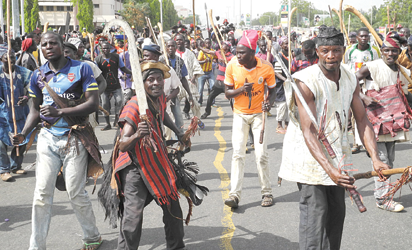
In the past editions, the carnival was usually a kaleidoscope of colours, costumes, and the culture of various ethnic groups in Nigeria. It featured street shows, musical performances, cultural dances, masquerade fiesta, durbar, boat regatta, food fairs, among others. It provided an opportunity for various states of the federation to showcase their rich culture and values.
In spite of the fact that the carnival witnessed low-turnout of people and absence of robust participation from some states of the federation which organizers blamed on the financial inertia prevalent in almost all the sub-sectors of the economy, there was no dull moment at any of the events marking the carnival. In fact, the four-day event was a mixture of culture and modernity.
One of the most eye catching events at the carnival was the Durbar. There was a parade of beautifully decorated horses which is a strong traditional practice of Northern elites. Although only Bauchi and Yobe states participated in the durbar, the festival added glamour to the carnival with people from all walks of life and social class in attendance.
Many of the spectators had their eyes glued to the horses that were decorated with gold and silver ornaments worth millions of Naira. The horsemen regalia were as breath-taking as was their expertise in handling the horse. During the durbar, the rider-men showcased their horsemanship, their preparedness and their loyalty to the respective emirates they hailed from as traditional drummers accompanied them.

Though the masquerade fiesta had only four states (Kogi, Nassarawa, Bayelsa states and the FCT) in participation, it was not less entertaining and an amazing sight to behold as different masquerades presented a colourful display of dance and acrobatics which most spectators described as thrilling.
Some of the masquerades like the female Saraunniya from Kogi, the Akpandoko from FCT, the Augu from Bayelsa, and the Gwandara from Nassarawa states showcased some of their steel and gorgeous regalia to the admiration of the audience.
One of the spectators, Waripamo Johnson, not minding the poor turnout of people at the event, described the masquerade fiesta as a show of Nigeria’s rich cultural heritage. “Even though people are not many, but the masquerade performances are okay. It is not how many masquerades that come out that matters but the intentions. You can see from the masquerades, there is representation of a large group of ethnicities,” he said.
The 2016 carnival also featured an exhibition of Nigerian artifacts and artistic works (at the arts and craft village, Abuja) which showcased the country’s diverse cultural heritage to the world.
The art exhibition featured artists, curators and designers from Kano, Bauchi, Gombe, Katsina states. On display were traditional attires and weaved fabrics, tie-and-dye materials, wood works, indigenous arts and crafts, and colour burst decoration amongst others.
Some of the exhibitors said the carnival was an opportunity to showcase their designs and artworks, and also promote the culture and tradition of their people. Visitors who were at the exhibition venue to patronize the products told Abuja Watch that the exhibition gave them a glimpse of the beauty of Nigeria. Children were not left out in the carnival as a cultural dance fiesta for kids featuring schools within the FCT and some states of the federation was staged to get children involved in the business of promoting Nigerian cultures and traditions.
The organizers also hoped that the children’s dance fiesta will encourage cultural integration among children in Nigeria.
Some children who participated at the event told Abuja watch that they were glad to have represented their tribes and ethnicities at the fiesta and hoped for a better event next year.
Similarly, a night of cultural dances was held as part of activities of the Abuja carnival. The night had different cultural troupes from 12 states thrilling the audience with traditional dancing skills. The top four cultural troupes were invited by President Buhari for a special performance at the presidential villa.
Perhaps because of previous editions of the carnival, business owners came out in their numbers, some from as far as Ghana to market their wares, but the apathy that trailed this year’s edition affected business negatively.
One of the business owners, Nana Kwame, said: “We came all the way from Accra (Ghana) to exhibit our goods here. They are just telling us there’s carnival, there’s no carnival. We are confused because of the low turnout of people. So we told ourselves, since we are already in Abuja, we are just going to display our goods to see, if we can make any sale while we’re still around.”
The Abuja Carnival was initiated in 2004 with the aim of promoting the rich cultural heritage of Nigeria to the international community, and fostering national unity and integration among the diverse ethnic groups in the country.
Some contingents who participated in the 2016 edition of the Abuja carnival said the festival provided them opportunity to meet new people and build new bridges within and outside their locality.
The minister of Information and Culture, Alhaji Lai Mohammed, revived the Abuja carnival (which has not held for two years now) in line with President Muhammadu Buhari’s effort to diversify government’s revenue source through tourism, the creative sector, and other aspects of national life. The traditional institutions and the media supported the carnival’s quest to provide additional stream of income for the nation.
Disclaimer
Comments expressed here do not reflect the opinions of Vanguard newspapers or any employee thereof.