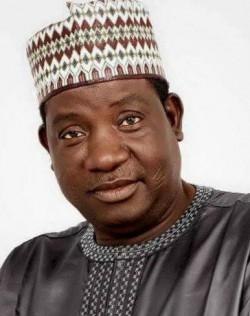
Lalong
*Says 3,000 applications to build ranches received by FG
*‘My plan to move Plateau’s IGR to N1billion a month’
By Dapo Akinrefon
Governor Simon Lalong, in this interview, speaks on the herdsmen’s killings in Plateau State and other states across the country and the potentials ranching, as against grazing routes, offers to resolve it.

Lalong
When you took over, what were the things you met on ground that suggested that the quantum of work you would have to do is enormous?
I inherited a state that was in crisis, conflict, killings here and there. In terms of security, that was the number one challenge. Secondly, immediately we were elected, I set up a transition committee and what the committee came out with was revealing. There were abandoned projects everywhere, many contractors had abandoned the state for almost a year.
We also saw that there was no civil service in the state. Workers had been on strike for almost nine months, the judiciary was not there. We had uncompleted projects here and there and then, I inherited a debt profile of about N222 billion. When I called for the state accounts, what I was given was just N95 million. So, imagine salary arrears of about nine months, a workforce that was utterly demoralized and then, above all, a state that was in very serious conflicts. There were killings here and there.
What I did was to look at the security situation because if you did not tackle insecurity, there was no way you could surmount the other challenges. So, we went into how to curb the conflict but I realised that you could tackle security without sorting out the issue of workers. So, what I did was to borrow money, pleaded with the workers to return to work. Now, when they returned to work, we set up a five -policy thrust. The first was on the issue of security, second was agriculture, third was human empowerment, tourism and the last was on physical development.
What I did was to now follow the policy thrust in sequence. So, when the civil servants were back to work, people were working and we were able to meet up with the warring factions, we set up a committee, put them together. We had to put them together because part of the problem I saw was the inability of the last administration to bring the two factions together. The former governor had taken sides but, in our own case, our campaign was that we are going to form a government of unity. When you talk about unity, Plateau State is like a miniature Nigeria where we have 53 ethnic groups resident on the plateau.
So, if you want peace, you must consider all of these ethnic groups and bring them together. For the first time, we were able to bring together the 53 ethnic groups in the history of Plateau State and we got to their doorsteps; we did town hall meetings, found out their grievances. That is why you have a different Plateau today. As for the conflict, I knew about some of these problems because I was the Speaker of the House of Assembly and I knew how to solve the problems quietly. What I did was to get the communities’, representatives to sit together and give me solution to the crisis. By God’s grace, they brought the solution to the crisis and as we started implementing it, peace returned to the state.
So, today, you will not hear people fighting; even cattle rustling that was rampant in the past, today, you hardly hear of such. Now, because there is peace in the state, we have now gone back to development, workers are paid salaries.
You mentioned that you met about nine months salary arrears but I read that one non-governmental organisation, SERAP, reported you and 10 other states to the ICC for not paying salaries. What is the status with that story?
That was very mischievous, even my workers were complaining about the SERAP claim; they said they never said they were taking the governor to court. They knew what I inherited, they knew the efforts I made. Today, we are already paying arrears and I gave them assurance that I would settle the arrears of salaries. So, I don’t know where they (SERAP) are getting their facts from. I inherited nine months and, when the bailout came, some people were saying that Plateau was going to divert it, but I didn’t. I set up a committee of workers to pay the arrears because salary is not a one-man thing and they cooperated with me. We applied for the bailout but only part of it was given to us for no reason; but after five months of struggling, we realised that there was an error from the Central Bank of Nigeria. We requested for N10 billion but N5 billion was approved and then another N5billion came in June. So, I don’t have problem about payment of salaries, the workers are not complaining. There is no need for any one to take me to the ICC because I have paid workers’ salaries.
You said something about the state’s Internally Generated Revenue. What was it before and what is it now?
What I inherited in Plateau state was a zero account and even the IGR that was generated was tied to a debt, so there was nothing. A bond of about N20 billion was hurriedly packaged by the former government and they left it for me including the IGR which was tied to the bond. One of the MoU was that the IGR that would be generated would be tied to the IGR and we would continue to pay for another 10 years. What kind of thing is that? It means I would preside over a failed state. First, I went and renegotiated with the bank. I told them I could not tie my IGR to the bond and at the end of the day, we all agreed. They got part of it and they released the rest of the IGR. So, from that time, the IGR was about N300 million but, as we talk, we have up to N500 million in a month.
In addition, we did an understudy of Lagos and other states who are improving their IGR through lands and we have already flagged off our pledges and the geo-graphical locations; I am sure that in the next two months, we will be hitting over N1 billion in a month as IGR. So, we are not joking with IGR but diverting the attention on over dependence on the Federation Account to what we can generate internally to run our state.
You have achieved relative peace in the state since you came on board but that peace appears threatened because of the issue of grazing reserves and ranching. What is the true situation?
The one that cropped up was settled last week, that was the political angle. I call it the political angle because I inherited a policy that was gazetted by my predecessor, Governor Jang. How did that come about? Due to the incessant crisis in the state, several commissions of inquiry were set up in Plateau. The last commission set up was the one headed by the late Justice Niki Tobi.
Now, Niki Tobi reached some far-reaching recommendations that would curb crisis on the Plateau and part of what he recommended was that if you want to curb the crisis, because that time it was still the issue of Fulani herdsmen and the natives, you must identify and establish grazing reserves and grazing routes. It was not implemented by Governor Dariye because of election. Now when Governor Jang came in, he called for the reports of all the judicial panels that made recommendations for grazing reserves and grazing routes and went ahead to gazette it in 2009.
When we came, things changed, implementing it would be a bit difficult. If you are going to implement it, where are you going to get the routes? The problem is the routes because when you establish it, you need to know the difference between grazing reserves and ranches. Grazing reserves means people will have to take their cattle to an open field for grazing, you can move from anywhere to come and graze your cows and, in the process of grazing, you will look for routes. In the process, they move into farmlands and feed on crops which is the cause of crisis, even then, the grazing reserves attract the attention of petty rustlers, that is where you find the issue of cattle rustlers.
So, the difference between that and what is being introduced today is the ranches, you cannot compare ranches with grazing reserves. There was a report that came under the administration of former President Goodluck Jonathan and was produced by a sub committee headed by the former governor of Benue State, Mr Gabriel Suswam, which provided solution of this kind of crisis and that solutions was to establish either grazing reserves or ranches.
Coming back to the case of Plateau, it was unfortunate that the first person who came in with that kind of thing was my predecessor. He did a press conference and said that the new governor was bringing in something very obnoxious and dangerous to the state. He said I was bringing in grazing reserves to Plateau in connivance with the President, who is a Fulani man. The moment he made that statement, there was commotion, his idea was to ignite crisis in the state but I took my time because, even when I decided on the issue of ranches, I set up a 14-man committee made up of experts to study the difference between ranches and grazing reserves and, of course, concentrate on how we are going to implement this new policy on ranches.
The committee came back and recommended that I should adopt the policy on ranches for the state. One of the other recommendations of the committee was to sensitize the people, so I took my time and did exactly what they proposed. We went on the sensitization with traditional rulers. The traditional rulers accepted. We invited the youths and they accepted too. It was just an explanation that we were not going for grazing reserves but ranches. We made them realise the advantages of ranches and the disadvantages of grazing reserves.
Employment opprtunity
I saw it as a good opportunity for the employment of our youths; so all the groups we met told us to continue with the ranching policy. When we finished with the youths, we went to religious leaders and explained to them. We then headed to the House of Assembly and the last group was the National Assembly. I took them (National Assembly) last because I knew there were mischief makers among them. This policy came from the Federal Government and it was the National Assembly that sat and passed the budget for it. They were going to implement it but because one was coming to Plateau, the National Assembly members ran back to the state and addressed a press conference that the people of the state should not key into the ranching policy. It means it was political. From their reaction, they saw it as an APC policy because many of them are in the PDP.
When I invited them, I said, ‘Tell me why you do not want us to key into it?’ Their story changed. They said they thought it was grazing reserve but I asked them at what time did we say we were going into grazing reserve? The National Assembly passed the budget but now, they are mobilizing people against the policy. I explained to them that the people of the state have accepted ranches, I did not bring grazing reserves to the state but I was only adopting the policy on ranches.
After addressing the last group, the remaining members of the National Assembly accepted and asked me to go on with the ranching policy because Plateau is one of the states that have been confirmed for the ranches. So, we are waiting to go and start the implementation in conjunction with the Federal Government.
One of the cardinal things I want to say is that, even implementing the concept was an issue because people were still claiming that government was going to confiscate lands and give them out for grazing, that was not what was agreed at the Governors’ Forum. If you look at the policy very well, the policy is about the willingness to go into it. If government has land, they can go into it. If private individuals have land, they can register with the Federal Ministry of Agriculture and key into it and will be given facility.
The Federal Government is going to start a pilot scheme and the pilot scheme will go along with the subsidy just like we are doing subsidy on potato and rice. That is what the Federal Government is trying to do, we want to start the subsidy on livestock production. We have done our sensitization on the Plateau, and right now, we are into the process. The people have understood it very well and they have asked us to go into it.
But the challenge we have is that they are asking me the yardstick in taking it to a particular place, and so, there is a serious conflict now on who wants to get it to his environment but the Federal Government says they are only starting with 5,000 hectares which will be divided into two places because it cannot be in one place. So, we are looking at two local government areas in the state to start the policy but almost all the 17 local government areas are fighting for the facility to be situated in their areas. I am even confused as to who would benefit and who would not and, in addition to that, so many individuals in my state, over 3,000, have applied for ranches in the country and the Federal Ministry of Agriculture does not have the capacity to give all. Grazing is not for everybody but ranches is for everybody, it is business for everybody but nobody’s land will be confiscated for ranches.
Aside clearing the backlog of salaries, in the last 14 months you assumed office as governor and having cleared the cobweb of insecurity, what can you point at as your achievements in the state?
Even with the challenge of the backlog of salaries that I met, within the period of one year, we have commissioned a lot of projects. One of the policies of the APC is not to leave abandoned projects; so when we came in, we continued with abandoned projects, we completed many of them and we are still continuing with some of them.
We also introduced new projects like the new roads we flagged off, which are on-going. In addition, let me point out one thing; we set up a state university over 10 years ago. At that time, I was the Speaker of the House of Assembly and I presided over the passage of the law to set up the university but that university never graduated students. There was no graduation for about 10 years. So, when I came in as governor, I saw that the same university could not graduate students for one reason of the other.
Is it that the university did not start at all or they started…
(Cuts in) They started, students came in but they did not graduate the students.
For 10 years? So, what were they doing for 10 years?
There have been administrative problems here and there. About four Vice Chancellors were changed. On the volition of the governor, he would change the Vice Chancellor and not only that, there was the problem of administration and, at the same time, the students were suffering. So, the last Vice Chancellor was removed but the university said no, ‘ we cannot continue like this’ . There was no accreditation of courses; instead of concentrating on accreditation of courses and graduating students, the politics of administration was what the governor was concerned about. What we did was to go with the recommendations of the National Universities Commission which we implemented. 17 courses were accredited and, right now, we are preparing for the first convocation of that university. I brought in the last Vice Chancellor that was removed. I followed due process.
With the security situation, it is not easy to restore security in the state. When we came in May 2015, people were running away from Plateau, but now people are eager to come to the state. It is when you have peace that people will want to come to your state. Our state is known for having the best weather and, when you have good weather, people would want to take advantage of it. It was our responsibility to restore security.
In terms of agriculture, that is our focus for empowerment and also for revenue generation. We have almost keyed into all the counterpart funding in agriculture. We have FADAMA, we are into rice, potato, cassava and several other crops. With our good weather, Plateau is known as the Home for Peace and Tourism; so, we are still going back to tourism. We would embark on reviving and developing our tourism.
Still on the issue of grazing, what your predecessor is trying to make people believe is that the state government wants to take lands from the natives, the indigenous people of Plateau and give to Fulani herdsmen. Is that what the ranching policy is about?
No. The policy is that the government and people of Plateau will own the land. Government will identify the land, the people of that area will give the land willingly for the ranches. Plateau State government will not confiscate land from any community or force any community to provide land for the ranches. Now, when you give the land of about 2,500 hectares, the state government will pay for the land, the Federal Government will develop the land, they will bring in dams, fence the land and, recently, what they are doing is to provide security. Right now, they are training some Civil Defence Corps members for the purpose of protecting the ranches. They will be called rangers. The Federal Government will develop the land but the Plateau government will own the land, then they will call for people who are interested in ranching to apply and then, the state government will demarcate the land and lease to people who want to participate.
So, the land for the ranches belongs to the government and people of Plateau but on lease to people who would come and participate in the scheme. They cannot be owners of the land. So, I don’t see why my predecessor is saying it is for Fulani herdsmen. It is not for the Fulani. Initially, they said they preferred grazing but when we did the stakeholders meeting, the Fulani people understood and they said for the purpose of peace in Plateau, they also want to key into the ranching policy.
So, the fear of acquiring somebody else’s land or community land is not there, it is for communities who are willing to provide land for the ranches. It is not all the states that have keyed into it, it means they don’t have the land or they don’t want it. But if you want it, the recommendation is that you must provide land because it is a pilot scheme. The Federal Government is trying to encourage people to go into that scheme. If you are doing that kind of encouragement, definitely the government must start something so that when people see it as good, they will go into it. Even the one that is for Plateau now, I don’t know how we would allocate it because the number of people that have applied is more than the allocation that we are going to do.
So, I have been explaining with every sense of responsibility that people should key into it, they should not be afraid that it is for the Fulani man, it is for everybody who wants to go into livestock production. There is even no basis to compare grazing and ranching, ranching is what we are adopting in Plateau. I was also confronted with the allegation that it was the President that was bringing it because he is a Fulani man, to benefit his Fulani people. With due respect and apology, may God forgive the people that say such a vile and wicked thing. This policy started in 2014 when Goodluck Jonathan was the President of this country. We inherited the document and recommendation from the last federal administration, so, what has it got to do with President Buhari? President Buhari waited for governors to make recommendations to him and we made recommendations for ranches, and I prefer ranches.
The Federal Government said those who are willing to key into it should bring their land. So, why should anybody say that we are going to confiscate our peoples’ land and give it to a Fulani man or Fulani herdsmen? Why I am saying this is for Nigerians to understand the policy. By the time you explain and they understand, you will see the number of applications to participate in the ranching increasing. The best thing is to avoid sentiments and move straight into ranching, which will be of great benefit to the people, including the production of milk and beef.
I was expecting you to talk about solid minerals because your state has been associated with tin and other kinds of solid minerals and frankly people are surprised that you are not generating a lot of revenue from this. What are you doing in the area of solid mineral development?
For solid mineral development, most of the policies are restricted by law to the Federal Government, it is on the exclusive list but Plateau happens to be the headquarters of solid minerals. The mining corporation is still there in Jos.
At a time when we were all depending on oil, people left minerals but, now, the reality has dawned on everybody and we have gone back. We have a solid mineral development company in Plateau, which was abandoned for a long time; so what we have done is that we have brought back the company.
Now, the company is back on stream. We are exploring and looking at areas in mining that will be favourable to the state. In Plateau, there is a place called Wase and, apart from Wase, in almost all the 17 local government areas, you will find solid minerals. We are putting a lot of emphasis on solid minerals, we are also looking at tourism and the gold mine in solid minerals. We have provided enough security to chase away illegal miners. So, we are taking back gradually what is due to Plateau and, in terms of solid minerals, you will find people in the next few years talking about resource control in our state on solid minerals.
One of the things that your predecessor talked about is the local government issue. Why is it difficult to conduct local government elections in the state?
It is not difficult to organise local government elections. We came in and have been trying to tackle the issue of insecurity in the state.
My predecessor(Jonah Jang) who’s talking left the state in complete mess. He destroyed almost everything. The mess needed to be sorted out first before we talk of conducting local government elections.
For instance, I have a case where N2 billion was sent to my state for youth SME empowerment, the money disappeared and no list of beneficiaries till date. Now, when I applied for the second one, I was told that I was supposed to refund that N2 billion before I could access another one. So, I went back to ask him (Jang), to give me the list of the beneficiaries and let me know where the money. He he has not accounted for that money. I am sorry to say that in such a case, I call such a person a hypocrite. I am asking him, let me know where the N2 billion went to that was meant for SME and who were the beneficiaries?
The second one was that we got a record where 500 vehicles were bought in the state, that is under SURE-P and we asked, where are the 500 vehicles?’ And where is the list of beneficiaries? He went up and down, saying I am witch-hunting him. Is that witch-hunting? Let us put the records straight. It is supposed to be a revolving scheme so that when we get the proceeds, we can give to other people. We are determined to get all funds back to the state.
When Jang brought up the issue of grazing reserves, I brought out the document where Jang gazetted it in 2009 when he was governor.
He even appropriated funding for it in the 2013 and 2014 budgets. So, if it was so bad, why did he gazette it and provided money for it in his budgets of 2013 and 2014? Jang gazetted grazing reserves and grazing routes in Plateau, but if you ask him to come and implement it, he cannot. He did that and he is now trying to pretend that he does not know anything about it; that is the hypocrisy I am talking about.
We will conduct local government elections, we are about putting a process in place. There are two conflicting judgements in Plateau after the last one conducted by my predecessor and all the judgements are from the High Court. Unfortunately, they all stopped at the High Court. There was one law that we did in 2005, I was then the Speaker of the legislature, but after we left, the governor who came on board during the state of emergency did something else. The deputy governor took over and amended the law, brought in another. When my predecessor came, he also amended the law and brought in another, thereby confusing the whole exercise. The last elections he had, two judgements came from the tribunal nullifying the two laws. So, if you are going to conduct another local government elections, you will require to put the proper laws in place first. I have set up a team and, very soon, I will present the law to the state House of Assembly so that we will the law to adopted to conduct the elections.
Again, while we were pursuing this issue of investigation, implementation of recommendations, the local government chairmen rushed to court because they knew that some of the things we are investigating are about them. So they now rushed to court and after which the local governments were dissolved. The law(put in place by my predecessor) states that the governor can dissolve the local governments without giving any reason but when I was the Speaker of the House of Assembly, we restricted it and said that the governor could not dissolve the council without the House of Assembly. If you want to dissolve, you must give reason and send it to the House of Assembly for approval.
The last amendment that was done by Jang was to dissolve without reason or recourse to the state legislature and he dissolved local councils twice, without giving any reason. Instead of waiting for us to sort the issues out, they are rushing to court, we are still waiting for the court because all the issues are in court to decide. However, we already putting a process for the conduct of our local government elections.
So, like I mentioned, key among them is to put the proper law for the conduct of the elections. If I should conduct the elections now, the court will eventually declare them null and void; so, we must, first and foremost, go back to the law. I am not one that likes to keep caretaker committees, but I want to start the
Disclaimer
Comments expressed here do not reflect the opinions of Vanguard newspapers or any employee thereof.