Stock image
By Francis Ewherido
One news item caught my attention in the Saturday Vanguard of April 16, 2016; a photo of a drunken young lady peeing in public in Newcastle, England. She was sitting on a bridge railing with her trousers pulled down to her knees, baring everything for the whole of humanity.

Open defecation
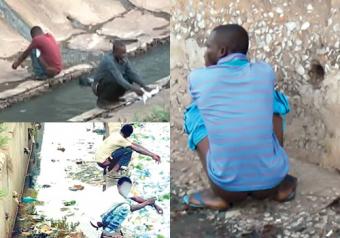
That was very odd behaviour by the British standard, so it made its way into Vanguard’s Odd News page. But Nigerians pee in public every day. We pee in gutters, on pillars of bridges, on the median of major roads and a “conductor” has been seen in the past urinating from a moving bus (Molue) on Ikorodu Road, Lagos.
About 99.9 per cent of Nigerians have at one time or the other urinated indiscriminately in public places; it is still a regular habit of most Nigerians. If it is odd for the British, why is it normal for us? Are they super humans while we are sub-humans?
I stopped a young man from peeing in the gutter by my house and he could not understand what the fuss was all about. “Na gutter I wan piss put,” he “educated” me, but I stood my ground. He then moved to my neighbour’s part of the gutter. I told him there was a mobile toilet nearby, but it fell on deaf ears.
But our people say you should remove the ants biting your privates before paying attention to the ones at your feet, so let us face a more serious and hazardous menace. According to the United Nations Children’s Fund, UNICEF, over 50 million Nigerians do not have access to toilets and so resort to open defecation. UNICEF also revealed that Nigeria is among the top five countries in the world with the greatest rates of open defecation.
Open defecation goes with a lot of health hazards, so it is not surprising that “Nigeria loses over 150,000 children to diarrhea annually” and 88 per cent of these diarrhea cases are attributed to unsafe water and sanitation. Only pneumonia kills more children under-five years in Nigeria. “Intestinal parasites such as roundworm, whipworm and hookworm are transmitted through contaminated soil in areas where open defecation is practised. Hookworm is a major cause of anaemia in pregnant women; leading to malnourished, underweight babies,” according to the report. In spite of the damning report, very little effort has been made to redress the situation.
Until a few years ago, human waste disposal vehicles emptied the waste into the waters by the foot of Carter Bridge, Lagos, on the Iddo side. Till date, when approaching Carter Bridge from Ikoyi, the median on that entire stretch is an open toilet for miscreants, street traders and others. The water around that area looks like something from a sewage pit.
And yet people fish in that water. Like many people from the Niger Delta, I love fish, but anytime I remember the Carter Bridge area, my love for fish evaporates. How the Lagos State Government could have allowed this to continue over time beats my imagination.
Unfortunately, even in highbrow Ikoyi, Victoria Island and Lekki, street traders and others without access to toilets defecate in unoccupied and unkempt buildings and surroundings. My most recent encounter was on Aboyade Cole, Victoria Island, where one of the young men who sell fruits at the junction by Ademola Adetokunbo defecated by the fence of an unoccupied building with over-grown weeds. When he finished, he washed his backside with water and resumed selling fruits. (May God deliver us from eating fruits contaminated with human faeces.)
They say old habits die hard, but this obnoxious and hazardous habit should die very fast. In this day and age, there should be no place for open defecation and on major roads of a mega city. Each time I see people defecating openly, I look around me to see if there are foreigners around. Until 200, that was how miscreants turned the outer Marina into a massive toilet. The beautification of the outer Marina put an end to this unhealthy and shameful habit. The Ambode government should as a matter of urgency sort out that stretch before Carter Bridge.
In Yobe State, the Canadian government has constructed 120 toilets in nine schools to help check open defecation. The report said the Japanese government is about constructing 100 ventilated improved pit toilets in schools, markets, hospitals and other public places in other parts of the state. Foreigners feel strongly about the ugly situation and are intervening; what are we doing about it?
I must admit painfully that many public toilets in Nigeria are in poor state of hygiene. They are dirty, smelly and often have no water to flush down the waste. It is the unhygienic state of toilets that forced many of us to openly defecate in nearby bushes in secondary school. But some people defecate openly even where there are clean public toilets because they do not want to pay between N20 to N100 to use the toilet. How do you want the workers who keep the toilets clean to be paid? Yet Nigerians pay equivalent of N500 or more abroad to use public toilets.
For three years at the University of Nigeria, we endured the usage of toilets that never had water. Each student simply offloaded on top of what the last user deposited. It stayed that way until the next morning when the cleaners would come to clean the toilets. The cleaners were off on weekends, so the human waste stayed from Friday morning to Monday morning. Looking back, I do not know how we managed. Yet, I cannot remember students protesting over the poor sanitary condition of Eni Njoku and Alvan Ikoku Halls in those three years I spent there. But we did protest over less serious issues.
May be that is the way many of us are constituted, but that constitution is archaic, unhealthy and untenable in the 21st century. Open defecation is impunity and lawlessness taken too far and it is not helping us as a people. Nigeria must be saved from this health hazard and national shame. The responsibility is everybody’s.
Disclaimer
Comments expressed here do not reflect the opinions of Vanguard newspapers or any employee thereof.