By Michael Eboh
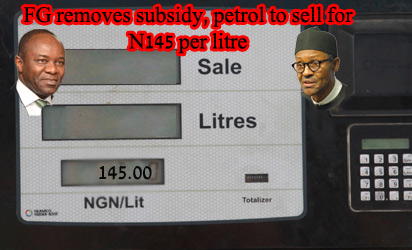
NIGERIAN Association for Energy Economics, NAEE, has faulted the decision of the Federal Government to set a price cap for Premium Motor Spirit, PMS, also known as petrol, saying it will discourage investment in the downstream sector of the petroleum industry.
Addressing newsmen in Abuja, Prof. Wunmi Iledare, President, NAEE, argued that allowing market forces to determine prices will remove expectations from government’s interference in the sector, and allow market players to take necessary risks and investments that characterise investment dynamics in a market driven economy.
“Certainly, Nigerians must expect some macroeconomic instability in the short run as a result of this shock due to the sudden but inevitable rise in the price of PMS under the circumstances. But in the long run, the gains would add significant value to the economy in terms of trillions of naira to build the national economy for infrastructure, capacity building and development,” he explained.
He called for the total removal of fuel subsidy and the proper calibration and adjustment of the Petroleum Products Pricing Regulatory Agency, PPPRA’s pricing template for a market dictated margin.
Iledare also argued that the removal of subsidies will limit the negative impact of the major fiscal and financial burden on the nation; reduce the fraud and rent-seeking behavior in the sector; increase government’s access to funds to develop infrastructure and decrease smuggling activities especially to neighbouring countries.
He further said the removal of subsidies will increase free market operations; spur the rehabilitation and revamping of the local refineries; and reduce declining fortunes of Nigerians in the long run.
“Hopefully, this government can be trusted to do it right. We at NAEE are certainly not unmindful of the economic hardship and the potential of doing nothing with the stagnation in the economy is dangerous as currently evident in Venezuela. It should always be about posterity not prosperity for a few in a nation of 170 billion people,” he added.
However, Iledare identified some necessary conditions that the Federal Government must put in place as soon as the country got out of the expected and temporal economic hardship to ensure that the full deregulation of the sector succeeds.
He said: ‘First, guidelines to support open access of common infrastructure in the sector, including farm tanks, storage and depot facilities to enable marginal players to be able to participate in the market without serious disadvantages.
“Second, the government must provide necessary support for those who want to establish local refineries. The key to Nigerians enjoying the benefit of ownership of huge petroleum endowment is when local refineries are up and running.
“Third, the competition law must be passed to ensure that firms with significant market power do not collude to influence market prices. The exercise of market power, without vigorous oversight is not consistent with an efficient market system. The government must ensure that all forms of collusion to influence market outcomes are promptly dealt with.
“Finally, government must be resolute in ensuring that it pushes through the deregulation, whatever the opposition that is expected.”
Disclaimer
Comments expressed here do not reflect the opinions of Vanguard newspapers or any employee thereof.