By Owei Lakemfa
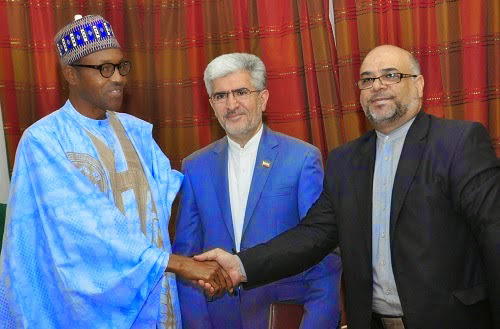
I WENT to school last Tuesday. It was a privilege walking in the midst of some of the best serving and retired ambassadors in our country. This class had Ambassador Abdul Rimdap, former Ambassador to Germany as captain.
The party was complemented by the presence of some leading intellectuals with Emeritus Professor Anthony.I. Asiwaju as leading light. Heavy weight professors like Ahmadu Sesay, Ayo Dunmoye, Bolade Eyinla and Victor Adetula were also present. The presence of Adelaja Odukoya reminded me that the intellectual torch has passed from the Asiwaju generation to a younger one.
On hand to deliver an enlightening and stimulating lecture was Dr. Martin Uhomoibhi former Permanent Secretary, Foreign Affairs Ministry who was comfortable strutting through many fields; from history to politics, domestic to foreign. I learnt not too familiar concepts. For instance, Nigeriacentricity. His explanation is that the “Ancient Nigeria Commonwealth” predates colonialism. That commonwealth, is the umbilical cord that connected the ancient kingdoms and city states that constitute what is now Nigeria.
Comparing those ages with today’s ephemeral politics where anybody can overnight become a leader, he said you do not become the Ooni of Ife, Oba of Benin or Shehu of Bornu, overnight.
He also espoused the concept of Smart Missions. He argued that this is the solution to policy summersaults that sees one administration closing a Mission today, and tomorrow, a new administration reopens the same Mission.
He argued that even if the economic reason for shutting a Mission is cogent, the host country will wonder why it is the one in his country being closed and not another. The unintended signal, he pointed out, is that such a country might assume Nigeria does not think much of it. The solution he argues, is to have Smart Missions; an embassy with an ambassador and one diplomat supported by local staff.
Uhomoibhi said Nigeria’s foreign policy of being friend to all, has its roots in the, Abubakar Tafawa-Balewa era. Based on this, he said, Nigeria has never gone to war with any country even if it meant giving up some of our territory as happened in Bakassi. To me, it is debatable if this is smart policy or docility in international relations.
Uhomoibh argues that Nigeria has not made adequate use of its position as ancestral home to many black peoples especially those in Brazil and the Caribbean, nor Nigerians in diaspora. The Black race he said, is in trouble pointing out that while by the mid 18th Century, we constituted one third of the human race, now we are far fewer. To him, most of the discussions on migration, especially in Europe, are focusing on the symptoms, rather than the root causes. Except for circumstances, he wonders who wants to leave his country.
There was a joke when I was young, that an ambassador is an honest man sent abroad to lie for his country; for Uhomoibhi, the value of an ambassador is his ability to reach his host president and adequately report on the country of his posting to the home office.
Glancing through the landscape, he submitted that it is not history that makes mistakes, it is people who make mistakes and blame it on history. As if talking about himself, Uhomoibhi said, the most beautiful thing for a human being is after doing his best, to retire and do things at his chosen pace.
Ambassador Ayo Olukanni, immediate past ambassador to Australia with concurrent representation to a number of surrounding countries, told two touching stories about the unique presence of Nigerians in virtually all parts of the world. While visiting Papau New Guinea, he discovered that there is only one mosque in that country and that the Chief Imam, is a Nigerian. In Alice Spring, on the edge of the Australian desert which has one of the largest concentration of the Aborigines, he met a Correctional Officer, Adeyemo, who is Nigerian. The officer, he said, has two customized plate numbers; Igwe I and Igwe II. While being Yoruba, Adeyemo in that far away desert, prefers to promote Igbo tradition. Occasion Chairman, Prof. Chudi Uwazurike was a uniquely placed person; he is a veteran of the Foreign Service, an academic and was a member of the National Assembly.
I sought to correct Uhomoibhi that there is still an African country under colonialism; Western Sahara. But he argued that with an ambassador in Nigeria and similar representation in other countries, that country cannot be categorised as a colony. By his logic, it means that Palestine is an independent country or that South Africa under Apartheid which had ambassadors from the liberation movement, was not a colony.
The event was put together in Abuja by the Society for International Relations Awareness (SIRA) led by Prof. Nuhu Yaqub, Vice Chancellor of the Sokoto State University and former Vice Chancellor of the University of Abuja. The SIRA which is supported by the German Friedrich Ebert Stiftung (FES) also used the occasion to launch its book “The Challenges of Insurgency”. Prof. W. Alade Fawole who reviewed it also showed good salesmanship in marketing the book. As expected in such a gathering, the millions did not come tumbling, but people freely gave. The SIRA also used the occasion to celebrate one of its own, Prof. Tonia Simbine who has just been appointed a Commissioner in the Independent National Electoral Commission (INEC)
I got a copy of the memoirs of Ambassador Olufemi Oyewale George titled “FROM ROOKIE TO MANDARIN: The memoirs of a Second Generation Diplomat”. The diplomat who was quite prominent during the Obasanjo administration told of struggles in the Foreign Service including one when there was an attempt to ‘import’ an obviously unqualified officer from a state civil to a top position in the Foreign Ministry where he would have been boss to his superiors in service and education.
What struck me was that the setting was a unique gathering. Ambassadors who by their training, exposure and experience, ordinarily, cannot but be Pan Nigerian in their views, and intellectuals who rely on the use of their intellect rather than the prevailing primordial sentiments. These groups of professionals who identify poverty as a major challenge, are in a position to brain storm on the way forward for the country. How to transform the old subsistence farming methods, and turn traditional cattle rearing that sees herdsmen damaging crops, to breeding in given settlements which would make it unnecessary to roam across the country. How do we shift emphasis from sharing national wealth, to true wealth creation and development? How do we ensure that population is not merely a criterion for revenue sharing, but more importantly, for production. Many questions I could not really ask the ambassadors and intellectuals.
Disclaimer
Comments expressed here do not reflect the opinions of Vanguard newspapers or any employee thereof.