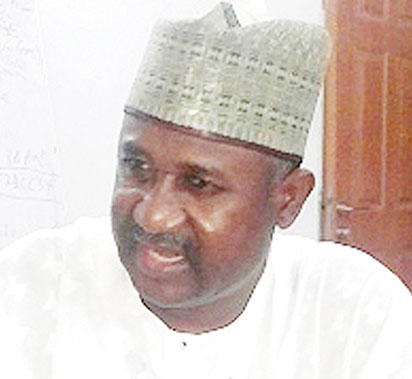
Sani-zorro
•Says legislature remains most transparent arm of govt
By Clifford Ndujihe
Former National President of the Nigeria Union of Journalists (NUJ), Hon Mohammed Sani Zorro is the chairman, House of Representatives Committee on Media and Public Affairs. Zorro who represents Gumel/Gagarawa/Mai gatari Sule Tankarnar Federal Constituency of Jigawa State on the platform of the All Progressives Congress (APC), spoke to some reporters in Lagos on Sunday on why the House is backing the on-going anti-graft war of President Muhammadu Buhari, set up a committee to take a holistic view on the funding of the House and readiness of lawmakers to yied to the desires of Nigerians on their remuneration.
His reaction to complaints that the cost of running the National Assembly is bogus and unjustifiable high?

Sani-zorro
First, let me say that this perception or agitation did not start with the 8th National Assembly. It’s been there since the return of democracy in 1999. But the present House leadership is concerned.
The House of Representatives, as a result of the outcry of Nigerians, who have been taking critical exemption to the funding of the National Assembly, has decided to review the funding of the activities of its members.
This review will also result in right-sizing and the funding of various aspects of our activities. We have already put a mechanism in motion to achieve that. It will also result in drastic cuts of our finances, including salaries, allowances and running costs.
What I can assure you is that we are submitting to the will of the people as a responsive and responsible legislative institution. We can no longer ignore the popular observations and wishes of the people who elected us in the first place. Even if the measures we consider will inconvenience us, we would rather do it and respect the views of Nigerians. By the grace of God, the House of Representatives will be credited with addressing these issues of persistent agitations against our finances.
How do you intend to go about this?
The House under the speakership of Hon. Yakubu Dogara, has adopted a legislative roadmap that will guide our conduct and activities. In the two weeks that we deliberated on it, most members agreed that we need to change. You know the House of Representatives is a hub of diversified competencies. With 360 members, all sorts of professional bodies and practitioners are represented there. We have a concentration of knowledge at our advantage.
So, we considered the agitation and empanelled an independent technical committee made of members of the civil society (led by Dr Clement Nwankwo) to blueprint funding of activities of the House. From purchase of newspapers to the conduct of public hearings and oversights, we expect the committee to evaluate how we do things.
They can, for example, ask whether or not members should read newspapers to be enlightened. If they say yes, they can then determine if the four papers we currently receive are enough or too much. They can scale the papers to two and say the treasury should expend not more than N600 per day on each member. If that is their suggestion, we will accept it.
On comments that the lawmakers do part-time legislation and are frequently on recess
That is a misunderstanding of how the legislative arm works. Many people think that all we do is to debate and return to our constituencies. That is not the case at all. What most people are aware we do is representation through motions in open plenary. That is what is televised every time and many people think that is all we do.
But we also do committee work where all the motions generated at open plenary are referred to through the Standing Committee for implementation or further actions. That takes a lot of our time and this business is never in public purview. Then, there is the oversight function, which involves going round the Ministries, Departments and Agencies (MDAs) to ensure they compile with the Appropriation Acts approved for them.
We meet with the officials and authorities of the MDAs. We also consider the quality of work they are doing and general assessment of the appropriation of the acts. National Assembly members are entitled to certain monies when they do this function. So, we want members of the technical committee to determine how much we should be paid for hotel accommodation, mileages and whatever in the course of this assignment.
When we go abroad for engagements, how much should we be paid as Duty Travel Allowance (DTA) or hotel accommodation as obtained in all arms of government? When we conduct public hearings, you will have to buy beverages and snacks for participants. How much should we spend? All our mandates should be determined by the committee in terms of running costs.
Nigerians hear of the National Assembly budget but the truth is the bulk of the money goes into running costs not salaries and allowances. Nigerians should focus on the running costs because that is where most of our expenses go to. So, the activists in the committee are human rights crusader and they will consider how we can bring down these costs.
The committee is our mechanism to address the controversies of funding and finances of the House. There are only two members outside the civil society organisations. One is the President of the NUJ (Abdulwaheed Odusile) because the media is the watchdog of democracy and the society. There is also the chairman of the Revenue Mobilisation Fiscal and Allocation Committee (RMFAC), which is the constitutional body empowered to fix the salaries and allowances of public servants across the three arms of government.
The RMFAC chairman is in the committee to throw light on how they fixed our allowances and salaries. If they are convinced, they will retain them. If not, they can say the nation is not in the mood for that and review it downwards or otherwise. Whatever they decide, we will abide with it.
There is also a staff from the Speaker’s office who will just facilitate things for the committee’s members. If they need stationeries or meeting rooms, he or she just facilitates. Otherwise, we will have nothing to do with the outcome of the committee’s work. If they give us a template, we will accept it.
How long does the committee have to work?
It is open-ended. We have given them some months to work but they have to be conscious of the sentiments of Nigerians to come up with something within the time tolerable. We are eager to implement their recommendations. We are lucky in the sense that we don’t need to raise a White Paper or subject it to another committee like the executives. We will respect the report wholesale and voluntarily ask the bureaucracy of the House to implement it.
Will there be a similar exercise in the Senate?
I do not know. As an arm of the legislature, we will do what we can because we are allowed to regulate our activities. If the Senate wants, it can follow suit. The Senate has set up a committee to reduce its salaries and allowances but we are not going that way yet. We want to tackle the issue of running costs.
Isn’t this arrangement just playing to the gallery?
I can assure you that this House of Representatives is change champion. The President is a change sponsor. All of us in the House are not averse to the change agenda. We’re committed to change for good. We are ready to diffuse that change agenda down. Nigerians should give us the benefit of the doubt. We want to do what Nigerians want because they elected us.
On complaint that the National Assembly work part-time for just 180 days in a year and earns full-time pay
All over the world, the legislature works in a certain way. Nigerians don’t know, for example, that Judges are on recess for three months in a year. They shut down the courts and leave behind vacation judges. That is how the judiciary regulates its activities, as regards vacation. The executive arm works for eight hours from Mondays to Fridays.
We work on Tuesdays-Thursdays between 11am-1pm every day. Do you know why? That is how it is everywhere in the world. The plenary work is just 20 percent of our work and 80 percent of our work is in committees and oversight functions. So, when we are not in plenary, we are either doing oversight works or meeting in committees.
Are members of the House members ready to accept pay cut?
Yes, we are ready to make that sacrifice. We note what the President and his vice did. We also noted what the senate is doing on reduction of salaries and allowances. We are also on the same page with them. We are willing to accept pay-cut and adjustments. Whatever Nigerians want in this season of change, we will do because we are conscious of our integrity and want to live by example.
On constant bashing of the legislature
The legislature is the most criticised arm of government worldwide and there is a reason for this. It is because 80 percent of parliamentary procedures are in the open. Our plenary sessions are open to media coverage and public participation. Our oversight tours are witnessed by members of the civil society organisations as observers. So, because people see what we do every time, they can interrogate us and input motives to our conducts. They can criticise us.
For the executive, you don’t know much about what they do. For example, the Federal Executive Council, FEC meeting is only open to the media for the opening sessions. It is at the end of the meeting that one or two of them will brief reporters on their decisions. It is a closed process. You don’t know how governance is conducted on daily basis. MDAs are so detached from the public.
It is the same in the judiciary. You don’t just go to courts if you have no business there. Ordinarily, people are not interested. Only judiciary correspondents get to cover court sittings. It is also a closed shop. But the legislature is always in the open and that is why we are heavily criticised.
Disclaimer
Comments expressed here do not reflect the opinions of Vanguard newspapers or any employee thereof.