By Egufe Yafugborhi
Mr. Sandys Omadeli Uvwo is one time Chairman, Ugborodo Community Trust and currently a member of the Ogidigben Export Processing Zone, EPZ, Interface Committee in Delta state. In this chat with Vanguard he says Chief Ayiri Emami deserves appreciation, and not vilification, from all stakeholders over his current legal battle against naming of the Deepsea Port, an arm of the EPZ after Gbaramatu. He also spoke on the problem with DESOPADEC.
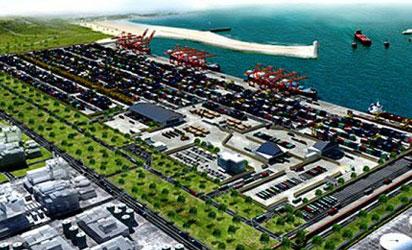
Almost every stakeholder understands the immense value of the EPZ to community development and nation building. And that is why the ethnic contentions which prolonged its groundbreaking were considered very disturbing and anti-development. Just when we thought the issues of dispute have been resolved leading to the groundbreaking by former President Goodluck Jonathan, why are we being faced with another court case over ownership of land and naming of Gbaramatu Deepsea Port?
If you mean the case Chief Ayiri Emami raised at the Federal High Court in Warri, it is not a fresh issue on any front you weight it. We (Itsekiris of Ugborodo) have been in court with the Ijaws and even about two, three other Itsekiri communities. That case started in 1976, about 39 years old now. It covers a lot of areas of land space under contention. I doubt if even Ayiri was born then. Before EPZ came, there was a judgment at the lower court, there about 1995 or 1996 in favour of Ugborodo. The Ijaws and other Itsekiri communities went to appeal court. The appeal ruled that the case be taken back to the lower court for retrial.
Ugborodo people said no, we are not comfortable with this your judgment. They then approached the Supreme Court. While this was going on, EPZ came and was named after Ugborodo. If not for the internal crisis in Ugborodo which the Ijaws capitalized on, there wouldn’t have been any crisis of ethnic contention. Then we heard some contention came up and a sort of Memorandum of Understanding was reached to break the project into two to include a Deepsea Port and all that.
I am a member of the EPZ Interface Committee but I was abroad when these things were being made, but I am very much aware that while this agreement was being reached, Ayiri visibly expressed his displeasure and disapproval. Ayiri told them that he was going to go to court. Even if he hadn’t told them, and the decision was taken by the entire Ugborodo, an individual who feels the majority decision threatens his existence and the future of Ugborodo reserves the right to go to court to seek redress. Anybody that goes to court is a peaceful person. Personally, I give hundred percent support to what Ayiri has done.
The EPZ Interface Committee is made up of Ugborodo indigenes who understand the lingering Supreme Court case as much as Ayiri. The committee collectively agreed on the naming of the Deepsea Port after Gbaramatu in the best interest of the project and the envisaged benefits for the people which were being hampered. Knowing it was in contention by the Ijaws over naming of the project that sparked the initial tension, is Ayiri’s decision to go to court not a slight on the EPZ committee and a further setback for the project?
I made the point that what Ayiri did is not a fresh case. The case in Supreme Court is still on, and on the strength of the plaintiffs’ argument, the Federal High Court that Ayiri approached has restrained the naming of the said Deepsea Port pending determination of the substantive issues. What that means to your last question is that Ayiri is not in court to stop EPZ project. He is simply saying naming that Deepsea after any party would create more problems if in the near future the party with the name ended up losing the land ownership case.
In between the lines in his prayers and argument, Ayiri never called for stoppage of project and that has also been the ruling of the court so far. Neither is he saying the name should be changed to Ugborodo for now. It says go ahead with your construction activities but don’t name Deepsea Port after anybody yet.
From the point of potential EPZ investors, it may not be as convincing as you sound it. The case is provoking ethnic contention and investors would not feel comfortable with the threat such contention poses to the project.
I think any wise investor should gain confidence from the wise council in Ayiri’s suit because if you do naming after one party who ends up losing the ownership battle in court, the backlash would be much harder to imagine and manage. Before EPZ we have been living peacefully with our Gbaramatu neighbors even with the original case which is still on. So if we have been living peacefully, we do not expect any uproar over this case to the extent that it is only drawing attention to the original case. It is not to stop the project and that is why site clearing and preparation is ongoing and both Ijaws and Itsekiris are working over the area. Nobody has been stopped from working there. That will not stop us from investing.
What would have posed danger under the circumstance is if Ugborodu is opposed to the Ggaramatu neighbors benefitting from the project on the basis of our claim to the land. We are not towing that line because even if you digest the judgment of the lower court which upheld our ownership, you find that such privilege does not grant us leverage to chase away the customary tenants we have accommodated from time immemorial.
If Gbaramatu people end up winning the case today, they cannot quit Ugborodo and vice versa. What is paramount is the benefits of the project to the people, but that should not be a cheap tool for throwing away the ownership issue.
Beyond the battle for territorial integrity with Gbaramatu, Itsekiri community of Kpokpo is also in contention with Ugborodo over their host status. Kpokpo say they are autonomous of Ugborodo and deserve own stakes on EPZ. Ugborodo say Kpokpo are an appendage of Ugborodo. How do you bridge this misunderstanding?
Again, like the other case with Gbaramatu, this is another none issue. Kpokpo has even filed to be joined in the case Ayiri is pursuing now. A section in Kpokpo is claiming they own the land. Maybe they got there before Ugborodo, but the leaders who are going to court affirm that Ugborodo gave them the land. Their claim is that Kpokpo was given to their great great grandfather, that it was a virgin land owned by Ugborodo at the time. And that they have no other home of origin they can fall back on.
So Ugborodo is asking, if you give somebody land to stay for long and there is no other place he can call home, does he now assume autonomy or landlord over the place? We may have to go to court to determine that, but like I said, all these contentions are all borne out of the desperation to benefit from the EPZ. This is uncalled for because like the EGTL and similar projects in the area, the direct host, Ugborodo, and every other impacted community would get its fair share. There is no need for contention.
How best can we have a rancour-free EPZ, because take it or leave it, the contentions won’t encourage investors?
Please, let it be established that this is my very personal view. The solutions I want to suggest here are not the views of Ugborodo or the EPZ Committee. The crisis didn’t start with Ijaw, Itsekiri. It was the internal crisis within Ugborodo that the Ijaws cashed in on to raise so much uproar. If there was no internal crisis there wouldn’t have been an EPZ Committee set up by the government in the first place. You know Delta state set up a committee headed by former Deputy Governor, Amos Utuama to settle the crisis when it started. If that committee had given proper attention, we would have avoided this crisis.
When we met at Asaba, it was the Ijaws who suggested that government should invite leaders and set up a committee, contending that the issue could not be settled in the open, and that negotiations should be on a representative capacity. As we were leaving that meeting, all parties were asked to send their representatives for constitution of the committee.
They were further tasked to submit briefs on their ownership claims on the disputed land. Parties submitted their representatives, but when it was time to submit and exchange of briefs, only Gbaramatu people failed to submit theirs. Instead they started accusing government and the NNPC of bias.
Parties including Ijaws from Ogulagha submitted their briefs. Some Gbaramatu leaders approached me thereafter because we know ourselves. It was when government set up the committee that they felt shut out. That was when they started raising issues of land ownership and all that.
Are you conceding that they too deserve their on EPZ committee because that has been one of their major agitations?
Everybody has his right to say if you can do this for one party, do it for me too. The Ijaws today are very impacted customary tenants. What brought the internal crisis in Ugborodo was lack of transparency and trust. The one with Gbaratu is same lack of trust. They have a right to feel that their interest won’t be protected in an EPZ committee where they have no representation. I did my personal investigation and I so discovered. I am speaking as an individual.
For me really, the mutually approachable way out would be for government to set up a broad, all embracing EPZ Interface committee that accommodates representation from the major host, Ugborodo and the impacted neighbors.
What affects them affects Ugborodo in terms of the project impact, but it must be emphasised that such as all embracing committee cannot be on equal representation and sharing.
What should then be the representation ratio if you don’t advocate equal representation?
First, let’s deal with how well all parties would accept this idea. After mutual consent by the communities, government and NNPC, all stakeholders can now come to a round table to negotiate representation and sharing ratios. So with this approach, whatever information, benefit coming from the project or NNPC will be known, first hand, to all communities and parties.
That settles the distrust and lack of transparency and also makes it easier for communities to checkmate NNPC against divide and rule. Afterwards, the battle will now be within the communities themselves to share what goes to them.
Above all, I am appealing to Urhobos, well meaning Isokos, Ndokwas and other Delta Ijaws who will also benefit from the project to appeal to our Gbaramatu brothers to allow peace reign so the project can take off because this was what they did during the Itsekiris/Ijaw crisis that made Shell to leave the state and we are all suffering the consequences today.
Let’s now deal with DESOPADEC particularly the raging debate over the executive amendment bill by Governor Okowa.
I have read the sentimental bill. For me, it is largely a question of Okowa trying, trying I say, to legalise the illegality Governor Ibori brought into the commission from the onset and supported by Okrika, the pioneer chairman.
Illegality? What illegality by Ibori?
When the fight for DESOPADEC started, we were all involved in driving it. All oil producing blocs in Delta state; Urhobos, Ijaws, Itsekiris, Isokos and Ndokwas. It was tug of war. We went to everywhere, to National Assembly, Obasanjo, DPR to get production figures, and even the military. Gen. Omu was the Chief of Defense Staff then. Even Chief Rita Lori-Ogbebor was prominent in the struggle. She hosted us and did a lot. The clear agitation was to ensure that monies derived from the oil and gas find direct expression in changing the degradation and squalor in oil host communities as panaceas for stopping pipeline vandalism and youth unrest.
While we got satisfactory response from Abuja, the governors were against it. In Delta we had Ibori to mount pressure on. Finally we got his nod. Having agreed that the idea was desirable, the next issue was what platform to use in managing the accruing resources and driving the distribution of the development projects to the communities.
There were vast suggestions to use traditional rulers, a ministry or a commission. We settled for DESOPADEC as Delta took lead in setting up an oil commission before Ondo, Edo and other oil states started joining the bandwagon. HOSTCOM was undoubtedly the agitation instrument. Alfred Bubor was pioneer chairman and Wellington Okrika, Leader. Okikra did not spend his money in the campaigns. Rather some of us were providing the money. For instance, my contributions came from Ugborodo where I was community leader.
With the negotiated foundation structure of DESOPADEC, the oil communities were supposed to determine their needs and chose projects best suited to bring development to their areas and the value of what to get should be in relation to the quantum of production.
The commission was to fall back to the oil company to authenticate their respective production quotas and the benefit to each community was to be based on its production value. And we struggled that HOSTCOM must produce the commission’s chairman. We made Okrika the chairman, but as soon as he came, he connived with the government to derail the group interest which is the communities’ interest. What became overriding was the partisan interests. Then, when we, HOSTCOM leaders went to Okrika to advice him, you stayed for hours and you couldn’t see him. This was somebody who was broke during the struggle for the commission. When you visited him then, he would open his door wide open expecting whether you brought money.
How does this correlate with the transition of illegality from Ibori to Okowa’s amendment bill?
I will expose the sequential relationship. Okrika has no moral justification to start playing saint about the situation with DESOPODEC. I have heard him. His argument against Okowa is right, but he caused the whole problem which Okowa is trying to capitalize on to further rubbish the commission. As pioneer chairman and leader of the group that fought for DESOPADEC, Okrika was bound to put up exemplary structure to achieve the group objectives HOSTCOM fought for. He was now carried away and allowed the government to have full control and influence over the funds.
Dr. Uduaghan then came in. For eight years, he did not do the right thing. Instead he aggravated the rot and derailment of the original course only to attempt at the last minute to call for restructuring. Because he was going out after successfully taking everything from DESOPADEC, he felt it was then right to say things were not being properly done. These are the illegalities Okowa is trying to perfect by aiming to further politicize DESOPADEC as a body to cater for the entire state and not oil communities. He is trying to legalise the illegality started by Ibori and escalated by Uduaghan and Okrika as pioneer chairman. He is trying to do so by passing through the house.
Are you inferring that the original law setting up DESOPADEC was faulty?
I mean they bent and grossly abused it from the very beginning. That is the illegality. Instead of bringing projects to the degraded and exploited oil producing communities, they used the bulk of the money on misplaced projects bearing no direct benefits to oil communities.
The law is not the issue, mismanagement is. They must check that. When they appoint people, it must not be that you are an Itsekiri man, for instance, based on just academic or partisan consideration . We must know; are you from oil producing Itsekiri area? Are you known in your community and do you have interests of the people at heart? Take a case in point.
The appointment of Engr. Tuoyor Omatsuli who represents Delta State currently on the board NDDC is the first time the commission’s presence is being felt in Ugborodo because Tuoyor not only hails from Ugborodo, he grew up there, he is very known to the people and he understands the needs of the community and other Itsekiri communities. Some of these appointees are not known and they don’t even know the people they are representing. They get appointed through man know man and that is what is killing the country.
The bill by Okowa, just like Uduaghan’s own that was widely rejected, is anti-oil producing area and anti development. I don’t expect any lawmaker from oil producing area to support that bill. Unfortunately most of them are not representing the interest of their people.
They are representing their own interests and those who sponsored them. If the governor means well with amendment he should go to the original law and strengthen areas which give greater checks to ensuring that development goes directly to the oil communities because the 13% is for oil communities. It is just like 13% derivation from federal allocation. It cannot go to non oil producing states, so you don’t expect DESOPODEC fund to go to non oil producing communities.
Disclaimer
Comments expressed here do not reflect the opinions of Vanguard newspapers or any employee thereof.