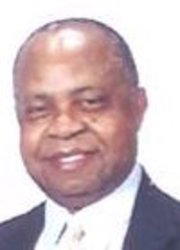
Let us celebrate good men. Chukwuma Azuonye, poet, scholar, and belletrist; one of the most versatile and most sophisticated intellectuals of his generation in Nigeria, belongs squarely to that”interstial” generation in Nigeria: that is how I describe that group of people born between 1945 and 1955; between the end of World War II and the formal transition towards decolonization in Africa in the 20h century.
 This generation is in part inheritors of the best hope of the postcolonial state, and in some ways, the darkest enablers of its later crisis, having assumed formal authority of the nation, marked in Nigeria by the shifts occasioned with the military coup of December 1983. That generation took the baton from the older “wasted generation,” of the Soyinkas, and ran their own race, and are today grand old men.
It does feel, given the incredible promise and optimism of those years, that the tragic cycle of waste may yet haunt the true measure of the work and contribution of their age in the shaping of the Nigerian or African imagination.However, among those who can look back and feel some consolation should be counted, Chukwuma Azuonye. Born on March 31, 1945 in Isuochi, in the old Okigwe province of Eastern Nigeria, Azuonye was educated first at the National High School, Okigwe, where he first came under the direct influence of a young teacher, his English and literature master, the now late Adiele Afigbo, in the years long before he distinguished himself as one of Nigeria’s greatest modern historians. At Okigwe National, he was a class or two ahead of his friend, the poet, Chimalum Nwankwo.
In 1966, Chukwuma Azuonye was admitted to study English and Drama at the University of Ibadan, a prospect which he abandoned soon after, to return to the University of Nigeria, Nsukka, because of the troubles that echoed in the “sirened afternoons”: the coup and counter coup; the pogrom and the massacre of the Igbo nation-wide.
This led to the Igbo exodus from all parts of Nigeria, and to the so-called “in-gathering” in the East. At Nsukka, in those years of early ferment from August 1966 to July 1967, just before the break into war, Chukwuma Azonye was active at Nsukka. As Secretary of the Nsukka Writers Club, he organized weekly readings that drew a wide-range of writers including Okogbule Wonodi, Obi Wali, MJC Echeruo, Ben Obumselu, and many of those who had fled from Ibadan and converged at Nsukka to seek both physical and intellectual refuge.
Among the writers who also read at Nsukka in the events organized by Azonye, sometimes at the courtyard of the Nsukka CEC or in the apartment of Stephen Vincents, a young poet, and American Peace Corp Volunteer from San Francisco, who taught in those years at Nsukka, included Ken Saro-Wiwa, and Gabriel Okara, then Eastern Nigeria’s Chief Information officer, who drove frequently from Enugu. As Azuonye recalled later in an interview, “I tried everything to make Christopher Okigbo join us. But he was elusive; he was nowhere to be found.” It waswell-knownthat Okigbo and Achebe were at this time busy establishing the Citadel Press on Station Road, Enugu.
But as it turned out, Okigbo as elusive and could not join the readings in those years at Nsukka because of his owninvolvement in a secret arms running adventure prior to the war. The mood towards that war was both fervent and inspired at Nsukka, and in many ways shaped Azuonye profoundly. It gave impetus to the work he did even after those events. It shaped the mood at Nsukka in one generation. Azuonye describes it as driven by a “passionate intensity.” Indeed, a scene in Chimamanda Adichie’s Half of a Yellow Sun, describes the tumultuous visit of Emeka Ojukwu to Nsukka in 1967, to address the University community; particularly the students at Nsukka, who were at the forefront of those clamouring for a new republic.
Azuonye was certainly thick in that event. As he recalls of that actual visit by Odumegwu-Ojukwu, “I was one of those who carried him on my shoulder” at Nsukka. The war sooner certainly came, and Chukwuma Azuonye was among the young men who fought the war for Biafra. They were Biafra’s young intellectuals and artists – Obiora Udechukwu, Felix Okeke-Ezeigbo, Bons Nwabiani, Akomaye Oko, and so many others who spent the war constructing sites of Memory. Azuonye worked in the Biafran War Information Bureau under MJC Echeruo and with the Biafran Culture commission under the Directorship of the poet, Gabriel Okara. At war’s end in 1970, Chukwuma Azuonye returned to Nsukka, and in 1972 graduated in First class Honours in English; top of his class that included the likes of Felix Okeke-Ezeigbo who also achieved some distinction first asProfessor of English at the University of Benin, and later on at the University of Rhode Island in the United States.
Azuonye himself began with his appointment as Junior Fellow at Nsukka in 1972 and editor of Omabe the journal of the Nsukka English department. Azuonye was central to the new flowering of the Arts and the renaissance that marked the Nsukka humanities from the 1970s, that included Obiora Udechukwu, Uche Okeke, El Anatsui in the Arts, Joshua Uzoigwe in Music, Pol Ndu, Ossie Enekwe, Azuonye, and the phalanx of the great Nsukka humanities scholars in those years: Echeruo, Nwoga, Obiechina, and for a very brief while, Obumselu, and of course, the great novelist, Chinua Achebe. Around these men, Nsukka felt organic and powerful, and arguably overshadowed its peers in that period in the continent as a great epicenter of artistic and literary production, and that distinct movement we now call the “Nsukka School.”
Chukwuma Azuonye was a great organizing force, both in the Odunke Arts Community, and the Okike Center at Nsukka. In 1974 he moved with Echeruo to teach at the University of Ibadan, and was awarded a Commonwealth Fellowship to complete his doctoral work at the School of Oriental and African Studies of the University of London.
He defended his doctorate on the Igbo Epic at the University of London in 1979/80, and in 1981, returned to Nsukka once more as the Head of the Department of Linguistics and Nigerian Languages. It was in that position that he collaborated with the late, distinguished critic, Professor D.I. Nwoga on the research into the Nwagu Aneke scripts – the syllabic system of writing of the Omambala Igbo as revealed to the mystic Nwagu Aneke.
In 1991 Azuonye joined the great migration of African intellectuals in one of the most devastating “brain drain” episodes in African history to the US. He went first as a senior Fulbright Fellow at the University of Pennsylvania, and later in 1992, was appointed Professor and chair of Africana Studies at the University of Massachusetts in Boston. The travails of exile and devastating ill-health and loss has not stopped Azuonye’s fantastic mind or production.
In 2007, as WEB Dubois Fellow at Harvard, he organized the Okigbo Conference. ChukwumaAzuonye turns 70 this week with a vast array of published and unpublished work in poetry, fiction, and literary criticism. One of the most prolific of his generation of intellectuals, and one of these days, when a systematic study is convened on his work, it will be clear that the renaissance and articulate range of his mind was a great gift of his generation. It is important to celebrate good men while they are still with us – particularly in this era pf philistinism when even the universities in Nigeria lack memory and culture – and yet it is seventy gun salute to Chukwuma Azuonye: poet, scholar, literary editor, and renaissance intellectual: one of the greatest pillars of the Nsukka School.
Disclaimer
Comments expressed here do not reflect the opinions of Vanguard newspapers or any employee thereof.