By Dayo Adesulu

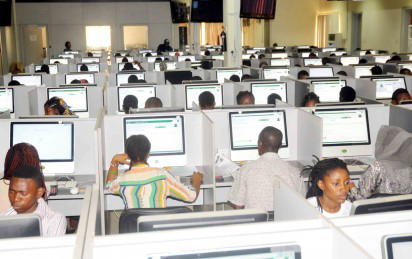
This week Saturday, all things being equal, candidates of the Unified Tertiary Matriculation Examination, UTME, would have rounded off the examinations which started on March 10, 2015. With that, 11 days would have been expended on the conduct of the tertiary examination. A day after the examination, candidates started receiving their results in batches.
However, the question being asked by many stakeholders in the education sector is; Having subjected these candidates to untold rigour in their quest for tertiary education, is there going to be a post-UTME for candidates?
Some stakeholders based their argument for abolition of post-UTME on the grounds that UTME was written by the candidates without any form of examination malpractice. Besides, they say, since tertiary institutions in the past have subjected candidates to post-UTME to test their credibility, will it be necessary with the Computer-Based Test, CBT?
In some quarters, people are calling for a total scrap of JAMB saying that it has over-stayed its usefulness as the same examination it conducted will be repeated by the various institutions of candidate’s choice. Reacting to the aforementioned, Professor Flourence Obi, Dean of Faculty, Department of English, University of Calabar UNICAL said:”The idea of computer based test is good’, but we are putting the cat before the horse, as government has not thought about these people.’’
Before making CBT compulsory for candidates, she insisted that the Federal Ministry of Education, should have made computer available to all secondary schools Nigeria. She said both rural schools and urban schools should have access to computers. In her village, she noted, they don’t have electricity consequently there is no computer business centre in that place. “I am just wondering what would have happened to them, perhaps they would have been cut off completely from university education. Now that it is computer based I don’t know how they will compete with others.
‘’In the first place, many students in the rural area do not even know what the computer is like and then telling them to travel to a local government where there is computer to write the exams would not help them. ‘’Many parents can’t even afford the money for these children to travel, even when they can, the children have not seen a computer and don’t know what to do even when they are given one. ‘’I think we still have a long way to go. When we talk about Nigeria educational system, we like to experiment things that will not really work out very well.’’
‘’Based on the afore mentioned, I will concur that there should still be post-UTME. Who says that with computer based test, candidates would not have opportunity to ask friends questions on difficult subject? She asked: “Who are the persons invigilating them, can not invigilators tell the children what to do. For the universities to be sure that these students actually did CBT themselves, they will want a post-UTME.
However, she noted that if post UTME will not going to be necessary, the universities will have to get together to talk about it. They still have to weigh the merits and demerits of the post-UTME before they agree to say there will not be need for that again. Speaking in same vein, Prof Oyesoji AREMU from the University of Ibadan said: “The post-UTME test which has become a norm in most universities in Nigeria is a reflection of not-too-much faith in some public examinations (UTME inclusive) in Nigeria. ‘’It means therefore, Nigerian universities are not leaving any chances to ensure quality assurance.
Facts driven empirically have shown that candidates who are subjected to post-UTME tests are much better prepared for university education than those who do not. It should however, be quickly noted that this may not translate to better performance at the end of their degree programmes. “What determines class of degrees is a function of other factors which are multifaceted and dynamic. Given this, subjecting candidates to another round of screening (post-UTME) is a welcome development.
‘’Although this does not go well with JAMB and has also been debated by the National Assembly in the past. Nevertheless, it is the best intervention to do in order to re validate the UTME scores. “In some cases, candidates with high sounding UTME scores were found not to pass through the proverbial needle of universities’ post-UTME assessments. ‘’While those who averaged in UTME scores were found to do well. In effect, universities are at liberty to organise post-UTME tests in the spirit of autonomy and quality assurance.
“That said, JAMB’s UTME is still a veritable tool of pre-university admission assessment. The challenge here, among other things is for JAMB to continue to re-appraise the reliability of its assessments in all subjects. Doing this, will further give credibility to UTME scores by universities in Nigeria.” Besides, on whether or not JAMB has outlived its usefulness, Aremu averred: “I don’t subscribe to the idea of scraping JAMB.
JAMB as an agency still intervenes significantly in the process leading to university admission. Scrapping JAMB is like going back to pre-JAMB years when candidates made efforts to apply and sit for many universities’ entrance examinations. JAMB still regulates admissions to Nigerian universities.” Meanwhile, Professor Ngozi Osarenren from the Department of English, University of Lagos said: ‘’Post-UTME and UTME CBT are two independent things. Post-UTME is conducted by each institution and UTME is done by JAMB.
It is too early in the day for us to start speculations because the results of the UTME CBT are yet to be known, so I don’t want to do that, the universities decide on Post-UTME after they have received the results. Reacting further,Edem Akpan, Adekunle Ajasin University, Akungba Akoko said: ‘’The argument that engendered the emergence of post UTME in Nigeria stemmed from the fact that Nigerians had lost faith in the integrity of results issued by JAMB to its candidates. Also, examination malpractice was endemic spiced with corruption among the JAMB official.
Now that the process is transparent and the question of exam malpractice has automatically been settled, it is a common sense that post UTME should be a thing of the past, except if the universities take solace in making money from the venture.’’ Cousin Brother said: ‘’P-UTME is needed so as to remind us all that Nigeria is a failed state. It is easier for Nigerian children to get admission into European and American schools than into Nigerian schools. WAEC is a fraud, so we must write UTME. UTME is a fraud so we have to write post UTME.
‘’Meanwhile, there is no body to fight for the suffering youth whose lives have been mortgaged by our so called leaders. By the way, JAMB made over six 6 billion naira from this year’s exam and the fact they would not want to share this loot with the universities is the compelling reasons for the universities to organize their own exam. After all, who else would they exploit if not the super dormant Nigerian youths?’’
Esesien Ita, Cross River University of Technology, Calabar said: ‘’I have once written that JAMB should be scrapped because, as far as I am concerned, they are a clog in the wheel of children gaining admission into tertiary institutions. ‘’Let the schools conduct their own exams, so the children can have the choice of applying to as many as they want, and go to the one they want, if taken in more than one. JAMB is simply a way of delaying them, and that is unfair. I was surprised to read in the net that admission into Nigeria’s higher institutions is highly competitive. And that is the truth. Let the authorities take away this burden from our children, please.’’
Pius Odiaka said: ‘’I am of the strong view that NUC should allow universities to conduct their respective entrance examinations, while JAMB should be scrapped. post UME now UTME examination was introduced by the universities when it was discovered that many new students who scored over 300 at the JAMB organised examinations could not write their names. The situation has not changed with the newly introduced computer-based examination which was introduced to curb endemic malpractice.
It is believed that corruption among university lecturers and registrars denies many young Nigerians of poor background from gaining admission into the tertiary. Perhaps, true; but the situation has been too bad since the advent of JAMB. The corruption has rather spread beyond the varsity offices. It is better to confine it to where it was so that the university can explain why they continue to produce unemployable graduates. Proscribe JAMB for quality and competitive tertiary education.’’
Mr Matthew said: ‘’Emphasis should be place on ensuring that the Joint Admission Matriculation Board (JAMB) overcomes fundamental problems affecting its Computer Based Test for the conduct of the Unified Tertiary Matriculation Examination (UTME) such as poor network, infrastructural defects and insufficient CBT centres to cope with the teeming number of candidates for the examination.
“Attaining this threshold would have, to a larger extent, addressed the issue of skepticism that the tertiary institutions are raising about the JAMB results which warranted the introduction of the post UTME.
“Therefore, one would think that subjecting prospective candidates to further test such as the post UTME by the tertiary institutions would not only amount not only to exploitation but unduly putting prospective candidates through excruciating experience. ‘’The foregoing is attainable with the JAMB working in synergy with all stakeholders in the education and communication sectors.’’
Disclaimer
Comments expressed here do not reflect the opinions of Vanguard newspapers or any employee thereof.