By Oghene Omonisa
Year comes and year goes. That is how it has been and will always be. As the clock gently ticked away, bringing a year to an end, another was being born. The birth of a new year brings about the beginning of another 365 or 366 days, a duration with its symbolic nuances, tempo and memories.
But some years pack so much historic events that such years become unforgettable. In recording them for history, these events jostle for available media space, be it instantaneous reports as in online news updates, or breaking news in broadcasting or newspapers or newsmagazines.
The editors at TIME, U.S. leading international newsmagazine, found similar challenges in 1927, when they chased aviator Charles Linbergh for its cover in May of that year. His historic non-stop solo flight across the Atlantic from New York to Paris was a news event which made Linbergh a deserved cover subject for the year. In justifying making him, in a news-scarcity season, a cover subject in its year-end issue, the magazine named him Man of the Year, which interestingly gave birth to its annual Man of the Year edition, and which has also become a media ritual world wide.
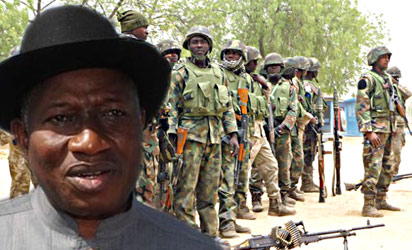
But throughout the year just gone by, Islamic militant leader Ibrahim Shekau and his Boko Haram boys did not, for a long period, lose media attention to another headline-grabbing event or personality. What with their string of murderous atrocities, especially keeping the over 200 abducted Chibok Girls for more than 250 days now!
February: Centenary Anniversary
2014 was a year which started with the exciting reminder that ours is a country which began with the amalgamation of the Northern and Southern Protectorates in 1914. Our country became a century old. Thus began the old debate about where and what we were, are and ought to have been. But we, as always, eventually celebrated, inviting world leaders to the elaborate series of events. The day of the grand finale was Thursday, February 27.
January: Glo/CAF Player of the Year
True patriotism and genuine admiration for Nigerian and Chelsea midfielder Mikel Obi had led many Nigerians to expect him to join African acknowledged greats by winning the 2013 Glo/CAF Player of the Year award in January. To their disappointment, the title went to Ivorian and Manchester City midfielder, Yaya Toure of Ivory Coast. But Toure deserved the award. Mikel was not in his class.
March: Recognition for Americanah
The Nigerian literary world was titillated by the news that Americanah, the third novel of our own Chimamanda Ngozi Adichie, had been named one of the top 10 Best Books of 2013 by the New York Times. The choice was made by a team of editors of the newspaper, a paper which is widely regarded as the most prestigious in the world. The prizes were expected to follow. One came in the U.S. in early March: the National Book Critics Circle (NBCC) award.
January: Open Letters Continued
 The public excitements created by former President Olusegun Obasanjo’s open letter to President Jonathan in late 2013 spilled over to 2014 with Chief EK Clark’s 10-page open letter to Obasanjo instigating more public reactions and debates on the extended season of letter writing, especially with the Ijaw leader accusing Obasanjo of being a trouble-maker and a hypocrite.
February: Sanusi Lamido’s Sack
If former CBN governor, Mallam Sanusi Lamido has gone down in history as the most controversial CBN governor ever, 2014 will be recorded as the year he stood up to the presidency. The mallam rattled the Presidency and elicited copies in the newsrooms when he refused to resign when President Jonathan ordered him to, following his leaked letter to the president, claiming that $49.8bn oil revenue was missing.
Surprisingly, support came for the headline-grabbing governor when many lawyers, and even some federal legislators later, began quoting laws in his favour. He would later be suspended by the presidency in February over alleged ‘acts of financial recklessness and misconducts’, four months to the expiration of his five-year term in June a successor was appointed, this caused him to drag the president to court. The matter was still in court in June, when the Emir of Kano Ado Bayaro passed on and the mallam was appointed to succeed him as the 14th Emir. He has since withdrawn the case.
Bamanga Tukur’s Resignation
The wrangling in the PDP over its leadership eventually claimed its chairman, Alhaji Bamanga Tukur, who resigned in January, replaced by Alhaji Adamu Mu’azu, Bauch State former governor. This though would not make the decampee governors and lawmakers to return to the party. But it certainly helped to put the party in shape.
January: Nasir El-Rufai’s Arrest, Release
Colours of things to come in 2015 began to appear when Mallam Nasir El-Rufai, former FCT minister and now APC Kaduna State gubernatorial candidate was detained by the DSS in January, over his comment that violence might erupt in 2015 if elections were rigged. And to protest alleged reign of impunity in Rivers State, APC legislators carried out party directives to shut down the government by shutting down government bills.
February: Atiku Abubakar’s Last Chance
Former Vice President Alhaji Atiku Abubakar began his last quest for the presidency when he ditched the PDP for APC in February. The journey would continue with his eventual purchase of the APC presidential form. But he would ultimately lose out to Gen. Mohammadu Buhari in the December party primary.
February: Asari-Dokubo’s Arrest, Release
For alleged inflammatory remarks, Alhaji Mujahid Asari-Dokubo, leader of the Niger Delta Peoples’ Volunteer Force (NDPVF) was arrested, interrogated and eventually released in February.
February: Etisalat Prize for Literature
The Nigerian literary community, and by extension, that of the whole of Africa, got a fillip in February with the organisation of the first edition of the Etisalat Prize for Literature, which held in Lagos and was won by Zimbabwe’s Noviolet Bulawayo, with her book, We Need New Names. The prize is for Africa’s most prolific debut book.
February: Stella Oduah’s Sack
Following the scandal caused by her purchase of allegedly inflated N255m bullet-proof cars the year before, Stella Oduah was eventually dropped as minister of aviation in February.
March: 2014 National Conference

Confab members
At last the federal government released the names of the 483 prominent Nigerians in March, to possibly hammer out details of a new constitution for Nigeria at the National Conference, which also kicked off that month. If anything, Nigerians like talking, even if for free. Now, for being paid, the delegates were expected to talk a lot. And they did eventually talk. A lot! Many Nigerians have since forgotten most of the things they talked about. They will be remembered when the government is set to implement the adopted resolutions.
March: Nigerian Immigration Service Recruitment Tests
Then came the immigration job test, which claimed tens of lives across the country. The Nigerian Immigration Service had advertised for 4,500 job spaces. And hundreds of thousands of applicants had indicated interest by purchasing the N1,000 application form. Recruitment tests were slated across the country. But the number of applicants was too high to be properly managed. 69,000 applicants thronged the 60,000 capacity National Stadium in Abuja; and there were 56,000 applicants in Lagos; 23,000 in Port Harcourt; 20,000 in Benin City; 12,000 in Akure; 11,000 in Minna; and similar number across the country.
Recruitment test centres were unable to accommodate them. At the end of the day, scores had died from exhaustion and suffocation, and certificates were lost. The date was Saturday, March 15. Following public outcry, the whole exercise would eventually be cancelled by the federal government.
April: Nigeria’s economy Is $510bn Big
It could have easily passed for an April Fool prank as it came on April 6, that Nigeria is now the largest economy in Africa and the 26th largest in the world, courtesy of a new rebase, which put its size at $510bn, as against the World Bank’s 2012 figure of $262.6bn. But it will take more than statistics to convince the average Nigerian that our economy is bigger than that of South Africa, a country which still retains the World Bank’s 2012 $384.3bn figure, a country where Nigerians troop to, to earn enough to send back to their families and loved ones, and a country with better social amenities and infrastructure.
Minister of finance and coordinating minister of the economy, Dr. Okonjo-Iweala, understands these, thus she added that the government needed to build safety nets to close the income inequality gap in the country, saying, ‘inequality has been rising so we need to build social nets meant to take care of those at the bottom of the ladder.’
April – July: Milestones
Death visited foremost movie producer and director, Mrs. Amaka Igwe, on April 28, at 51. She passed on in her Udi country home, Enugu State. The creator of Checkmate and Fuji House of Commotion died of asthma. Then came the death of eminent jurist Justice Chukwudifu Oputa, May 4, at 97, in Abuja. He was the chief care-taker of the famous Oputa Panel (Human Rights Violations Investigation Commission), which was constituted by former President Olusegun Obasanjo to investigate rights abuses during the 15-year military rule from 1984 to 1999.
Alhaji Ado Bayero, Emir of Kano and one of Nigeria’s most prominent Islamic leaders, took a bow at his palace on June 6, at 83. He died of cancer. The next day, cancer, ovarian this time, snuffed life out of irrepressible Prof Dora Akunyili of NAFDAC fame, in far away India. She was aged 60. Prominent businessman, Alhaji Arisekola Alao, died in his sleep at his London home, June 18. He was 69. Then former minister of transport and strongman of 2nd Republic politics, Alhaji Umaru Dikko, died of stroke July 1, in London, at 78.
June: Newspapers’ Seizure
The Jonathan government practically took Nigeria back to the military era when, in the morning of Friday, June 6, armed soldiers and operatives of the SSS intercepted and raided newspaper distribution vans and seized and damaged copies of newspapers nationwide. Wide condemnations trailed these actions. The next day, similar actions were carried out by security personnel in Minna, the Niger State capital. It went on for a few more days.
July: Nigerian Banks Among 1,000 Global Banks
There came uplifting news from the banking sector around this time, that thirteen Nigerian banks have been listed among the Leading 1,000 Global Banks as published by The Banker magazine of the Financial Times Group in its 2014 edition. The banks that made the list are Zenith Bank, Guaranty Trust Bank, FirstBank, Access Bank, United Bank for Africa, Fidelity Bank, Ecobank and Skye Bank. Others are First City Monument Bank, Diamond Bank, Stanbic IBTC Holdings, Standard Chartered Bank Nigeria and Union Bank of Nigeria.
July: Wole Soyinka At 80
2014 is the year Prof. Wole Soyinka clocked 80! Does he need any introduction! Born on July 13, 1934 in Abeokuta, Ogun State, Prof. Soyinka attended both the University of Ibadan (then known as University College, affiliated to the University of London) and the University of Leeds, in the UK. He quickly became a university teacher, playwright and poet. Some people liken him to William Shakespeare, also of the same initials (W.S.), and refer to him as our answer to Shakespeare. Known for his literary prowess, Prof. Soyinka won the Nobel Prize for Literature in 1986, the first African to do so. His 80th birthday was well celebrated.
September: Soldiers To Be Executed
Then came the news on Tuesday, September 16, that twelve Nigerian soldiers have been sentenced to death for mutiny after shots were fired at their commanding officer by Boko Haram insurgents in the restive North-Eastern city of Maiduguri, in May. While Nigerians were still grappling with the impact of such pronouncement, another military court sentenced a different set of 54 soldiers to death in December, by firing squad for defiance against the battle against the Islamic militant group. Nigerians still await their fate.
October: Yakubu Gowon At 80
Three months after Prof. Soyinka’s 80th birthday, it was the turn of Gen Yakubu Gowon, Nigeria’s civil war head of state, who also clocked 80 in 2014. Gen. Gowon holds the record of Nigeria’s youngest leader, becoming head of state at 32 in 1966. He was even a bachelor when he assumed office. His was October 19. Appropriately and deservedly elaborate ceremonies were also held to mark it.
July: Ebola Outbreak
If ever there was a news item which took the “shine” off Boko Haram the longest, it was the Ebola outbreak. The story goes of a certain Liberian-American diplomat named Patrick Sawyer, who travelled to Nigeria through Lagos on July 20, with the supposed intention of attending an ECOWAS convention in Calabar. But the guy knew what he actually wanted. He had contracted the deadly Ebola Virus Disease (EVD) and actually wanted it treated in Nigeria, where he believed there were better medical facilities than Liberia.
His sister, Princess, from whom he was believed to have contracted it, had died of it two weeks before. Sick on arrival, he sought an exclusive hospital for treatment. Not diagnosing any meaningful ailment, doctors had to test him for Ebola, having just come from Liberia, where there had been an outbreak of the disease. Confirming he was down with the virus, he eventually died three days later. But before then, he had made contact with people, on the flight to Nigeria, in the hospital. And a few of them had contracted the virus.
Thus began the race to eradicate the virus from Nigeria. Those who had contracted it were traced, quarantined and treated. But some could not survive it. Public enlightenment campaigns were intense. School resumption was delayed by one month, banks and other public places providing sanitisers at the entrance became the norm. Nigerians started washing their hands. Sanitary masks became a common sight. And Nigeria and Nigerians won. Ebola is gone, taking 8 Nigerian lives.
July – November: Nigeria Without Sports Glory
2014 gave little joy in sports, but much sadness. Joy that Blessing Okogbare gave us double gold in 100 and 200 metres at the Commonwealth Games in Glasgow, Scotland, in July; and joy that, in October, the Super Falcons lifted the trophy at the 9th edition of the African Women Championship in Namibia. But it was sad that Nigeria did not make much impact at the World Cup in Brazil; the saddest and one of the darkest spots of the year was when the Super Eagles failed to qualify to defend the African Cup of Nations in 2015.
September: Synagogue Church of All Nations’ Building Collapses

TB Joshua-Synagogue Church
The Synagogue Church of All Nations (SCOAN), located at Ikotun-Egbe, Lagos, had since turned out to be one of the most visited places by foreigners from all over the world, as well as Nigerians from every part of the country, seeking spiritual solutions to their problems. Its founder and leader, Pastor TB Joshua, is equally an international figure. So, when a building collapsed there, it was world news largely due to the number of foreigners and deaths involved as well as the international standing of the church and its founder. The building, which mostly served foreigners, was a five-storey guest house within the church premises. At the last count, 116 persons lost their lives. It was tragedy. The day was Friday, September 12.
September: Seizure of $9.3m Arms Money
The news of the arrest of two Nigerians and an Israeli in September, for attempting to illegally bring $9.3m cash into South Africa was just news until further details emerged that the money was to legally purchase arms on behalf of the Nigerian government, and that the private jet used, a Bombardier Challenger 600, with Registration No. 808HG, was owned by Pastor Ayo Oritsejafor, president of the Christian Association of Nigeria (CAN) and an ally and personal friend of President Jonathan. Then the whole story took another dimension: Political dimension.
Some alleged that the Christian leader was an arms dealer; others claimed the arms were for Christians to fight Muslims, while a few others believed the arms were for the 2015 elections. It easily became a source of weapon for the opposition until explanation finally came from the leader of the Christian community himself, that he actually owned the jet, but that it was being managed by another company, Eagle Air, which leased it to Green Coast Produce Limited, and what Green Coast Produce did with it was no business of Eagle Air. The presidency had to wade in that the arrested arms dealers legally acted on behalf of the Nigerian intelligence service. End of story. It later went as far as to the Senate, but the end had earlier been seen.
November: 2 Nigerians Join World Billionaires’ Club
Then came the good news in November that two more Nigerians have joined the world billionaires’ exclusive club. They are Dr. Orji Uzor Kalu, former Abia State governor, industrialist and publisher of The Sun and New Telegraph newspapers, and Mr. Tony Elumelu, banker and chairman of UBA. By making Forbes magazine’s 50 Richest Africans list at $1b each, both automatically joined the world’s richest, joining four other Nigerians on the world billionaires’ club: Alhaji Aliko Dangote ($21.6b), Dr. Mike Adenuga ($4.1b), Madam Folorunsho Alakija ($2.5b) and General Yakubu Danjuma ($1.1b). The good thing about this news is that if there are presently four billionaires in dollars in Nigeria, more certainly are coming behind, evidence of our greatness.
November: Wall Scaling At Assembly Complex
The police tried to prevent Speaker Aminu Tambuwal and other members from entering the National Assembly premises in November 20. Then commotion broke out as the law-makers attempted to force their way through. Tear gas followed and both Tambuwal and Senate President David Mark were affected. Some members had to climb the walls to gain entry. Cameras captured them for members of the public to see. It was high drama.
Olusegun Obasanjo’s Book
 Obasanjo took his letter-writing hobby to another height when he released his autobiography, My Watch, in December 9. A controversial book even before it was released, Buruji Kashamu, chairman, organisation and mobilisation committee of the PDP in the South-West, and a personal friend of President Jonathan, had obtained a court order stopping the publication of the book. Expectedly, Obasanjo takes on Jonathan and a few others in the book, including Soyinka. Soyinka would later respond in a treatise, promising more detailed response later. Sure, more literary fireworks are expected on the book this year.
December: 30 Days in Atlanta Makes N85 Million
One of the most exciting news of the year came towards the end, that 30 Days in Atlanta, the comedy movie produced by Ayo Makun, popularly known as AY, has grossed N85 million in two months, showing in Nigerian cinemas only. This has made the film the highest grossing in Nigeria, beating Half of a Yellow Sun, which had held the record at N60 million. N85 million in two months! In Nigeria! Big things are going on!
December: AirAsia Plane Missing, 40 Bodies Found
2014 was a year during which many Nigerians were almost forgetting the existence of air disasters until it was starkly brought to our consciousness with the disappearance of an Indonesian AirAsia’s flight QZ8501, an Airbus A320-200, carrying 162 people; especially because it happened in the festive season: Sunday, December 28. As at Tuesday, December 30, the plane was yet to be found, but the Indonesian Navy said 40 bodies and wreckage had been recovered from the sea off the coast of Borneo.
2015
2014 will be remembered for many things, positive and negative. But it will be remembered more as the year the whole Nigerians defiantly stood up in unison to confront Ebola and defeat it. 2015 is here. There are the elections. And there is Boko Haram. If Nigerians could unite in the anti-Ebola spirit and vigour, these two events, like unforeseeable others to come in 2015, should not pose any formidable threat to our unity, the palpable fears notwithstanding.
Disclaimer
Comments expressed here do not reflect the opinions of Vanguard newspapers or any employee thereof.