By Henry Boyo
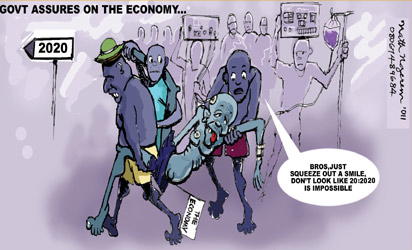
Regrettably, inspite of the earlier assurance to maintain the stability of the Naira in his inaugural address, Emefiele, the CBN Governor’s, policy summersault with Naira devaluation shortly afterwards, has since led to the National Currency trading above N173=$1, thus establishing Naira depreciation of about 13%; alarmingly, the pressure remains unabating and there are real fears that sooner than later, the Naira exchange rate may tumble below N200/$1 with the attendant severe social and economic consequences.
It will indeed be difficult to exempt any stakeholder or economic sector from the ravages of the ill wind of the recent Naira devaluation. Indeed, some reports already suggest that the Naira may have begun a suicidal slide into ignominy a la the experiences of Ghana and Zimbabwe, where the local currencies became virtually worthless until redenomination temporarily rescued the Ghanaian Cedi, while the adoption of US dollars for transactions eventually stabilised Zimbabwe’s money market. Predictably, wherever a currency looses significant fractions of its exchange value, deepening poverty and disenabling economic distortions will prevail and the public will increasingly reject holding such currency as a store of value!
Hereafter, we will look a bit more closely at the most vulnerable victims of the current Naira devaluation.
 The extent of price increases on all imported goods and services, as a result of devaluation, may still be difficult to determine, but what is quite clear, is that the minimum increase on shelf/retail prices of goods may exceed 20% since payments for most of such imports will be sourced at the interbank exchange rate, which is destined under present pressure to approach N200=$1 in the short term. The resultant steep rise in prices will not be restricted to Retail outlets like Shoprite, where, well over 90% of goods (including fruits & vegetables) on offer are imported! Sadly, the prices of those goods sold in our traditional markets and side shops may not also fare any better, as imports have increasingly also taken up shelf spaces in these markets.
Nigerians must, however, immediately dismiss any hope that increases in the prices of imports will ultimately spur local production; evidently, so long as industries struggle with the huge cost of energy and the excessive cost of borrowing (with interest rates above 20%), our industries may never be able to successfully compete with imported goods, (which include processed foods and beverages). Besides, the absence of sustainable local sources of raw materials will continue to make it necessary to source such industrial inputs as imports for many years to come.
Indeed, if industrial raw materials costs increase by over 20%, inevitably, finished goods from local production will similarly carry higher production cost which will restrain their competitiveness against cheaper imported equivalents. Ultimately, cheaper, oftentimes subsidized imports will prevail and additional factory space may become available for transformation to event centers or churches and mosques; ultimately factory closures will only compound our already oppressive yoke of a high rate of unemployment and its abiding collateral of insecurity and violence.
Similarly, loan default will become increasingly rampant for both private and corporate debtors who had thought it was smart to accept (5-7%) cheaper foreign denominated loans offered by banks as substitute for the much more expensive (17-25%) Naira denominated loans. Thus, beneficiaries of foreign loans will, unexpectedly, have to find over 20% more Naira to service and or repay their debts. Some Nigerians may recall the misfortunes of the beneficiaries of government’s NERFUND (Nigerian Economic Reconstruction Fund) dollar denominated loans over 20 years ago! Sadly, most of the businesses funded with those dollar loans became grounded and many erstwhile successful and diligent entrepreneurs lost their ‘shirts’ while some others paid the ultimate price from stress and hypertension as a result of pressures to repay their rapidly bloating debts as the Naira rate plunged abysmally to a small fraction of its previous values. Sadly, It may be difficult to identify any surviving industrial beneficiary of the NERFUND scheme today!
As it is with the private sector, so also with public sector external loans. Indeed, Okonjo Iweala, the Finance Minister assured Nigerians, that relatively cheaper external loans would be sourced to supplement revenue shortfall as a result of contracting crude oil prices; on the surface, this might sound sensible, however, the Minister failed to also warn that even if such foreign loans are cheaper we may ultimately still require over 15% more Naira to service or repay these external debts if the Naira continues to weaken. Indeed if the Naira exchange rate tumbles further, the cost of servicing our external debt will eat deeper and deeper into our annual budgets and we may ultimately expend over 20% of the federation’s projected revenue for debt services and repayments annually; undoubtedly, infrastructural enhancement and poverty alleviation will consequently remain a challenge to fund with annual budgets.
Furthermore, parents and sponsors of children and wards in overseas educational institutions are also victims of the recent Naira devaluation. Indeed if school fees are paid at the current interbank rates, the Naira burden may increase by almost 20% for most sponsors. The cost of air ticketing for overseas travel will also go North in deference to the current devaluation of the Naira, consequently travel expenses (whether for education, holiday or business) for both private and government passengers will increase and may ultimately lead to curtailment of travel plans and manpower development programmes; alternatively, distasteful tradeoffs in the capital and expenditure budgets may become imperative for all concerned.
Foreign Portfolios Investors who were erstwhile eager patrons of Naira denominated equities and government’s bonds and bills are presently quickly making a beeline to exit the Nigerian market, as Naira devaluation continues to wipe off, the once exceptional yields from such instruments. The resultant capital flight has also instigated over a N2000bn fall in equity values in the Nigerian Stock Exchange in the last 6 weeks, the trend remains unyielding, with destabilising economic consequences that would shake the confidence of the investing public in the stock market for some time. Nigerians are of course concerned that inspite of almost 40% drop in crude oil prices, domestic fuel prices have remained resistant. The reality of course is that the fall in crude prices will largely be compensated by Naira depreciation and may just reduce the element of subsidy in fuel pricing from 50% to between 10-15% if the Naira exchange rate rises above N190=$1.
In conclusion, devaluation will instigate a general price rise which will push inflation into double digits and deepen poverty as all incomes will ultimately lose over 50% of purchasing value every 5 years!
Save the Naira, Save Nigerians!!
Disclaimer
Comments expressed here do not reflect the opinions of Vanguard newspapers or any employee thereof.