By UDUMA KALU
When is a generation? Is there a new Nigerian generation, the fourth? What defines this new writing? Who are its writers and leaders? Does this signify a new nation? And as patrons of Nigerian literature, Niger state’s governor Dr. Muazu Babangida Aliyu and Rivers governor Chibike Amaechi may exit next year, will the MBA colloquium and Port Harcourt Literary Festival survive?
These questions and more agitated the minds of those that attended the 4th MBA International Colloquium held from Nov 10-12 at the Justice Idris Legbo Kutigi International Conference, Minna.
Themed ‘Leadership and National Development and Post Centenary Nigeria: New Literatures, New Leaders and New Nation’, the event featured former Mozambique leader Sir Joaquim Chissano (Colloquium), and Prof. Pius Adesanmi (Pre Colloquium) as key speakers.
Other speakers were Ms. Unoma Azuah, Chiedu Ezeanah, Sumaila Umaisha, Chinyere Obi Obasi and Denja Abdullahi. Prof Ibrahim Gambari was billed to chair the event Was absent and so Adesanmi sat in his place. And there were school children too being lured into the literary world and leadership.
Indeed, Adesanmi had set the leadership tone in his keynote speech from a generational stand point.
He therefore spent a considerable time on this, insisting with Chinua Achebe that “the writer cannot be expected to be excused from the task of nation building and other socio-political debts to his society.” He noted Soyinka’s wasted generation quote and Femi Osofisan’s lecture in University of Leeds on Nigeria as a failed utopia. Adesanmi’s generation, like the other two, also engaged Nigeria as it was not satisfied with the Nigerian project.
Itemising his generation’s attempt at revamping Nigerian literature, Adesanmi gave insights into the definers of the new writers who he said seem to be questioning the exile option of the Adesanmi’s generation.
Ali and his group had indicted his mainly exiled group of “‘absence and emptiness where we had been or ought to be. Where are they? What happened to this generation, Richard Ali queried. I dare not tell you the discussion that ensued among members of Richard’s generation as they took their koboko and went after us.”
Adesanmi pointed out that this new generation include: Richard Ali, Tolu Ogunlesi, Paul Liam, Olisakwe Ukamaka Evelyn, Abubakar Adam Ibrahim, Okwui Obu, A. Igoni Barrett, Ifedigbo Nze Sylva, Jumoke Verissimo, Chinyere Obi-Obasi, Egbosa Imasuen, Uche Peter Umez, Su’eddie Vershima Agema, Onyekachi Peter Onuoha, Rosemary Ede, Saddiq M. Dzukogi.
However, the major concern for the organisers of the MBA colloquium was the sustainability of the literary confab.
Though Speaker of the State House of Assembly hoped the colloquium would continue, and Niger state being the first in the country to sign into law a bill that establishes a book agency empowered to handle book and literary issues, Mallam BM Dzukogi, Director General of the agency told Vanguard in his Minna office that in spite of the new law, there are rumours that the 2015 budget may approve only N20m for the agency. Wondering what he could achieve with such sum as it could not even organise the colloquium, the DG expressed fears that just when the governor is about to depart, there are already attempts to stifle the new agency of funds.
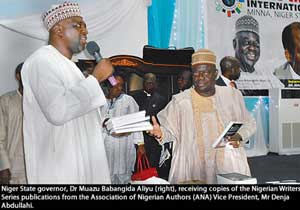
Yet, the writers had a festive event, with readings and dramatic performances. And the gathering was not just national but international. The joy was the presentation of 10 new books sponsored by the state government for the kick off of the Nigerian Writers Series, NWS. The presentation was done with Ghanian poet and president of Pan African Writers Association (PAWA) Prof Kofi Anyidoho. The key note speech was presented by President Joaquim Chissano.
Blaming foreign ideas of leadership for Africa’s political problems, Chissano said, “I share the view that the roots of effective leadership lie in simple things, one of which is listening. Listening to someone demonstrates respect; it shows that you value their ideas and are willing to hear them with due attention and consideration.
“There are times in this harum-scarum world when figuring out the right thing to do is quite simple, but doing the right thing is simply impossible. That is why I would like to suggest that leadership is a constant struggle, not exempt from errors and mistakes, to achieve set goals, and when the challenge is national development, leadership is essentially about keeping all stakeholders united and committed in solving the multiple and increasingly complex problems our countries are faced with,” he stated.
Disclaimer
Comments expressed here do not reflect the opinions of Vanguard newspapers or any employee thereof.