By Henry Boyo
The Financial Punch of Monday 8th September, 2014, carried a story titled “12 banks earn N1.4tn in six months”; the report explained that the published trading results showed that 12 banks made a combined after tax profit of N223bn between January and June 2014.

Apparently, this profit figure was about 15% lower than the N262bn profit for the same period in 2013; nonetheless, the declared profit is spectacularly almost 16% of gross earnings.
Instructively, however, inspite of their role as the real drivers of inclusive economic growth, the trading results of industrial and commercial conglomerates cannot boast of this same degree of success; for example, for the 12 months ending June 2014, Guinness Nig. Plc’s after tax profit is a meager N9.6bn or 8.7% of gross earnings, (i.e. about 50% less than the ratio of the six months after tax surplus of the 12 commercial banks).
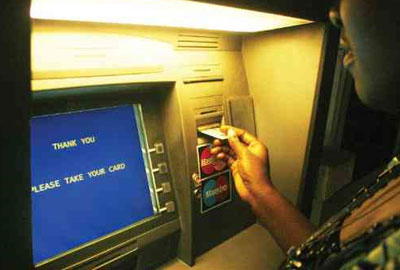
Evidently, the banks are not content with their comparatively bounteous profits; consequently, they succeeded in encouraging Godwin Emefiele, the current CBN Governor and former Managing Director of one of Nigeria’s largest banks to re-introduce a N65 ATM service charge on the 4th of every third party bank withdrawal by all customers nationwide.
The CBN has defended its apparent icing on the cake for banks by alleging that customers have abused the frequency of withdrawals from ATMs since the cashless project was introduced on a pilot basis in 2012 by Lamido Sanusi, the former CBN Governor.
In another story titled “Customers withdraw N168bn from other banks’ ATM monthly,” the Punch edition of 9/9/2014, noted that ATM transactions by customers using third party banks “rose from 33.4m in January 2013 to 66.8m in December 2013”; this development, according to the report compelled CBN, after consultation with the Bankers’ Committee on E-banking to re-introduce the N65 ATM fee.
Ironically, an ATM service charge of N100 was earlier abolished by Lamido Sanusi to encourage customers to readily embrace the CBN’s cashless project. In the above event, it seems odd therefore, that a fresh levy, whatsoever the value, should be re-introduced after the cashless project has been extended nationwide and has become increasingly adopted by more customers!
Consequently, some customers see the re-introduction as a premeditated trap with an unexpected punitive charge for the mass adoption of CBN’s cashless policy.
Indeed, since the commencement of the new levy on September 1st, there are replete media reports of an overwhelming rejection of the new ATM charge by customers; Organized Labour as well as Students’ Associations are all unanimous in their call for the immediate abolition of what they consider to be a betrayal of trust.
On the other hand, the Bankers’ Committee on E-Banking has explained that the rising volume of third party bank ATM usage “had put a substantial cost burden on the Deposit money banks; this development apparently led to CBN collaboration with the Bankers’ Committee to re-introduce the ATM fee”.
Nonetheless, CBN’s policy somersault, barely 2 years after abolishing the initial N100 ATM charge raises the question as to how the Apex bank failed to anticipate the obvious collateral of increased usage and faster depreciation of ATM infrastructure when the cashless project ultimately became successfully established nationwide after the initial pilot promotion in few selected states?
It is equally worrisome that, inspite of their bountiful and exceptional profit performances, the CBN has expressed concern that the increasing cost “of maintenance of ATM infrastructure, may force banks to reject transactions coming from their customers at other banks’ ATMs” with severe consequences for “the operability of the already institutionalised payments system.”
Indeed, the CBN has every right to promote sustainability of its policies by identifying with the perceived plight of banks, however, some customers may see the CBN as insensitive to the station of the poor while the banks may also appear to be ungrateful.
Indeed, in its campaign for massive public adoption of the ‘cashlite’ policy, the CBN had earlier alleged that over a third of total banking operation costs were derived from cash handling activities, which also accounted for a third of all banking personnel and all letable floor space.
Nigerians were encouraged to believe that the expected savings from the cashless policy would improve bank customer service and usher reduced charges for transactions; the former CBN Governor also suggested that interest rates would fall and banks would increase credit availability to the small and medium enterprises so as to facilitate inclusive rapid economic growth.
Regrettably, these expectations remain clearly unfilled, besides, the adoption of the ‘cashless’ policy has caused tremendous anguish to many Nigerians, while the attendant incidence and extent of fraud may not have also significantly reduced. So the question is, where did the benefit of all the touted savings from reduced cash handling in banks go?
Worse still, inspite of an apparent acute surplus cash in the system, the real sector and SMEs are yet to feel the impact of reasonably priced single digit interest rates; alarmingly, while the banks pay zero percent for government deposits, and less than 10% for private deposits, their cost of funds to the real sector still exceeds 20%, while our National treasury continues to subsidise banks by borrowing money it intends to keep idle from the same banks with double digit costs! Besides, the plethora of other banking charges, such as COT, alert notices, manager’s cheques, renewal of transaction cards, etc, etc. remain abiding sources of easy pickings for the banks.
Furthermore, Nigerians may feel done in, that inspite of their immense profitability, the same banks that Nigerians salvaged from collapse with both our internal reserves as well as heavy debt accumulations should still want a pound of flesh with the re-introduction of the new ATM charge.
Indeed a recent report released to the media by Afrinvest disclosed that almost N5tn deployed by the CBN and Asset Management Corporation for salvaging the banks toxic debts in 2008/9 had raised the Apex Bank’s liabilities from N2.1tn to N6tn by 2013; furthermore, the report also disclosed “that this development had made over 40% of CBN’s asset portfolio unmarketable.” (See pg 29, Punch Newspapers of 10/9/2014)
Well, so what? Some might say, after all, the banks are now ‘safe’ and depositors’ moneys are also safe, what does it matter, if future generations continue to pay back these oppressive debts which our generation gleefully incurred to save and sustain our buccaneering and exceptionally successful banking cartels? What does it matter if the banks remain affluent even when the large majority of Nigerians wallow in poverty?
Save the Naira, Save Nigerians.
Disclaimer
Comments expressed here do not reflect the opinions of Vanguard newspapers or any employee thereof.