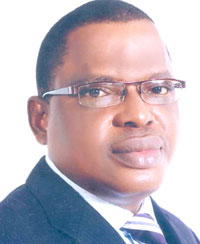
Godwin Ehigiamusoe
Mr. Godwin Ehigiamusoe is the Managing Director and Chief Executive Officer of LAPO, a leading development and microfinance organization with operations in Nigeria and Sierra Leone.
An experienced microfinance practitioner and author, Ehigiamusoe who began his career as a rural cooperative officer has won several local and international awards among which are the Model Entrepreneur Award – Nigeria in 2008 and the Schwab Foundation’s Outstanding Social Entrepreneur for Africa Award in 2010.
In this interview with Saturday Vanguard Business, he speaks about the progressive growth and development of LAPO over the years, milestones, challenges and issues concerning microfinancing in Nigeria. Excerpts.
What factors contributed to the establishment of LAPO?
Let me begin from the socio-economic background even before the beginning of LAPO. The prompting for the establishment of Lift Above Poverty Organization (LAPO) could be ascribed to a number of factors. First, was my ideological orientation as a young man.

Godwin Ehigiamusoe
My years in the university in late 1970s coincided with the period of national enthusiasm and the desire to make Nigeria the greatest nation. At the beginning of the decade we came out of the civil war strong. In 1975, we had a very charismatic leader in the person of Murtala Muhammed and Nigeria was at the forefront of the final de-colonialization of Africa with massive support for liberation movements in Southern Africa. Nigerians were excited and universities were centres of movements for better Nigeria.
This was the time I was in the university. In conjunction with others, I devoted much time beyond my studies to sensitize the students who were obviously potential elites on how to make the nation greater through adequate attention to the condition of life of the poor.
The second factor was my involvement in the co-operative movement. My exposure to the cooperative movement began with my vacation job at the Cooperative Department in Benin City in 1980. I instantly believed as I still do that properly organized, cooperative societies are veritable institutional structures to improve the condition of members of low-income households particularly in rural communities.
The final and perhaps the immediate factor was the economic crisis in the early 1980s which culminated in the implementation of the Structural Adjustment Programme (SAP) in 1986. The effect of the programme was harsh on the people. That was the setting when LAPO was initiated as a non-profit organization in late 1980s in Ogwashi-Uku, now in Delta State.
How did it begin?
LAPO began as a simple act. In the parish where I worshipped, I gave N100 each to three women, Felicia Monye, Monica Igwubuike and Obiageli Nwoko, a young lady. In the evening of every Afor market day, a major market in Ogwashi-Uku, I would move round to collect repayment of N10 per installment.
It grew steadily. With steady repayment, a loan capital of N300 reached more women within few Afor days. The pace of development and the essential features of LAPO were influenced by my contact with the Grameen Bank of Bangladesh in 1989.
How did you get in touch with Grameen Bank?
It was quite interesting. I read about Grameen Bank in Business Times, a Nigerian business paper which I doubt is still on the newsstands. Reading about Grameen Bank doing what I was doing was quite fascinating. I wrote a few lines to Dr Muhammad Yunus as he was then known, highlighting what I was doing.
There was a problem with posting the letter. In the features article on the bank in the Business Times, there was no street address. I simply addressed the letter to Dr. Muhammad Yunus, Dhaka, Bangladesh. Fortunately, a month or so later, I received a response with pamphlets and local newspaper cuttings on Grameen Bank.
I was requested to forward a photocopy of the features article on the bank as published in the Nigerian business paper which I did. In addition, I wrote to thank Professor Yunus for the response and documents and requested for funding support.
The letter was published in one of the early editions of Grameen Dialogue, a newsletter of Grameen Bank. Fortunately for me, a Programme Officer at the West Africa office of the Ford Foundation, Frank Hicks subscribed to the newsletter. He read the letter and requested for a meeting in Lagos. That was how the Ford Foundation provided the first external support for LAPO in July 1991. When it won the Grameen Foundation’s Award for Excellence in Microfinance in 2006, we felt it was fitting to dedicate it to the Ford Foundation and we gladly did.
How were the early years?
Early years of the organization were challenging and equally exciting. Here was I, a young idealistic man, brimming with ideas and with grant support to implement the ideas. I felt it was the best thing that could ever happen to me. In addition, I had the fortune of attracting hardworking young men and women who with little skills in microfinance (none had any in Nigeria then anyway) were fantastic and highly committed.
We made our mistakes, we corrected them and here we are today. The unique thing about LAPO is that it did not start as a project of any international development agency. Perhaps LAPO is one of the very few microfinance institutions, if not the only one in Africa which was not an international project but successfully scaled up to be what and where it is today.
Many people know LAPO as a non-profit organization. When did the institution transform into a microfinance bank?
Let me correct one issue. LAPO as a pro-poor development organization did not transform into a microfinance bank. What happened was that in 2010, the organization set up a microfinance bank and transferred the bulk of its microfinance operations to the new institutional vehicle. LAPO as a non-profit organization is still involved in the provision of a range of social and economic empowerment services particularly in rural communities.
We came under regulation because we are convinced that the future and development of microfinance is in an appropriate and enabling regulatory environment.
There were some misconceptions in a particular case, mischievousness about borrowers making deposits into the loan fund from which they take loans. This was and is a feature of traditional and non-profit thrift and credit schemes in rural Nigeria and indeed West Africa.
Let us look at the performance of LAPO. What will you consider are the achievements of LAPO?
The achievements of microfinance institutions like any poverty-reduction interventions are usually at two levels. In terms of service delivery such as how many people are benefiting and the volume of services delivered and second is the impact on the beneficiaries.
In terms of outreach and services, we have succeeded in creating a sustainable and regulated financial institution which provides a range of flexible financial services to a large number of people. LAPO’s client base rose from 355, 502 in 2010 to 518,187 in 2011, an annual growth rate of 46% which is remarkable in a challenging environment especially at a time when most microfinance institutions globally are recording negative growth.
The client base rose to 593,111 in May 2012. The volume of loans disbursed to clients has also grown remarkably. LAPO disbursed N13 billion, about USD 83 million, in 2009. This rose to N21.9 billion in 2010 and N31.58 billion in 2011. This is an average growth rate of 56.5%.
We target N50 billion as disbursement in the current financial year. This is an achievement when one considers the fact that the average loan size does not exceed N50, 000. As a regulated financial institution, we also provide savings opportunities for our clients.
In terms of social performance, how has LAPO fared?
LAPO has established people. It began as peoples’ organization. The organization has always been committed to finance-plus approach even before the current commendable focus on social performance management and standards. First, it was natural for LAPO to endorse the client protection principles.
We have gone further to identify and implement specific steps to put the principles into effect. For example, the elements of LAPO pricing are printed and displayed across our branches. Our price is the lowest in the Nigerian microfinance market. This can be verified easily.
As a part of the re-orientation of our credit officers, the training modules for new and existing staff have been reviewed to include client relationship management. In 2010, we changed the official designation of our Credit Officers (COs) to Client Support Officers (CSOs). In 2007, that is even before the discussion about social performance and client protection, LAPO as an NGO established a Client Relations Unit with regional client relationship officers appointed in 2011.
To effectively address the concerns and grievances of clients, the telephone numbers of client relationship unit and top management are printed on the cover of client passbooks. In 2011, LAPO introduced In Touch programme whereby every member of the Management Team is required to work out of the branch office five days in a quarter.
This has been very helpful in keeping touch with activities at the field level including how our client support officers relate with clients. These initiatives have been acknowledged and regarded as pacesetting even by our competitors. On transparency, LAPO obtained the services of Microfinance Transparency to determine its actual interest rates.
To enhance our reach to low-income households and effectively measure the impact of our services, LAPO has commenced the implementation of PPI which is a tool for measuring clients’ progress out of poverty.
One of the criticisms of microfinance is in the area of pricing. How do you rate LAPO on pricing?
It is natural for pricing to stir up emotions when low-income people are involved. Like most microfinance institutions, LAPO has received its fair share of criticisms on pricing. However, LAPO offers the cheapest loans in the Nigerian microfinance industry today. As I said earlier this can be verified easily. We have also developed a road map for a further reduction of our rates in the second half of this year and in 2013. We can do so because LAPO will progressively reap the benefit of scale and therefore plans to pass the benefits to our clients in form of lower interest rates.
I need to also highlight the fact that as a non-profit and even now as a regulated for-profit organization, the profits of LAPO have never been appropriated by anyone as dividends, This explains in part why LAPO has been able to scale up and expand services to many clients and also to provide vital social services such as scholarship awards to children of our clients.
Speaking in general term, one understands the emotion attached to pricing in microfinance but what is not helpful is the tendency to demonize institutions and operators. How else does one explain why one journalist was quick to categorize all payments including savings under interest payment and used the figure to compute the rate of interest! She realized her error later. Good, but much harm had been done.
Disclaimer
Comments expressed here do not reflect the opinions of Vanguard newspapers or any employee thereof.