By Peter Duru, Makurdi
Benue state has commenced the 2026 National Learning Assessment, NLA, Week with the training of assessors ahead of the statewide exercise.
Described as a key initiative to measure learning outcomes and improve the quality of basic education, the exercise followed the declaration of June 29 to July 5, 2026, as National Learning Assessment Week by the Minister of Education, Dr. Tunji Alausa.
It is being jointly implemented by the Federal Ministry of Education, the Universal Basic Education Commission, UBEC, the World Bank and UNICEF.
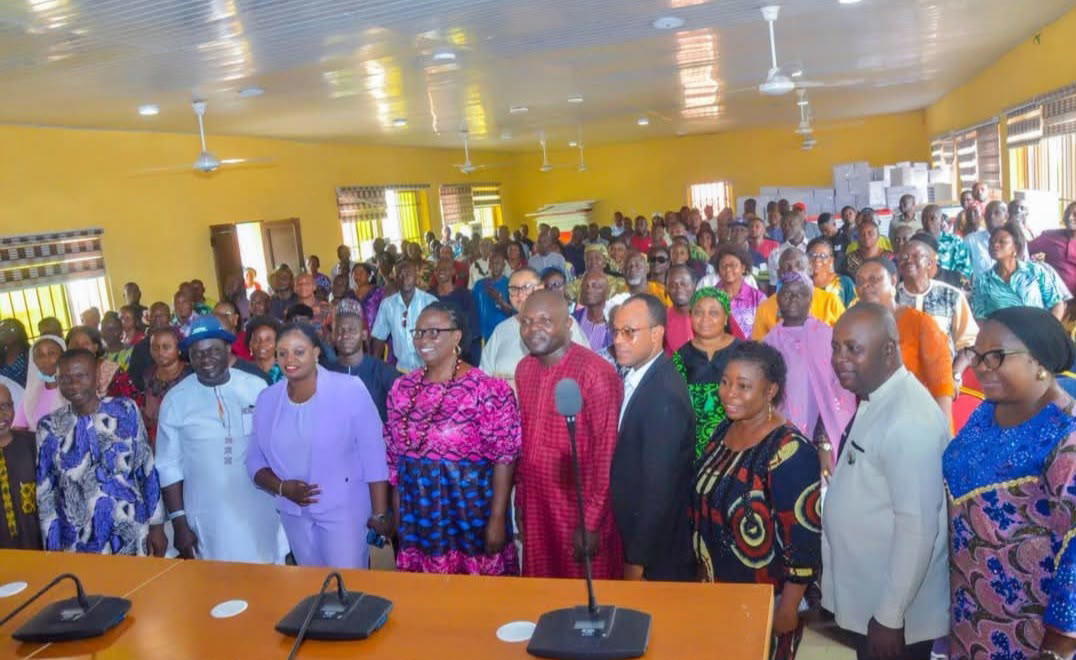
Speaking during the training held at the Benue State Universal Basic Education Board, SUBEB Headquarters in Makudi, the Executive Chairman of Benue SUBEB, Dr. Grace Adagba, described the NLA as a “strategic initiative that will provide valuable insights into learners’ performance and strengthen the quality of education delivery.”
Dr. Adagba explained that a pilot phase of the assessment was conducted in May 2026 across three Local Government Areas, LGAs, while the main exercise in Benue state would cover 11 Local Government Education Authorities (LGEAs).
She noted that “the exercise is particularly significant following the recruitment of over 9,000 teachers by the administration of Governor Hyacinth Alia, as the findings will help identify learning gaps, assess progress, and guide targeted interventions.”
Declaring the commencement of the exercise in Benue, the NLA Team Lead from UBEC Headquarters, Dr. Phoebe Jatau, explained that “the National Learning Assessment is a merger of the National Monitoring of Learning Achievement (NMLA) and the National Assessment on Learning Achievement in Basic Education (NALABE).”
She stated that the assessment would provide credible data needed to drive education planning and policy implementation.
According to her, “the exercise will assess pupils in Basic Three, Basic Five, Basic Nine and Senior Secondary School Two, SSS II, in both public and private schools across the country.”
She urged assessors to uphold transparency, integrity, and accuracy in the administration of the assessment tools, stressing that “credible data remains essential for effective planning and policy direction.”
Participants at the training included principals, head teachers, quality assurance officers, SUBEB board members and representatives of the Federal and Benue State Ministries of Education from the 11 participating Local Government Education Authorities.
Disclaimer
Comments expressed here do not reflect the opinions of Vanguard newspapers or any employee thereof.