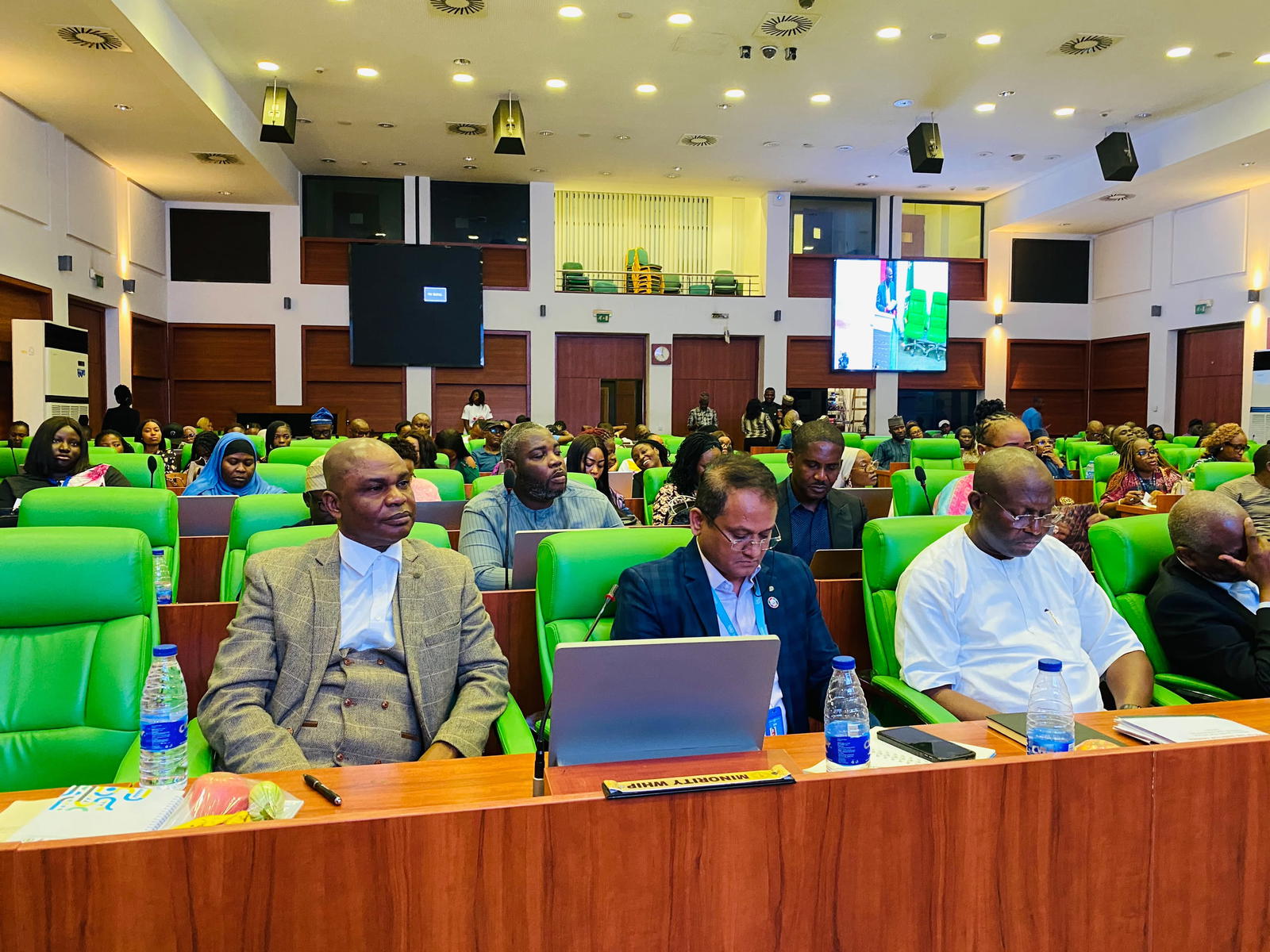
President, Lawyers Alert, Dr Rommy Mom (left) and WHO’s representative, during the public hearing.
…to protect fundamental rights, boost access to treatment
By Gabriel Ewepu
ABUJA – THE House of Reps Committee on Infectious Diseases, Lawyers Alert, Stop TB Partnership Nigeria , TB Network and Debriche Health Development Center DHDC, and others have thrown weight behind the proposed Tuberculosis Rights Bill, giving hope to Nigerians with Tuberculosis as the Bill protects their fundamental human rights, addresses stigma, and boost access to treatment.
They supported the Bill at a one-day public hearing organized by the House Committee on Infectious Diseases at the National Assembly, where the Chairman, House Committee on Infectious Diseases Hon. Amobi Godwin Ogah, represented by Hon Mark Esset, in his welcome address explained that the public hearing was convened to allow stakeholders and the public to express their views on the merits and gaps in the proposed legislation.
He described the TB Bill as an important intervention aimed at giving Nigerians living with and affected by TB a sense of belonging by protecting their fundamental human rights and preventing discrimination and stigmatization.
The Committee Chairman further observed that Nigeria has long had a legal gap in the protection of the rights and dignity of persons affected by TB which has contributed to low testing, poor diagnosis, and weak protection for affected persons.
He assured stakeholders that the Committee was willing to work with them to resolve grey areas in the Bill and produce legislation that would stand the test of time.
Stakeholders at the hearing welcomed the TB Bill as a historic opportunity to move Nigeria’s TB response beyond a purely medical approach toward a people-centred, rights-based, and community-driven framework.
It was noted that TB-related stigma and discrimination continue to prevent early diagnosis, treatment adherence, workplace retention, school participation, family support, and community reintegration.
Meanwhile, relevant government ministries supported the passage of the Bill, while calling for targeted amendments to make it more comprehensive and implementable.
The memorandum submitted on behalf of the Ministry and NTBLCP noted that stigma is not a peripheral social issue but a driver of late presentation, poor treatment outcomes, poverty, social exclusion, and continued transmission.
However, it was recommended that the Bill be strengthened to protect confidentiality, informed consent, reasonable accommodation, access to justice, and enforceable remedies.
A key recommendation was that the Bill should be expanded from a TB-only framework to an integrated protection law for persons affected by Tuberculosis, Leprosy and Buruli Ulcer.
The Programme noted that all three diseases fall within the Ministry of Health mandate and are associated with stigma, exclusion, disability and discrimination.
It further recommended that the Bill address technical and biomedical accuracy, testing and screening safeguards, healthcare worker protection, duties of persons affected by TB, implementation accountability, and operational safeguards.
Lawyers Alert, a leading Nigerian human rights organization working at the intersection of rights and health, also made a strong case for the Bill to be strengthened as a human rights instrument. The organisation commended the National Assembly and the sponsors of the Bill for recognising that TB is not only a public health concern but also a human rights issue.
It noted that stigma, forced disclosure, denial of work, school exclusion, refusal of health services, and loss of livelihood discourage early diagnosis and completion of treatment.
In its memorandum, Lawyers Alert urged the Committee to ensure that the Bill balances human rights, public health, and treatment adherence. It is recommended that any restriction of liberty, including involuntary isolation or hospitalisation, must be exceptional, evidence-based, medically justified, time-bound, and subject to court authorisation.
Meanwhile, it stressed that isolation should never be used for punishment, discrimination, immigration control, homelessness management, or institutional convenience, and should never take place in a prison, police cell or other punitive setting. It also called for stronger enforcement and accountability mechanisms.
It recommended a stronger role for independent human rights institutions, clear timelines for inquiries, interim relief measures, access to court, legal aid, victim support, and representative actions by civil society organisations.
Meanwhile, another nonprofit organization, Stop TB Partnership Nigeria, in its presentation, called for a Bill that places people, communities, and adequate funding at the centre of Nigeria’s TB response.
The Partnership emphasised that TB is not found only in hospitals, but also in homes, markets, transport hubs, schools, workplaces, correctional facilities, and rural communities.
They urged that communities, TB survivors, civil society organisations and community-based organisations be formally recognised as partners in case finding, treatment support, stigma reduction, community-led monitoring, and accountability.
The organisation stressed that the Bill must be backed by sustainable funding. It noted that even where TB medicines are free, persons affected by TB still face transport costs, lost income, nutritional needs, psychosocial burden, and other indirect costs that can affect treatment completion. Stakeholders therefore called for social protection, nutrition support, transport support, health insurance linkages, livelihood assistance, and community-led TB financing to be expressly supported in the final law.
Stakeholders including the TB Network and Debriche Health Development Center DHDC also highlighted the need for the Bill to protect vulnerable and marginalised groups and ensure community-led monitoring.
Disclaimer
Comments expressed here do not reflect the opinions of Vanguard newspapers or any employee thereof.