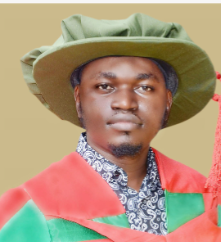
By Adesina Wahab
A globally recognized researcher and Senior Lecturer in the Department of Mass Communication at the University of Nigeria, Nsukka (UNN), Dr Verlumun Celestine Gever, has cautioned institutions of higher learning, particularly in the Global South, against the uncritical adoption of western-monopolized digital technologies. He warned that integration without infrastructural self-reliance risks turning African universities into digital colonies.
Dr Gever gave this warning on Thursday while delivering a high-profile keynote presentation titled, “Beyond the Screen: Navigating Digital Humanities and New Media Technologies for Sustainable Education, at the international ICOELLA 2026 conference held in Indonesia.
The UNN don, who ranks among the top two percent of scientists globally based on Stanford University’s 2024 data releases, argued that contemporary higher education is undergoing a massive structural mutation driven by algorithmic environments.
He noted that modern computer and smartphone screens are not neutral tools but highly structured spaces that actively dictate human cognition and information hierarchies.
The Interface Illusion
Speaking on the core conflict in modern pedagogy, Dr Gever described what he termed the interface illusion.
According to him, many institutions mistakenly treat digital interfaces as mere modern replacements for traditional paper and chalkboards. In reality, these platforms are powered by commercial software engines whose rapid obsolescence directly clashes with the deep, slow, and deliberate timelines required for genuine humanistic learning.
“If software architectures completely dictate how historical texts or communication patterns are analyzed, then proprietary software programmers are silently co-authoring our cultural critiques,” Gever declared, calling for a shift toward sustainable, critical pedagogy.
Preservation as Resistance
The communication scholar, who also serves as the Editor-in-Chief of the Ianna Journal of Interdisciplinary Studies (IJIS), outlined the powerful intersection between Digital Humanities and New Media.
He explained that while computational methodologies allow researchers to mine large text databases or track language mutations over time, interactive new media tools break down the ivory-tower isolation of universities by turning public scholarship into a participatory act.
However, he emphasized that true sustainability means building systems that outlast corporate hardware and software updates.
He identified severe challenges facing developing nations, including the digital divide, programmatic algorithmic biases, and digital decay—the high volatility of digital data compared to resilient print records.
“Uncritical adoption of high-bandwidth tools without matching electricity and internet investments risks excommunicating Global South institutions”, he noted.
Furthermore, because most artificial intelligence models and servers originate from Western corporate monopolies, they naturally encode historical, racial, and cultural biases that need to be systematically audited by scholars.
Call for Policy Reforms
To address these challenges, Dr Gever put forward a four-point strategic framework aimed at decolonising institutional infrastructure, democratising marginalised academic voices, integrating AI critically as an adversarial tool, and reforming pedagogy.
He criticised the current practice where publicly funded research is locked behind expensive commercial paywalls, describing it as a structural absurdity.
He advocated for a nationwide policy shift that rewards open-access platforms like Open Journal Systems to ensure intellectual breakthroughs remain a universal public good.
He urged university management bodies and regulators to update their promotional metrics, advising that the design of digital archives, open software infrastructures, and curated digital assets should be treated as equal to traditional printed textbooks in academic promotion criteria.
“Technology can build the most beautiful screen in the world, but it is the humanities that must decide what is worth looking at”, Dr Gever concluded
Disclaimer
Comments expressed here do not reflect the opinions of Vanguard newspapers or any employee thereof.