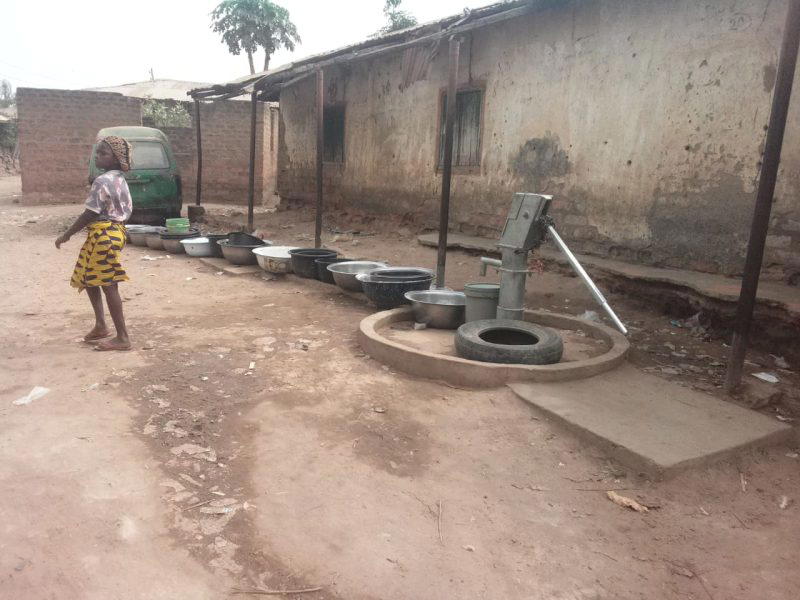
The borehole that was repaired to stop reliance on the river.
By Iwunze Jonathan
The Benue river has always been central to life in Kabawa community, in Abinsi town, Guma Local Government Area of Benue State. It fed the fish that fed the families. It watered the farms. It was the geography around which the community organized itself — its rhythms, its seasons, its survival.
It was also killing them.
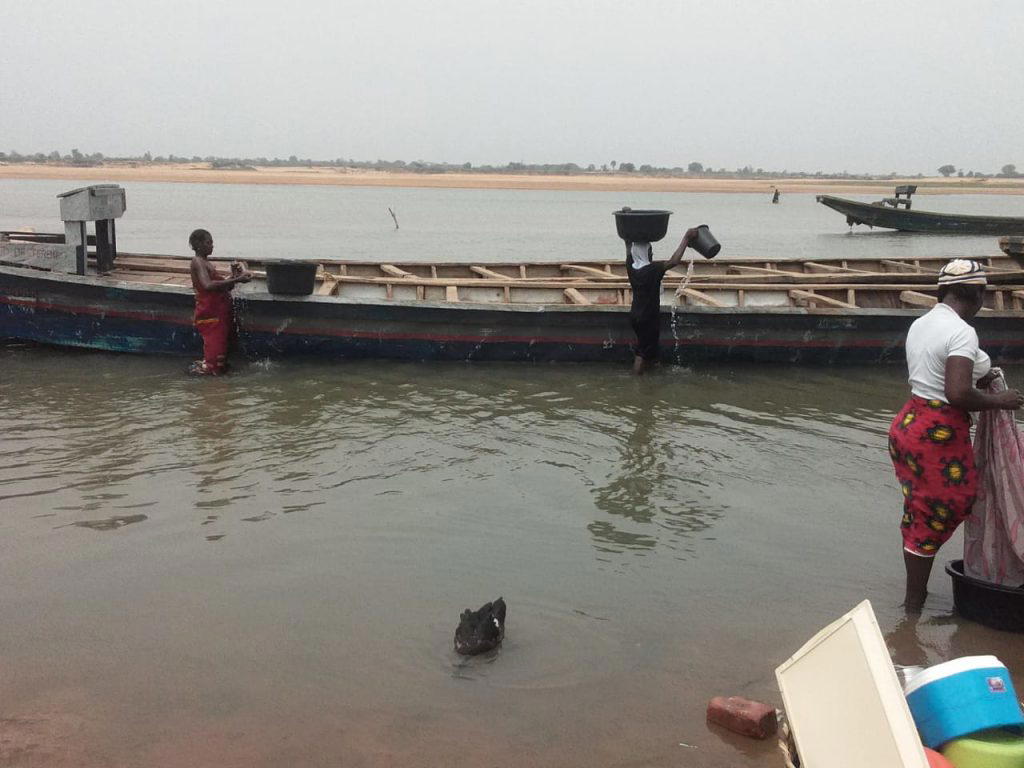
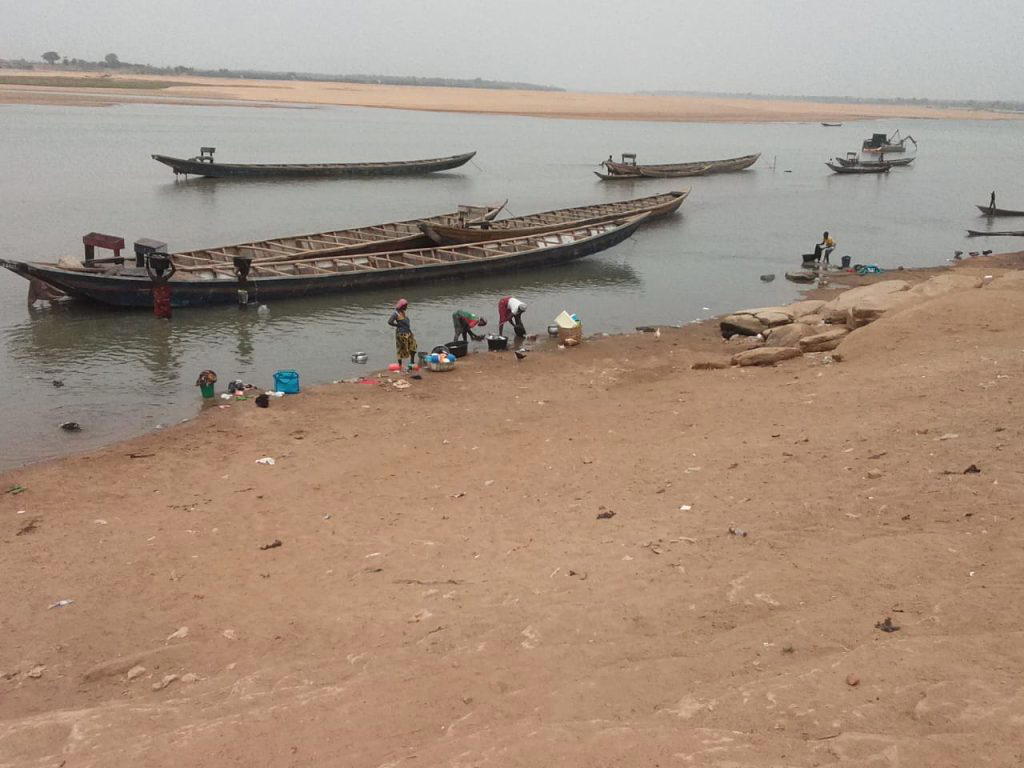
When I arrived in Kabawa, the evidence was visible from the riverbank. Large deposits of human and animal waste lined the water’s edge and floated in the current. Nomadic shepherds waded in with their herds — bathing, defecating, drinking — alongside the same community members who drew water for cooking and consumption from the same source.
Fatimah Bala, a mother of four, described the health consequences with the exhausted familiarity of someone who had long stopped expecting anything different.
“Cases of water-related diseases are not new in our community,” she said. “Most of the time that I take my children to the primary health care centre, it is always because of typhoid, stomach problems, or frequent stooling.”
Then the cholera came.
In January 2021, Kabawa was among the hardest-hit communities when cholera tore through Benue State. Seven people died in the community alone — most of them children. Dozens more were hospitalized. The state’s Commissioner for Information confirmed that contaminated water had killed at least 25 people across Agatu and Guma local government areas. The World Health Organisation intervened to contain the outbreak. Without that intervention, community volunteers Yakubu Adama and Aminu Yusuf believe the death toll would have been far higher.
Kabawa’s tragedy was not an accident. It was the predictable consequence of a community drinking from a river that climate change is making more dangerous every year — and development systems that had already failed to provide a reliable alternative.
When the Boreholes Broke and the River Was All That Remained
Kabawa had boreholes. Three of them, manually operated, donated by a non-governmental organisation and installed at different points across the community — one in the Jukun settlement, one at the primary school, one near the river’s edge. They were constructed with goodwill and commissioned with celebration. Shortly after, they broke down.
No maintenance plan had been put in place. No local ownership structure had been formalized. The NGO that built them had moved on. The government had no mechanism to detect the failure or respond to it. The data, wherever it was recorded, still showed three boreholes serving the Kabawa community.
The community returned to the river.
“It was a very delicate and trying situation,” recounted Aminu Yusuf, one of the WASHCOM volunteers. “We could not go back to drinking water with animals. All our efforts would simply have been for nothing.”
This pattern — boreholes constructed, counted, and then abandoned to failure — is not unique to Kabawa. A 2017 World Bank diagnostic found that approximately 25 to 30 percent of Nigeria’s rural water points fail within the first year after installation. Government monitoring tracks construction, not functionality. Politicians gain more from building new water points than maintaining existing ones. The result is a data infrastructure that records progress while communities regress — and a climate crisis that is accelerating the consequences of that regression in ways the data never captures.
What Climate Change Does to a River Community
The Benue river is one of Nigeria’s major inland water systems, and it is acutely sensitive to climate variability. In recent decades, the river basin has experienced increasingly erratic rainfall — intense flooding during the wet season that spreads riverbank contamination across wider areas, alternating with prolonged dry periods that concentrate pollutants as water volumes drop and flow slows. For communities like Kabawa that depend on the river as a primary or backup water source, both extremes are dangerous.
Flooding events along the Benue have become more frequent and more severe. When the river overflows its banks, waste deposits — human, animal, industrial — are carried into homes, farms, and community water points. Boreholes are submerged and contaminated. The same cholera bacteria that thrive in untreated river water travel with the floodwaters into places that had previously been protected. Communities that had managed to reduce their river dependence find themselves exposed again.
In the dry season, the opposite dynamic takes hold. Reduced river flow concentrates contaminants. Water temperatures rise, accelerating bacterial growth. Communities that rely on shallow boreholes find water tables dropping — and those whose boreholes have already failed find the river is the only option left regardless of the season or its dangers.
Adama and Yusuf had spent years warning their neighbors about the river’s dangers before the 2021 cholera outbreak finally forced the community to listen.
“It was always very discouraging,” Adama told me, “to imagine that we would suffer insults and rejection just because we were trying to save our people from eating their own faeces and getting sick.”
The cholera outbreak vindicated them in the worst possible way. Seven of their neighbors — most of them children — had to die before the message landed.
Benue’s cholera history stretches back decades. In March 2008, at least 25 people died in Makurdi, the state capital, in an outbreak centered on communities near the Benue river. The pattern has repeated itself with grim regularity. Globally, the World Health Organisation reports that 2016 alone saw over 132,000 cholera cases and more than 2,400 deaths, with 54 percent of cases reported from Africa. Nigeria’s riverine communities, sitting at the intersection of broken infrastructure and climate-driven water stress, contribute to that toll year after year.
The Volunteers Who Did What the System Would Not
What happened in Kabawa after the 2021 outbreak is a story about the limits of community resilience — and also about its power.
Adama and Yusuf, both WASHCOM members, paid out of their own pockets to repair the three broken boreholes. They absorbed the cost that neither the government nor the original NGO had budgeted for. Then they built a management system from scratch — opening the boreholes each morning until noon, locking them, reopening at four in the afternoon until seven in the evening, then locking them again overnight. The system prevented overuse and mishandling. The community developed a queuing culture. The boreholes held.
“Now a good number of us are complying, and we use the river water only for bathing and washing, while we use the water from the borehole for drinking and cooking,” Adama said.
It was a genuine achievement. Two volunteers with no institutional support, no government backing, and no development funding had done what the system had failed to do — made clean water reliably accessible to a community that cholera had just torn through.
But the achievement also carries a warning that Nigeria’s delegation to COP31 should carry to Türkiye: when community volunteers are the last line of defense between a population and a cholera outbreak, the system has already failed. The resilience is real. The burden it places on individuals like Adama and Yusuf — who absorbed costs, absorbed insults, absorbed the grief of watching seven neighbors die before being believed — is not a development model. It is a failure dressed in human dignity.
What COP31 Owes Communities Like Kabawa
Climate adaptation finance — the funding stream that COP negotiations are increasingly focused on directing toward vulnerable communities — is only as effective as the data infrastructure that guides it. If Nigeria’s water access data shows Kabawa as served by three boreholes, the community does not register as a priority for adaptation investment. The broken boreholes, the cholera deaths, the volunteers paying repair costs from personal savings — none of that appears in the dataset that shapes where the money flows.
This is the accountability gap that must be closed before COP31’s adaptation commitments can reach the communities that need them most. Functionality monitoring — sensors on installations, community ownership structures, continuous data collection rather than one-time commissioning records — is the technical reform. Political reform is harder: it requires governments to measure outcomes rather than outputs, and donors to demand the same.
The loss and damage mechanisms that climate negotiators have spent years debating were designed for communities at the frontline of climate impact. Kabawa is that community. The Benue river’s increasing volatility — the floods that spread contamination, the dry seasons that concentrate it — is not a future projection. It is the water that Fatimah Bala’s children have been drinking, the water that killed seven of her neighbors, the water that Adama and Yusuf have spent years trying to replace with something safe.
At COP31, the language of climate justice will fill the conference halls. Loss and damage funds will be debated. Adaptation commitments will be made, revised, and made again. Nigeria’s delegation will speak of vulnerability and need.
Fatimah will be in Kabawa. Adama and Yusuf will be at the boreholes, keeping them locked until four in the afternoon, keeping them open until seven, keeping the system running because no one else will.
The river will still be there. And it will still be dangerous.
COP31 owes them more than language. It owes them the infrastructure — and the data accountability — to make clean water a reality rather than a resolution.
Iwunze Jonathan is a WASH, Solutions and Data Journalist and founder of SPY Network Online Media. His reporting on water access, child rights, and rural governance spans over a decade of field work in Nigeria’s most underreported communities. He is a Bill & Melinda Gates Foundation fellow trained at Pan-Atlantic University’s Solutions and Data Journalism Academy.
Disclaimer
Comments expressed here do not reflect the opinions of Vanguard newspapers or any employee thereof.