— Approves N1bn intervention Hospital Fund
By Dayo Johnson Akure
Governor Lucky Aiyedatiwa of Ondo State, has said that access to quality healthcare must not be determined by a citizen’s economic status.
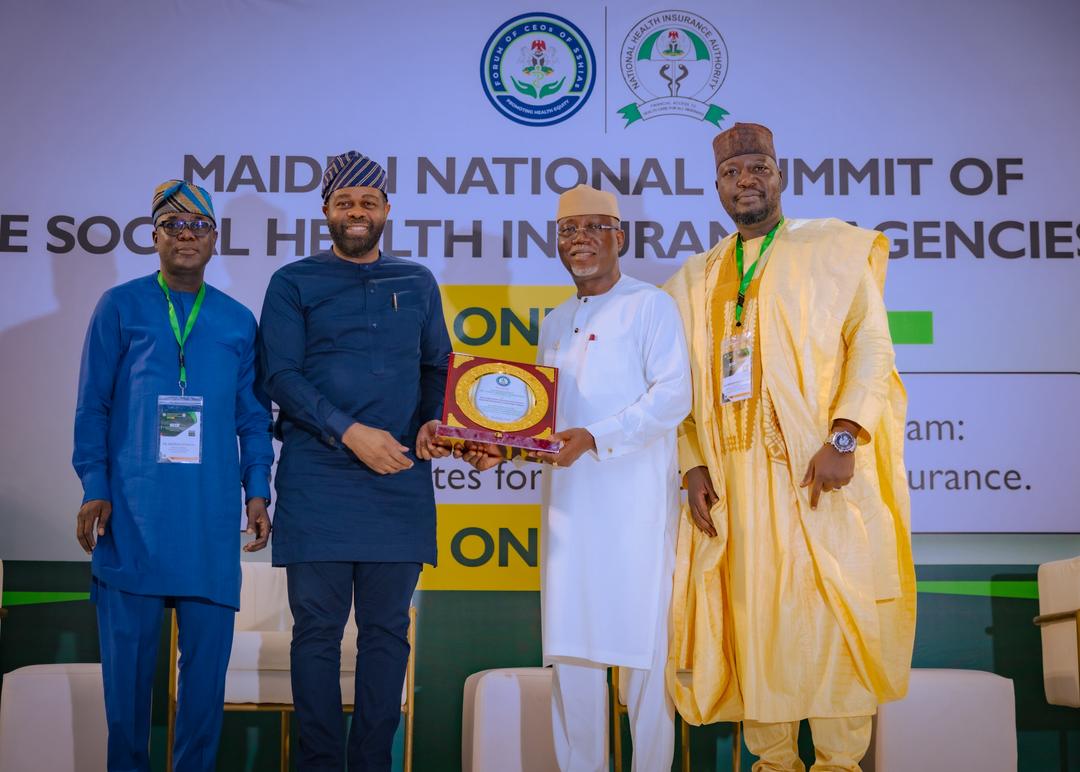
Aiyedatiwa spoke at the maiden National Summit of State Social Health Insurance Agencies held in Akure, the state capital.
The summit drew policymakers, health insurance managers, development partners and government officials from across the country to deliberate on strategies for achieving Universal Health Coverage amid economic pressures.
Speaking on the theme, _“Economic Realities and the Universal Health Coverage Dream: Mobilising States for Scalable Health Insurance,” the governor said inflation and worsening economic conditions often force families to delay medical care until conditions become severe and costlier to treat.
According to him social health insurance remains critical for shielding citizens from catastrophic health expenditure and ensuring equitable access to care irrespective of income.
Aiyedatiwa said his administration had prioritised healthcare through the Ondo State Contributory Health Commission, which continues to expand coverage and improve service delivery.
He explained that the Orange Health Insurance Scheme currently covers public servants and their dependants, with registration ongoing for informal sector participants and members of local security outfits.
The governor highlighted the Abiyamo Maternal and Child Health Insurance Programme, which provides free antenatal services, safe delivery care, and health coverage for children under five.
He also noted the Basic Healthcare Provision Fund programme, under which vulnerable residents across all 203 political wards in the 18 local government areas have been enrolled.
Reaffirming an inclusive approach, Aiyedatiwa announced the formal inclusion of retirees into the Orange Health Insurance Scheme, with the state government assuming full financial responsibility for their enrolment. He said the decision was informed by the rising cost of medical care for pensioners.
The initiative will guarantee retirees access to consultations, treatment, medication and specialised services without financial burden, he said.
To strengthen healthcare delivery, the governor disclosed that the State Executive Council had approved procurement of modern medical equipment for secondary health facilities.
He added that government had embarked on construction and upgrading of health infrastructure, alongside recruitment of additional health workers.
Aiyedatiwa said Ondo State had become the first in the country to implement the newly approved salary structure for health workers.
He said the reform would improve welfare, reduce brain drain, and encourage retention of skilled professionals.
Aiyedatiwa also announced approval of a N1 billion Hospital Intervention Fund to expand and modernise healthcare facilities across the state. The fund, separate from routine health expenditure, is designed to enhance hospital capacity and improve service delivery.
The governor attributed achievements in the health sector to deliberate planning, strategic leadership and sustained commitment to citizens’ wellbeing.
He reiterated his administration’s resolve to achieve universal health coverage through strengthened monitoring, quality assurance, facility audits and expanded enrolment of underserved populations.
Aiyedatiwa urged State Social Health Insurance Agencies nationwide to sustain reforms aimed at improving access to affordable healthcare.
The governor encouraged participants to strengthen collaboration and develop practical solutions to healthcare delivery challenges.
In his welcome address, Ondo State Commissioner for Health, Dr Banji Awolowo-Ajaka, described the summit as timely.
Ajaka said economic realities require states to adopt innovative financing strategies, stressing that reliance on traditional funding models is no longer sufficient.
Ekiti State Commissioner for Health and Chairman of the Forum of Health Commissioners, Dr Oyebanji Filani, commended Ondo State for recording the lowest neonatal and infant mortality rates in Nigeria.
Filani said data from the National Demographic and Health Survey showed neonatal mortality at three per 1,000 live births and infant mortality at eight per 1,000.
Chairman of the Forum of Chief Executive Officers of State Social Health Insurance Agencies, Dr Kabir Mustapha, called the summit a milestone.
Mustapha said it marked the first coordinated gathering of all state health insurance agencies and the FCT under a unified platform.
Special Adviser to the Ondo State Governor on Health, Prof Simidele Odimayo, said the administration had renovated primary healthcare centres, strengthened secondary facilities and restructured tertiary institutions.
Director-General of the National Health Insurance Authority, Dr Kelechi Ohiri, said over 90 per cent of Nigerians remain outside the formal insurance system.
Ohiri noted that rising out-of-pocket expenditure continues to expose Nigerians to financial hardship, stressing that universal health coverage is essential to protecting citizens from medical poverty.
Disclaimer
Comments expressed here do not reflect the opinions of Vanguard newspapers or any employee thereof.