By Chioma Obinna
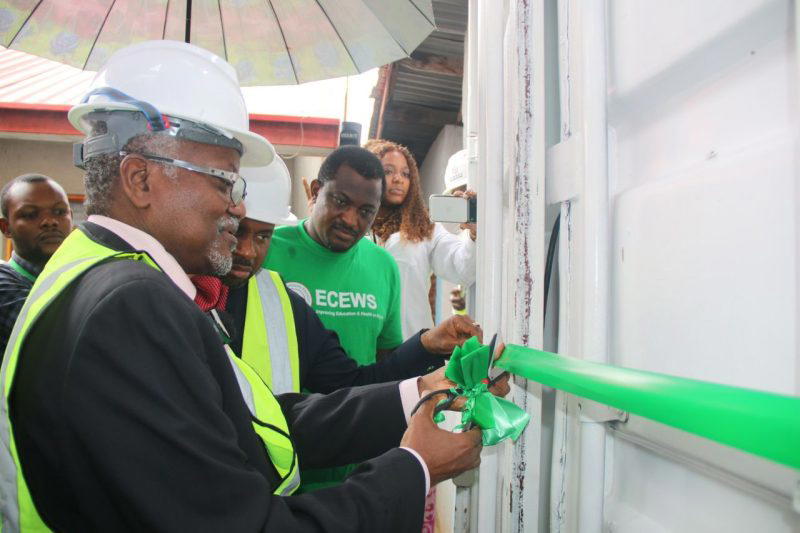
The Nigerian Institute of Medical Research (NIMR) has taken a major step towards ending its crippling electricity challenges following the commissioning of a N300 million 100 KVA Solar Power System donated by Excellence Community Education Welfare Scheme, ECEWS.
The solar facility, commissioned at the institute’s headquarters in Yaba, Lagos, is expected to provide uninterrupted electricity supply to critical laboratories and research facilities, while significantly reducing NIMR’s huge monthly power bill which currently fluctuates between N49 million and N52 million.
Speaking during the commissioning ceremony, the Director-General of NIMR, Professor John Oladapo Obafunwa, represented by the Director of Administration, Mr. Bitrus Nelson, described the intervention as timely and strategic for the institute’s research mandate.
According to him, stable electricity remains critical to laboratory research, disease surveillance, molecular diagnostics and preservation of sensitive biological samples.
“Today’s event represents much more than the commissioning of a 100 KVA facility. It signifies a shared commitment to sustainable development, resilient research systems and strengthening global partnerships in advancing public health outcomes,” he said.
Obafunwa disclosed that shortly after he assumed office in August 2024, the institute’s monthly electricity bill exceeded N48 million and later rose to between N49 million and N52 million despite government subvention.
He said the growing energy cost had forced management to introduce stricter electricity management measures, including prepaid metering and energy conservation practices across the institute.
The DG explained that the new solar power installation now supports several critical operational areas, including the COBAS laboratory for HIV viral load testing, molecular laboratories for PCR analysis, the biobank facility housing ultra-low temperature freezers, seminar facilities and key support units.
“Uninterrupted power supply is essential for laboratory-based research, cold chain systems, emergency preparedness and data management. This intervention will help preserve the integrity of valuable research specimens and ensure continuity of critical services.”
Speaking earlier, the Managing Director of ECEWS, Dr. Andy Eyo, said the intervention formed part of broader efforts to strengthen healthcare infrastructure and public health systems in Nigeria.
“Without NIMR, we would be more challenged than we can imagine. NIMR has played a significant role in Nigeria’s public health history and in responding to emerging public health threats,” Eyo stated.
He revealed that the N300 million project comprises 312 solar panels of 705 watts each, two 209 KVA lithium battery units and two 50 KVA inverters designed to guarantee stable electricity supply for critical operations.
“This is the most sophisticated solar facility we have deployed in the health sector. It is designed not only to provide stable power but also to reduce the institute’s energy costs so that more resources can be redirected into research and quality healthcare,” he added.
Representing the Minister of State for Health, Dr. Iziaq Adekunle Salako, the NIMR DG commended ECEWS for supporting Nigeria’s health and research sector through renewable energy investments.
He noted that renewable energy solutions remain critical to strengthening healthcare systems, improving efficiency and ensuring continuity of services in research and diagnostic institutions.
The solar facility currently powers three critical units within the institute, including the COBAS building complex for viral testing, HIV and tuberculosis specimen analysis, as well as the biobank facility where sensitive biological samples are preserved under ultra-low temperature conditions.
NIMR management said the intervention would further strengthen the institute’s capacity to sustain critical medical research, improve diagnostic services and contribute to Nigeria’s renewable energy and climate goals.
Disclaimer
Comments expressed here do not reflect the opinions of Vanguard newspapers or any employee thereof.