By Chioma Obinna
The Lagos State Government and the 57 Local Government Areas and Local Council Development Areas, yesterday, signed a landmark 10-year Primary Health Care, PHC, Financing Compact aimed at transforming healthcare delivery at the grassroots, reducing maternal deaths and expanding access to quality healthcare services across the state.

The agreement, signed at the end of a two-day strategic retreat in Lagos, marked a major step towards strengthening primary healthcare infrastructure, manpower, health insurance coverage and digital health systems between 2026 and 2036.
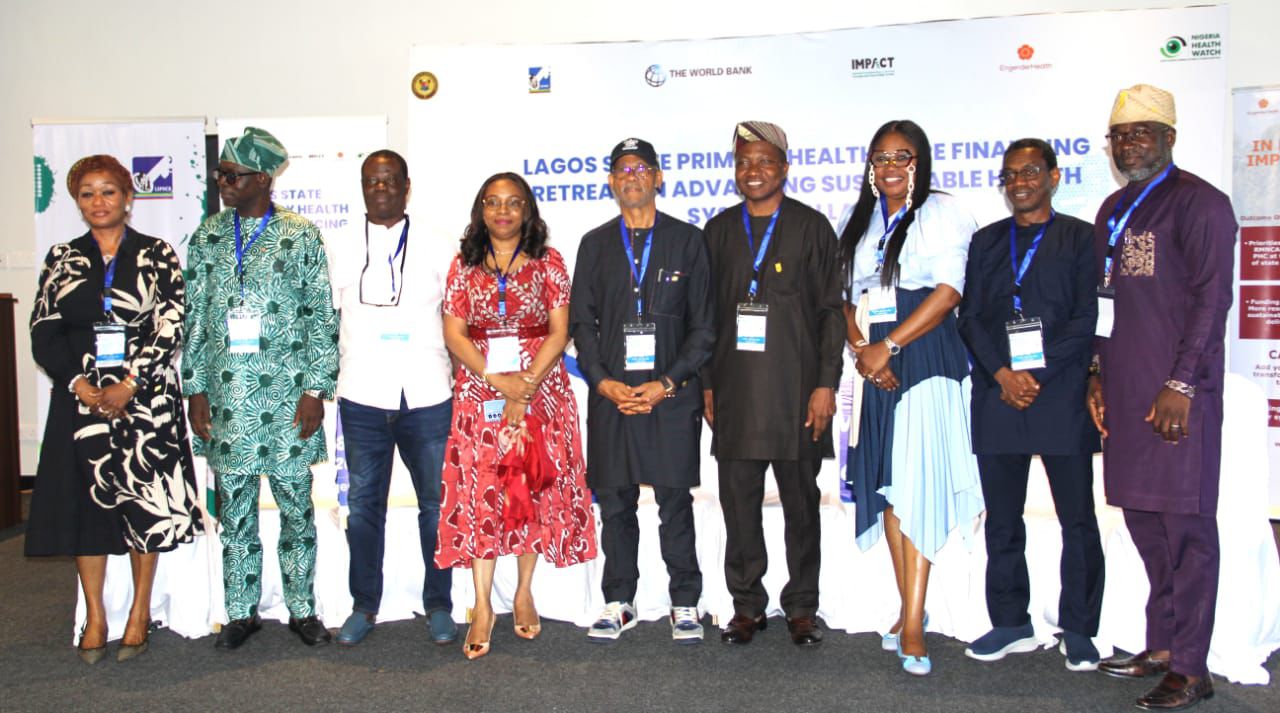
The retreat, themed “Advancing Sustainable Health Systems in Lagos: A 10-Year PHC Financing Plan,” was organised by the Lagos State Primary Health Care Board, LPHCB, in collaboration with EngenderHealth, Conference 57, and development partners.
A major highlight of the event was the unveiling and formal signing of the Lagos State Primary Health Care Compact 2026–2036 by representatives of the state government, Lagos State Primary Health Care Board and chairmen of the 20 LGAs and 37 LCDAs.
Speaking during the signing ceremony, Lagos State Commissioner for Health, Professor Akin Abayomi, described primary healthcare as the foundation of an effective healthcare system, stressing that sustainable progress could only be achieved through collaboration among all tiers of government.
“The foundation of healthcare delivery is the primary healthcare platform. If the foundation is weak, the house will not stand the test of time,” Abayomi said.
He noted that healthcare delivery had for years suffered from fragmentation and lack of coordination among federal, state and local governments, adding that the compact would now provide a unified framework for healthcare financing and implementation.
“At the moment, everybody has been working in silos. What this compact is doing is bringing together local government, state government and by extension the federal government to support a common agenda,” he stated.
According to the commissioner, the state government plans to significantly expand access to healthcare by increasing the number of functional PHCs across Lagos from about 340 to 600 over the next decade.
“Our goal is to increase this to 600 fully functional PHCs, properly equipped and staffed,” he said.
Abayomi also disclosed that Lagos currently faces a severe shortage of healthcare workers, especially doctors, warning that the manpower gap remains one of the biggest threats to healthcare delivery in the state.
“We have about 7,000 doctors instead of the required 30,000,” he revealed.
On health financing, the commissioner said the state was intensifying efforts to expand enrolment under the ILERA EKO health insurance scheme, insisting that health insurance must become the norm for all residents.
“It will become abnormal to live in Lagos without health insurance,” he declared.
He further expressed concern over maternal mortality in the state, saying reducing preventable deaths among women and children remained central to the 10-year PHC financing strategy.
“We are not proud that about 430 women die per 100,000 live births,” Abayomi said.
The commissioner added that nearly half of the state’s PHCs still require major rehabilitation and modernisation, while the government was also moving to digitise public healthcare facilities through the Smart Health Information Platform, SHIP.
According to him, a joint technical committee would be established to translate the provisions of the compact into measurable programmes, implementation timelines and performance targets.
“We are united, we are committed, we are determined, and this meeting demonstrates the unification of the ideas of the three tiers of government,” he added.
The Permanent Secretary, Lagos State Primary Health Care Board, Dr Ibrahim Akinwunmi Mustafa, said the retreat provided a strategic platform for state officials and local government chairmen to jointly review challenges confronting primary healthcare delivery and chart a sustainable path forward.
“We have the two most important actors in universal health coverage gathered together and forging ahead with a united front to improve healthcare delivery in Lagos State,” Mustafa said.
He explained that the compact focuses on critical areas including healthcare infrastructure, manpower development, electronic medical records, digital health systems and improved healthcare financing mechanisms.
According to him, the state government would continue to provide technical and financial support to local governments to ensure effective implementation of the agreement.
“It’s all cooperation between the local government and the state government to achieve our set objectives,” Mustafa stated.
The Chairman of Conference 57 and Chairman of Ibeju-Lekki Local Government Area, Mr Sesan Olowa, said the retreat gave council chairmen deeper insight into the state’s long-term healthcare vision while also exposing major gaps requiring urgent intervention.
“We’ve seen investments in infrastructure and human resources, but there is still a lot of work to be done in terms of the number of PHCs, equipment and quality of services,” Olowa said.
He disclosed that one of the key resolutions reached at the retreat was for local governments to increase annual budgetary allocation to the health sector, with a minimum benchmark of 15 per cent.
“The minimum this retreat is recommending is 15 per cent of annual budgets to be invested in health,” he stated.
Olowa added that councils would now become more deliberate in financing healthcare infrastructure, advocacy, technology, health insurance and data systems over the next decade.
The compact also acknowledged ongoing healthcare reforms introduced by the Lagos State Government, including the implementation of mandatory health insurance through Executive Order EO-BOS-01-2024, expansion of ILERA EKO and restructuring of the Basic Health Care Provision Fund, BHCPF 2.0, to give local governments greater participation in frontline healthcare financing.
Under the agreement, the state government and councils committed themselves to four key pillars, including investment in PHC infrastructure and manpower, expansion of health insurance financing, improved governance and accountability systems, and digital health integration through SHIP.
Delivering the closing remarks, Permanent Secretary, Health District II, Dr Abimbola Bowale, commended stakeholders for demonstrating commitment towards repositioning primary healthcare in the state.
“We are looking forward to seeing the change that has been promised so that our people can continue to benefit from our PHCs,” Bowale said.
The retreat ended with stakeholders expressing optimism that the 10-year financing compact would accelerate universal health coverage, improve health outcomes and strengthen grassroots healthcare delivery for millions of Lagos residents.
Disclaimer
Comments expressed here do not reflect the opinions of Vanguard newspapers or any employee thereof.