By Abiola Kudehin
The unfolding political drama in Nasarawa State ahead of the 2027 elections is beginning to reveal a deeper, more complex story, one that goes beyond party endorsements and internal disagreements within the All Progressives Congress (APC).
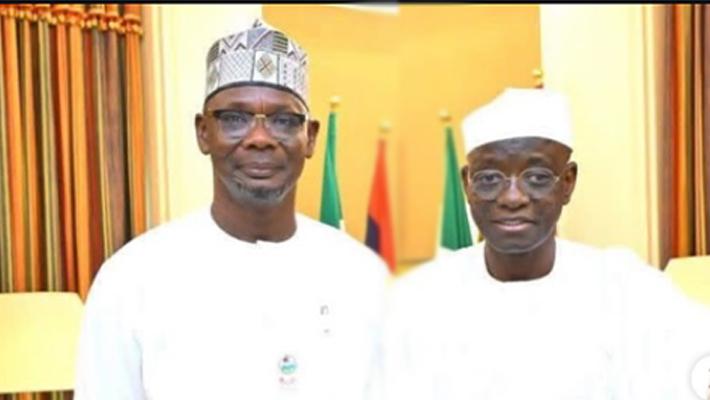
At the surface, the disagreement appears straightforward. Governor Abdullahi Sule has openly endorsed Senator Aliyu Wadada as his preferred successor. This endorsement, formalised through a presentation to President Bola Tinubu, has triggered resistance from within the party, particularly from aspirants and advocacy groups like the Nasarawa State Transparency, Accountability and Good Governance Group (NS-TA&G2), who insist on a transparent primary process.
But beneath this push for internal democracy lies a more strategic contest, one shaped by economic interests and long-standing alliances.
Governor Sule’s relationship with influential business figures such as Aliko Dangote and Gilbert Chagoury is no secret. Having previously worked within the Dangote Group, Sule’s political and economic networks are deeply intertwined with some of the most powerful private sector interests in Nigeria. These relationships matter—especially in a state like Nasarawa, where untapped natural resources are fast becoming a critical political currency.
From solid minerals to expanding industrial potential, Nasarawa is no longer just a quiet North-Central state; it is an emerging economic frontier. Control of its leadership, therefore, is not just about governance, it is about influence over resources, investments, and long-term economic positioning.
It is within this context that the endorsement of Wadada begins to look less like a routine political preference and more like a calculated alignment. The convergence of political power and private capital often seeks predictability, someone who understands the existing structure, maintains continuity, and protects strategic interests.
However, this is precisely where the resistance from other APC aspirants becomes significant.
Their insistence on open primaries is not just about personal ambition; it is a pushback against what many perceive as a creeping culture of predetermined outcomes. For them, the argument is simple: legitimacy must come from the people, not from closed-door consensus shaped by elite networks.
The concerns raised by NS-TA&G2, led by Lazarus Salaki, reflect this tension. Their call for fairness, transparency, and even the resignation of party chairman Aliyu Bello over alleged bias underscores a growing distrust within the party’s internal process. When party structures appear aligned with a particular candidate, the credibility of the entire electoral process is called into question.
This moment presents a critical test for the APC in Nasarawa State.
Will the party prioritise internal democracy and allow aspirants to test their popularity through a credible primary? Or will it lean into consensus politics, where decisions are shaped by a blend of political authority and economic influence?
There is nothing inherently wrong with consensus. In some cases, it stabilises party structures and prevents fragmentation. But when consensus begins to mirror imposition, it risks alienating party members and weakening public trust.
Nasarawa’s 2027 governorship race is, therefore, more than a contest of candidates. It is a reflection of a broader national question: who truly decides leadership in Nigeria, the people, the party, or the powerful interests operating behind the scenes?
The answer, as events continue to unfold, will not just define Nasarawa’s political future, it will speak volumes about the state of Nigeria’s democracy.
*Abiola Kudehin is a public affairs analyst.
Disclaimer
Comments expressed here do not reflect the opinions of Vanguard newspapers or any employee thereof.