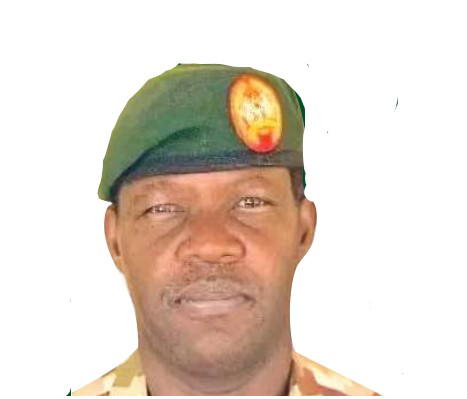
Brigadier General Oseni Braimah
By Evelyn Usman
They leave their homes at dawn under the rising sun, exchange warm hugs with their children, whisper prayers with their spouses, and head into danger. But for some of Nigeria’s military personnel, particularly those of the Nigerian Army, that promise to return is often left unfulfilled, hanging like a fragile hope that may never be realised.
Read Also: Ex-senatorial candidate jailed 10 yrs for selling petrol to Boko Haram
The death of Brigadier General Oseni Braimah on April 9, 2026, in a midnight attack by terrorists on the 29 Task Force Brigade Headquarters in Benisheikh, Borno State, is the latest tragic chapter in Nigeria’s long catalogue of sacrifice in the fight against terrorism. Eyewitness accounts and military sources confirmed that while troops repelled the attack, it nevertheless claimed “a few brave and gallant soldiers,” including the Brigade Commander, a grim reminder of the relentless brutality of the conflict.
Braimah was not just a senior officer; he was a leader, a mentor, a source of strength to those under his command, and a beloved husband and father of a family whose life revolved around his steady presence. His death and those of his soldiers sent shockwaves across military barracks and civilian homes alike, reopening emotional wounds from earlier losses and reminding the nation of the human cost of insecurity.
Heroes forever remembered
In November 2025, Brigadier General Musa Uba, commander of the 25 Task Force Brigade in Damboa, Borno State, was ambushed along the Damboa–Biu axis. After surviving the initial clash, he was reportedly captured by Islamic State West Africa Province (ISWAP) fighters and later executed, a fact confirmed by President Bola Tinubu, who expressed deep sorrow over “the tragic death of our soldiers and officers on active duty.”
Uba’s story is not just one of battlefield horror; it is a life cut short in the service of others. A graduate of the Nigerian Defence Academy, he had survived countless battles but met his end in an ambush that became a defining moment in Nigeria’s decades-long insurgency.
Also, in November 2021, Brigadier General Dzarma Zirkusu was killed while leading reinforcement troops against ISWAP in Askira Uba, Borno State, paying the ultimate price while trying to protect others. In September 2020, Colonel Dahiru Chiroma Bako, commander of 25 Task Force Operation Lafiya Dole, died from injuries sustained in an ambush near Wajiroko village.
Families left waiting
Each of these names represents a story of devotion and heartbreak: husbands who never saw their children grow up, fathers unable to witness family milestones, and comrades whose absence is felt deeply in the barracks and even more painfully at home.
Across the country, the void left by these losses is profound. Children stare at empty beds where their fathers once slept, spouses replay their last phone calls, and photographs on mantels speak of futures that will never be realised. Soldiers often go months without seeing their loved ones, communicating only through weak phone signals and hurried video calls.
One mother of a fallen soldier, who requested anonymity, recounted how her granddaughter still asks why her father never came home to celebrate her birthday. “She looks at his picture and whispers his name. We were proud of him, but no one told us courage would cost so much”, she said, her voice trembling.
The cost
The death of a soldier is a devastating loss to the nation, yet it also imposes significant costs on the terrorists they confront. Each fallen soldier represents years of training, discipline, and experience, forcing insurgents to expend resources, replace leaders, and constantly reassess their strategies against highly skilled Nigerian troops.
While these lives can never be replaced, their sacrifice has amplified calls across Nigeria for President Bola Ahmed Tinubu to summon the political will to decisively end the war against terrorism. Citizens, civil society groups, and military advocates insist that beyond battlefield victories, there must be a concerted effort to trace and dismantle the complex network of sponsors and facilitators who fund insurgents.
Why terror thrives — Ofoyetan
Among those insisting that the nation owes it to the fallen to ensure their blood is not shed in vain is the Director-General of the International Institute of Professional Security, Dr. Tony Ofoyetan. He emphasised that Nigeria’s battle against terrorism runs deeper than identifying where the enemy operates, warning of sleeper cells embedded across society, from politics to business and even religious institutions.
He said “terrorists do not simply wake up and attack. By the time it happens, a lot of groundwork has already taken place, and they are almost certain of success.” He also cautioned that powerful individuals may indirectly shield terrorist networks, complicating counter-terrorism efforts and influencing government action.
“Government is doing a lot, but there are what we call partners in crime. Some politicians will stand on the floor of the National Assembly and accuse the government of human rights abuses during military operations. But sometimes it is because they are sympathetic to the terrorists and believe military bombardment is weakening their operational strength.”
Troubling battlefield reality
Rear Admiral Dickson Olisemelor (retd.) highlighted the widespread knowledge of bandit activities and the challenges of taking decisive action. He said, “The other time we saw over 500 motorcycles carrying three passengers each passing through Minna boldly. Just a few days later, we heard they kidnapped school children. Up till this moment, no particular action has been taken against them. In the last few weeks in Borno State, we have lost senior officers, with their units destroyed and their equipment taken away. And up till now nothing significant is happening.”
Serving officers, who spoke anonymously, raised concerns about the integration of so-called repentant bandits into security structures, warning that it could undermine long-term operational security. Political interests, alleged leaks, and the use of former insurgents in sensitive roles remain troubling realities on the ground.
Troops far from intimidation
In the same vein, a retired Air Force personnel, Adetuga, dismissed suggestions that the killings could weaken the military, insisting that Nigerian troops are far from being intimidated. “These attacks are meant to deter the army, but our troops cannot be cowed. They have faced worse and remained standing,” he said. He, however, stressed that beyond battlefield bravery, what is urgently needed is sincerity at the highest levels of leadership.
“What the military needs is the genuine commitment of all political actors. If politicians across the six geopolitical zones come together with sincerity and agree to end this war, it will end. This is not a fight the military alone can win, it requires a united national will,” he added.
Call for action
The deaths of Nigeria’s soldiers are more than headlines. They reflect courage, sacrifice, and unyielding patriotism. While every loss leaves families in mourning and communities in grief, it is also a stark reminder that remembering fallen heroes must go beyond the annual laying of wreaths.
A retired Brigadier General, who spoke from his Abuja residence after much hesitation, said: “True honour lies in decisive action, turning grief into resolve and ensuring that their sacrifices drive a renewed commitment to ending the cycle of violence that continues to claim brave lives.”
He added: “Nigeria must confront the root causes of this self-inflicted or self-generated terrorism, dismantle networks of sponsors, and strengthen institutions responsible for national security. Having the political will to decisively end this protracted conflict will go a long way in preventing the needless loss of more soldiers. Only through sustained commitment, strategic foresight, and genuine national unity can the nation ensure that the blood of these heroes is not shed in vain and that lasting peace becomes a reality in affected regions.”
Disclaimer
Comments expressed here do not reflect the opinions of Vanguard newspapers or any employee thereof.