By Peter Duru, Makurdi
Women in Internally Displaced Persons (IDP) camp in Benue State are recording significant gains in economic independence and social resilience following the implementation of the Promoting Women’s Economic Resilience (POWER) project.
The initiative, spearheaded by the Centre for Redefining Alternative Civic Engagement for Africa (RACE) in collaboration with the Gender and Environmental Risk Reduction Initiative (GERI), and funded by the French Embassy in Nigeria, has empowered significant number of displaced women through skills acquisition, mentorship, and enterprise development.
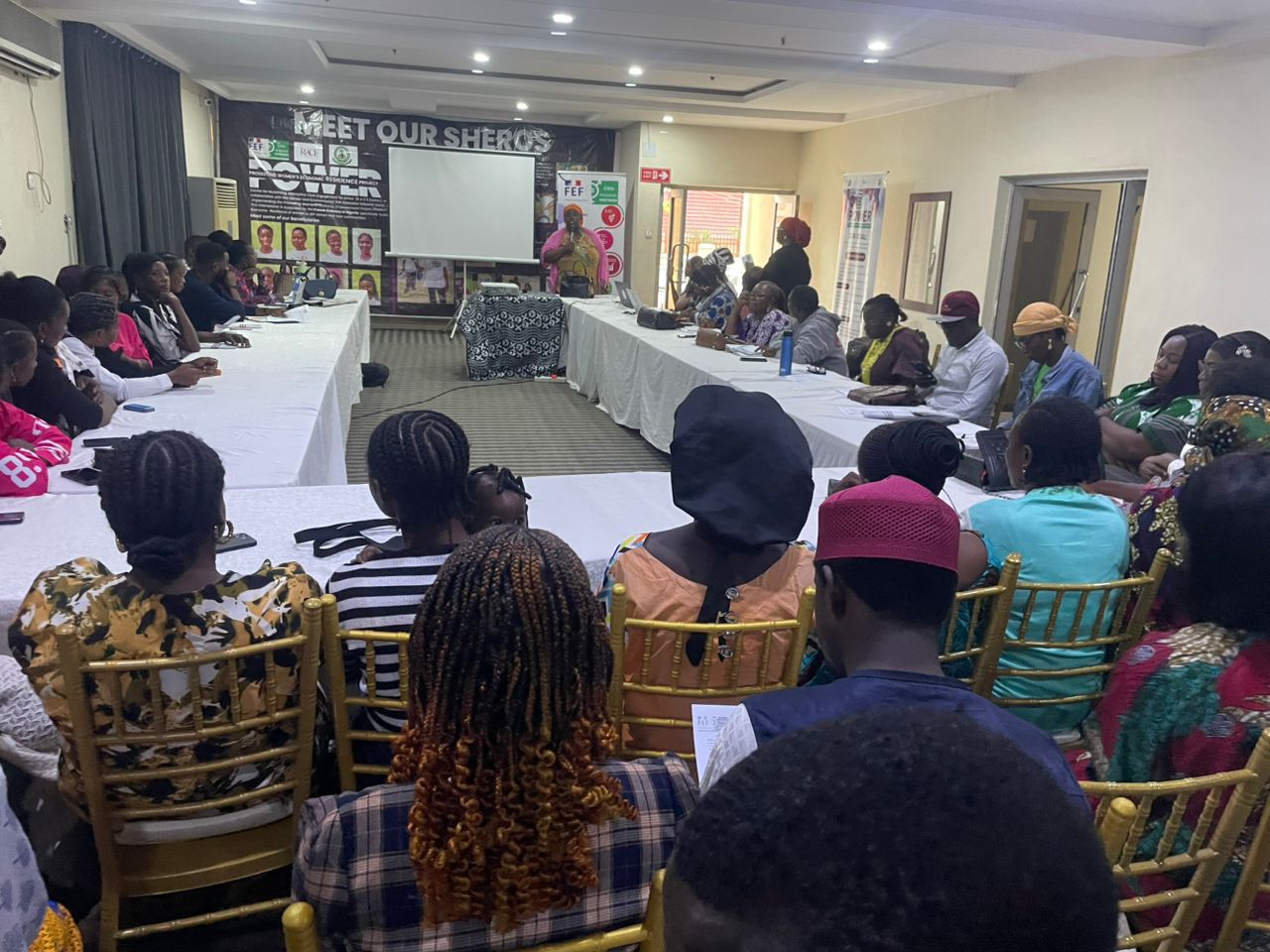
Speaking during a Peer-Learning and Mentorship Dialogue on the sustainability of the project, Executive Director of RACE, Evelyn Ugbe, said the programme was designed to provide long-term solutions to challenges faced by women in conflict-affected communities.
“Today we are here to discuss sustainability, peer learning, and evidence dissemination of the POWER project, which seeks to build the resilience of women in conflict-affected communities, particularly those in IDP camps,” Ugbe said.
She explained that beyond vocational and business training, the project focused on building partnerships with government institutions and the private sector to ensure inclusion of beneficiaries in social protection programmes.
Ugbe noted that the intervention had led to the establishment of two key structures, the Tahav Women Cooperative Society and the Tahav Women Development Initiative, both aimed at sustaining the gains recorded.
“What began with 50 women has grown into a cooperative of 200 members, while over 1,500 women and girls have benefited from safe spaces and peer-to-peer mentoring. These women are now equipped to advocate for their own recovery and participate actively in the development ecosystem,” she said.
She added that the project had also reduced vulnerability to Gender-Based Violence, GBV, by addressing the economic challenges faced by displaced women.
Also speaking, Team Lead of GERI, Elizabeth Jeiyol, said the project targeted women affected by displacement and GBV in Daudu II IDP camp and host communities.
“We trained the women in various skills such as tailoring, baking, hairdressing, and soap making over a three-month period, alongside mentorship and monitoring,” she said.
Jeiyol explained that safe spaces created under the programme enabled beneficiaries to discuss their experiences and access support. “Through these platforms, we guided them on how to seek help, resolve challenges peacefully, and engage relevant authorities within the camp and host communities,” she added.
According to her, the women have now formed a registered cooperative and a community-based organisation to extend support to others.
“They realised they should not keep the knowledge to themselves. The Tahav Women Development Initiative is helping them reach out to other women and girls, ensuring broader community impact,” Jeiyol said.
The Director General of the Benue State Bureau for International Cooperation and Development (BICD), Dr. Leo-Angelo Viashima, commended the initiative, describing it as a model for other civil society organisations.
“My joy with this initiative is that it is a selfless intervention that should be emulated. What Tahav women have achieved in nine months is greater than what many could not attain in 10 years,” he said.
Viashima encouraged beneficiaries to leverage available partnerships to expand their businesses, noting that the cooperative model remained a sustainable pathway for growth.
On her part, Barrister Ori Adam Onum, who supported the project at BICD, highlighted the role of stakeholder engagement in its success saying “we helped facilitate partnerships, trainings, and visibility. The impact has been significant, and it shows that empowering women strengthens the economic resilience of entire communities,” she said.
The Chairman of Benue NGO Network (BENGONET), Rachel Ityonzughul, highlighted the organisation’s ongoing collaboration with RACE and the TAHAV Women Initiative, pledging that the partnership would continue. “We assure you that we will continue to patronize and encourage you.”
Moses Makeri, Program Manager of Civil Society Organizations – Benue (CSO-B), also commended RACE for its achievements in the state recalling testimonies from beneficiaries saying “I assure you that we will continue to partner with you and provide support, including psychosocial assistance and more,” he stated.
Speaking on behalf of the Program Manager of the Benue State Cash Transfer Unit, Dr. Emmanuel Waghbo, the Gender and Social Inclusion Officer, Hafsat Ayauga reassured that the office would work closely with cooperatives and include them in its register.
Meanwhile, Theodore Chia, Executive Director of the Centre for Family Empowerment and Vice Chairperson of Women in Climate Leadership, lauded RACE’s accomplishments and affirmed a sustained partnership with the TAHAV Initiative.
Beneficiaries of the programme also shared testimonies of transformation. One of them, Orgbe Nguhiden when is also the Coordinator of the Tahav Women Development Initiative said “since the programme started, there is a big difference in how we speak, dress, and run our businesses. Some of us had nothing doing before, but now we have skills and sustainable sources of income.”
Another beneficiary, Precious Terwase, said her training in hairdressing had given her a new lease of life. “Before the programme, I had nothing to do. Now I can make hair, earn money, and take care of my needs,” she said.
In a presentation at the event, Managing Director of D’Fudi Cuisine, Dr. Dorcas Akpoghol, encouraged the women to embrace entrepreneurship as a pathway to independence.
“Entrepreneurship is about using what you have to create value. Start small, remain consistent, and never give up,” she advised.
Organisers said the project had directly and indirectly impacted individuals, including households within the IDP and host communities. They added that ongoing efforts are focused on integrating beneficiaries into broader economic networks and scaling the initiative.
Disclaimer
Comments expressed here do not reflect the opinions of Vanguard newspapers or any employee thereof.