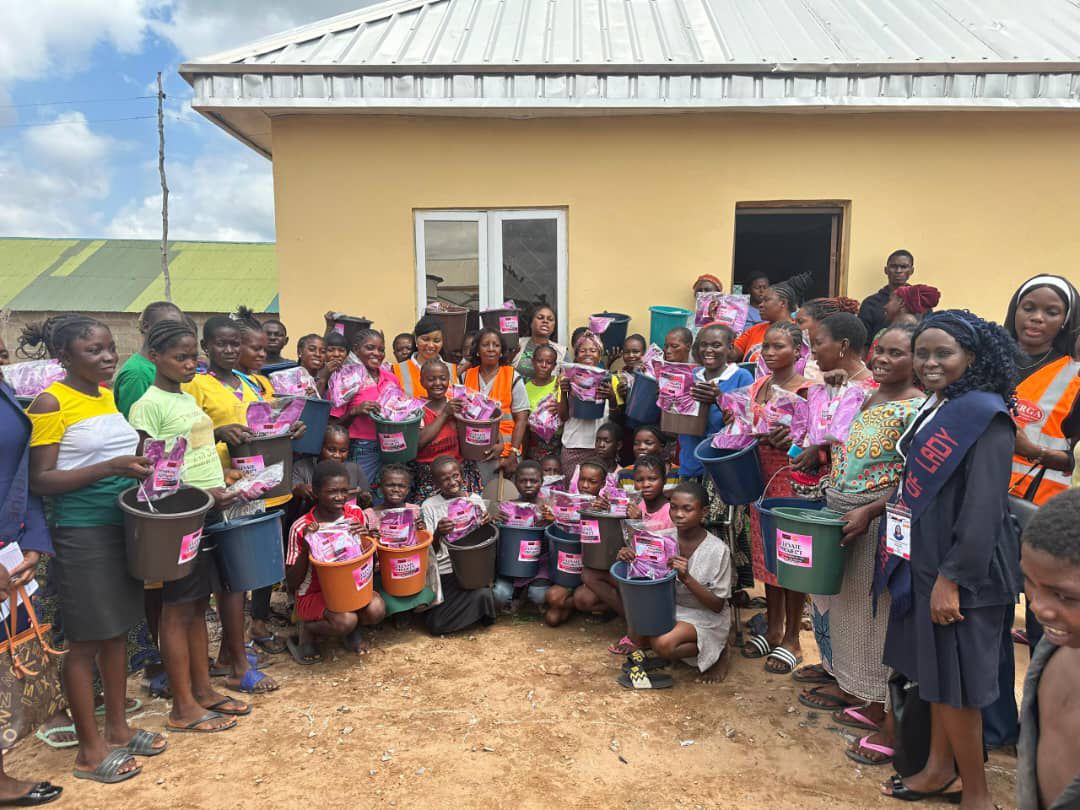
…trains 70 in reusable sanitary pad production
By Peter Duru, Makurdi
No fewer than 70 women and adolescent girls at the Daudu II Internally Displaced Persons (IDP) camp in Guma Local Government Area, LGA, of Benue state have been trained in the production of reusable sanitary pads under a six-month menstrual hygiene intervention implemented by the Initiative for Human Rights and Gender Awareness (IHRGA).
The programme, tagged “Empowering Lives through Effective Menstrual Hygiene Management” (ELEVATE), also featured the distribution of dignity kits to displaced women and girls aimed at addressing menstrual poverty and improving hygiene management within the camp.
Funded by the non-governmental organisation, GIVING, the initiative sought to tackle the challenges of poor access to sanitary products, harmful cultural taboos and the social stigma surrounding menstruation among displaced populations.
Speaking during the graduation and distribution ceremony at the camp, Executive Lead of IHRGA, Pauline Ikyereve, said the project was intentionally designed to move beneficiaries from dependence to self-reliance through practical skills acquisition.
According to her, many women and girls in IDP camps are often forced to miss school, withdraw from economic activities and suffer indignity during menstruation due to the lack of sanitary products and safe hygiene spaces.
“The project was designed to raise awareness, address menstrual poverty, and shatter the cultural myths and taboos that hold women back,” Ikyereve said.
“By equipping these women with the agency to produce their own solutions, we are fostering long-term social stability and economic resilience,” she said.
She explained that the beneficiaries underwent intensive hands-on training using a “train-the-trainer” approach, enabling them not only to produce reusable sanitary pads for personal use but also to establish small-scale businesses within the camp and surrounding communities.
One of the beneficiaries, Mnena Joko, an amputee resident of the camp, described the intervention as transformative, noting that access to commercial sanitary products had remained a major burden for women living with disabilities.
“This experience has been enriching and transformative. For women with disabilities, affording commercial menstrual products on a monthly basis is an even steeper hill to climb.
“Now, I can manage my period without the constant fear of not being able to afford basic pads,” she said.
Another participant, Precious Terwase, a teenage mother, said the training had restored her confidence and dignity.
“In the past, using old pieces of wrappers and rags was our normal. Learning this skill has made me feel empowered and bold. I can now experience my period without the fear of stained clothes or public shame,” she stated.
Also speaking, Racheal Unongo, a member of the TAHAV Women Cooperative, said the knowledge gained had expanded her income-generating opportunities.
“The acquired skills in reusable pad production complement my existing soap-making knowledge. This has significantly enhanced my entrepreneurial capabilities,” she said while appreciating GIVING for sponsoring the initiative.
The programme received commendation from government officials and health stakeholders who attended the event.
Representing the Benue State Commissioner for Women Affairs and Social Welfare, Mrs. Theresa Ikwue, the Unit Head, Reproductive Health Rights, Faith Ibya, described the intervention as a sustainable social welfare initiative capable of improving the lives of vulnerable women and girls.
“Equipping beneficiaries to manufacture these pads independently is a sustainable approach to social welfare,” she said.
To promote proper hygiene practices, representatives of the Pharmaceutical Society of Nigeria (PSN), Benue State chapter, led by Pharmacist Jacinta Onyeguli and supported by Pharmacist Hawa Nyigba, educated beneficiaries on proper washing, sun-drying and safe storage of reusable sanitary pads.
Items distributed as part of the dignity kits included locally produced reusable sanitary pads, toothbrushes, hair combs, soaps, detergents, needles and threads.
The organisers expressed optimism that the intervention would create a self-sustaining network of empowered women capable of managing their menstrual health with dignity while earning livelihoods through pad production.
Disclaimer
Comments expressed here do not reflect the opinions of Vanguard newspapers or any employee thereof.