By Peter Duru, Makurdi
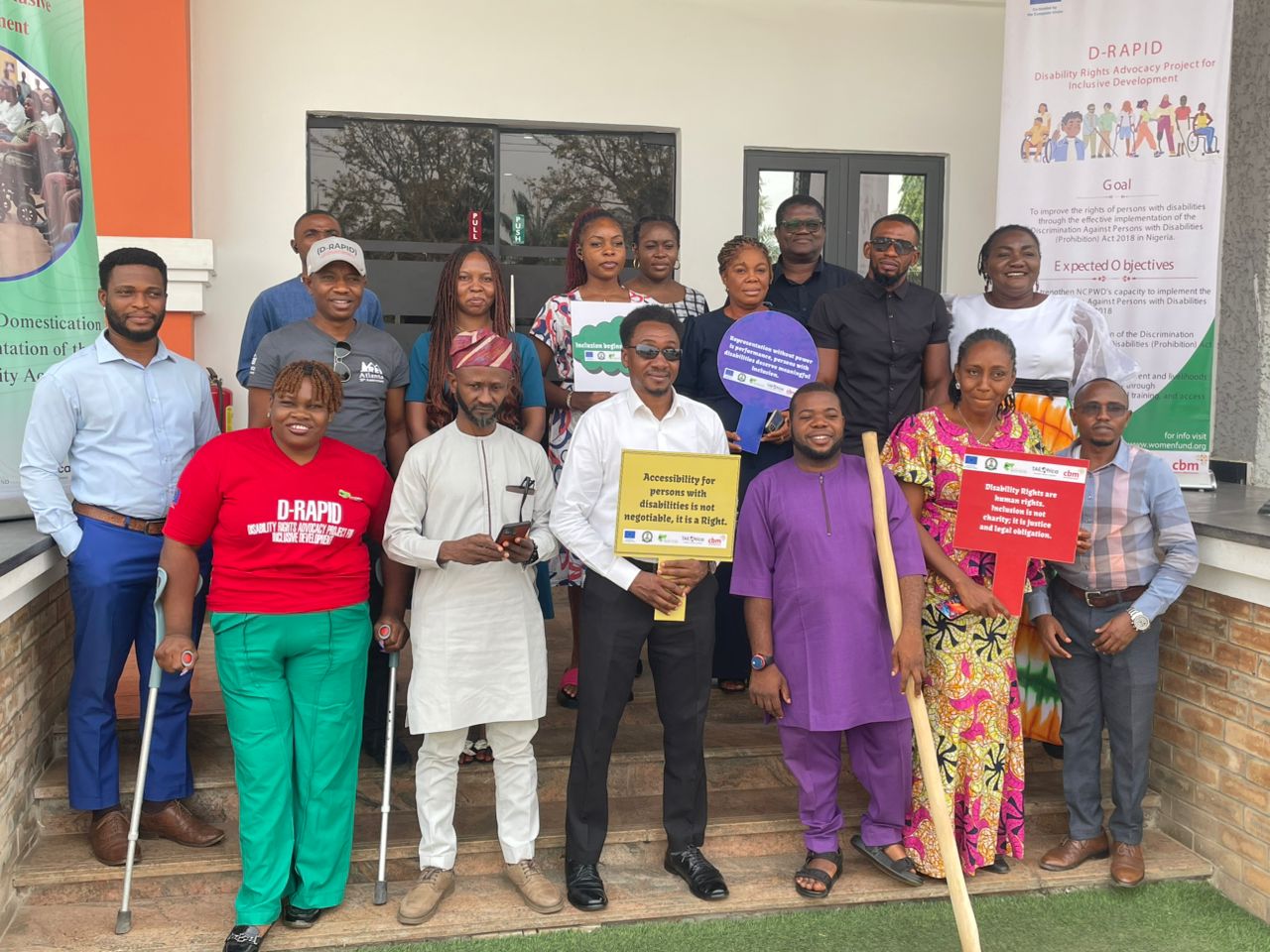
The Nigerian Women Trust Fund, NWTF, has commenced a two-day media advocacy training of Journalists and awareness-raising on inclusion and disability rights under the Disability Rights Advocacy Project for Inclusive Development, D-RAPID.
The D-RAPID project is being implemented in Benue state by the NWTF and co-funded by European Union and Christian Blind Mission (CBM).
Speaking during the opening Tuesday in Makurdi, the Monitoring and Evaluation Officer of D-RAPID, Mr. Victor Diji said the training is designed to strengthen the knowledge, technical capacity, and institutional commitment of print, radio, television, and digital media professionals in Benue State to serve as proactive advocates for disability inclusion.
He stated that the training seeks to deepen participants’ understanding of the legal framework governing disability rights, including the Benue State Disability Law and the National Disability Act, with particular emphasis on enforcement mechanisms, domestication at the state level, and the media’s role in promoting accountability.
He said the objective “is to build competencies in ethical, rights-based, and inclusive reporting, equipping journalists with the skills to apply dignity-focused language, avoid harmful stereotypes, and promote accurate representation of persons with disabilities.”
He said the training also aims to “strengthen media advocacy skills by developing participants’ ability to frame disability issues, strategically influence public discourse, support policy implementation, and leverage agenda-setting power for social change.
“It is to promote practical content development skills, including genderand disability-sensitive storytelling, inclusive interviewing techniques, and the production of accessible radio, television, and digital media content. Establish sustained media engagement and accountability mechanisms, enabling participants to develop newsroom action plans, commit to ongoing disability-focused reporting, and contribute to monitoring and tracking the implementation of the National Disability Act.
He emphasized that “Overall, the meeting seeks to transition media professionals from awareness to action, positioning them as informed partners in advancing disability rights, strengthening public awareness, and supporting inclusive development through sustained and responsible media engagement.”
In an overview of the engagement, the Program Officer of D-RAPID project, Benedicta Kave explained that the programme would be implemented in three years.
According to her the programme is being implemented in three Local Government Areas, LGAs, in the three Senatorial zones of the state including Tarka, Ushongo and Okpokwu LGAs to improve the livelihoods of beneficiaries.
She emphasized that the project among others also “seeks to get accurate data base of persons with disability in Benue state and Nigeria in general.”
The Project Coordinator, Daniel Ogabiela took participants on several topics including Disability-Inclusive Development, DID, – Principles and Practice, the Role of the Media in Promoting Disability Rights and Social Change as well as Ethical and Respectful Reporting on Disability Issues.
Ogabiela identified media practioners as critical and important stakeholders in highlighting and championing issues pertaining to the well-being of Persons With Disabilities in the state and country advising that they take up that responsibility with all since of commitment.
Participants in the two-day training are drawn from various media organisations.
Disclaimer
Comments expressed here do not reflect the opinions of Vanguard newspapers or any employee thereof.