By Musa Ubandawaki, Sokoto
SOKOTO — Chairman of the National Population Commission (NPC), Dr. Aminu Yusuf (Talban Wushishi), has said Nigeria’s development trajectory in the 21st century is closely tied to its rapidly evolving demographic realities, stressing that population dynamics must remain central to national planning and policy implementation.
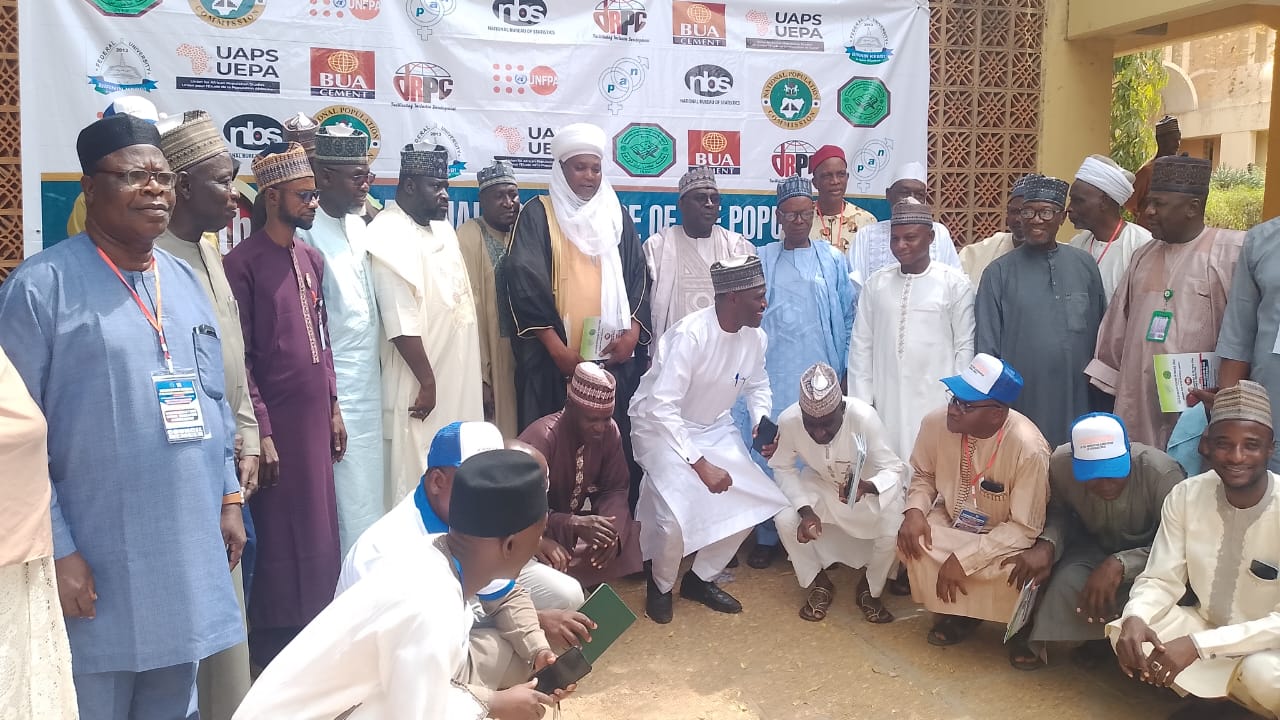
Dr. Yusuf made the remark on Tuesday while delivering his address at the 14th International Conference of the Population Association of Nigeria (PAN) 2026, hosted by Usmanu Danfodiyo University, Sokoto (UDUS).
He noted that Nigeria’s development is taking place against the backdrop of sustained population growth, a predominantly youthful population, accelerating urbanisation, and increasingly complex internal and international migration patterns.
According to him, these trends are reshaping the scale and distribution of national needs, placing significant pressure on infrastructure, social services and governance systems.
The NPC chairman emphasised that population issues should no longer be treated as purely academic concerns but recognised as a decisive factor influencing policy outcomes.
“Demographic pressures often remain unnoticed until they manifest in rising unemployment, insecurity, urban congestion and strain on social services,” he said.
Dr. Yusuf explained that this reality informed the inclusion of population dynamics as a core pillar in Nigeria’s national planning frameworks, including the revised National Policy on Population for Sustainable Development adopted in 2022.
He stated that demographic trends directly affect development prospects across sectors by shaping demand patterns, resource allocation and the effectiveness of public interventions.
“When policies and development programmes are aligned with demographic realities, planning becomes more coherent, forward-looking and sustainable,” he added.
The NPC chairman called on researchers, policymakers and development partners to prioritise evidence-based data and demographic intelligence in decision-making, warning that weak or fragmented data could undermine development efforts.
Earlier, the Sultan of Sokoto and President-General of the Nigerian Supreme Council for Islamic Affairs, Muhammad Sa’ad Abubakar, urged stakeholders to invest in building a productive population through improved access to education, healthcare and economic opportunities.
The Sultan, represented by the District Head and Sarkin Yakin Gagi, Alhaji Dani Umar Jabi, also highlighted the importance of family planning and youth empowerment in addressing insecurity and securing the nation’s future.
Declaring the conference open, Sokoto State Governor Ahmed Aliyu described population as a defining factor in Nigeria’s growth, noting that the country’s large youth population could become its greatest asset if properly harnessed.
In his remarks, Vice-Chancellor of UDUS, Professor Bashir Garba, said Nigeria’s status as Africa’s most populous nation presents vast economic opportunities, but cautioned that these could become challenges without strategic population management.
President of the Population Association of Nigeria, Professor Enang Ebingh, described the conference as a vital platform for generating professional insights to support informed policymaking and sustainable investments in key sectors.
The four-day conference, themed “Population Dynamics in the 21st Century: Opportunities, Challenges and Policies for Sustainable Development,” brought together demographers, academics and policymakers to chart a data-driven pathway for Nigeria’s development.
Disclaimer
Comments expressed here do not reflect the opinions of Vanguard newspapers or any employee thereof.