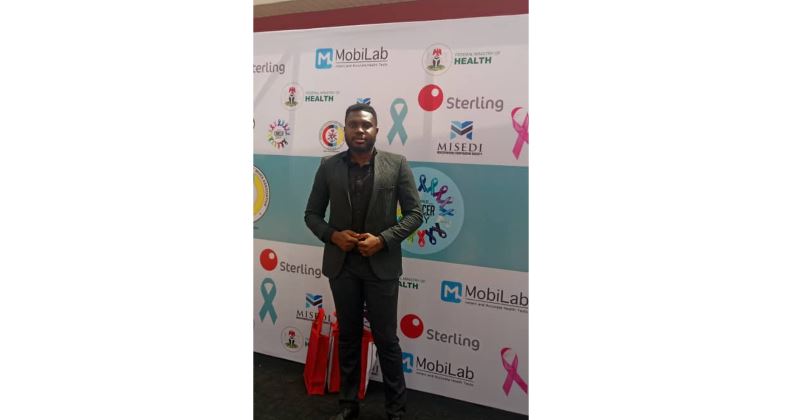
By Juliet Umeh
In African healthcare, laboratories are often seen as silent backrooms where samples are processed and results are printed. For Uzoka Ikenna, they are something more, classrooms, proving grounds, and engines of transformation. His career this year shows how a scientist can move beyond routine testing to become a mentor, a systems thinker, and a community advocate.
Uzoka’s leadership at Bio Rapid Diagnostics in Abuja remains a defining chapter in his professional journey. As Laboratory Manager, he supervised daily operations in a facility handling hundreds of samples across hematology, microbiology, and chemistry. His role was not limited to supervising tests. He created order in the chaos of daily diagnostics. By training medical students, technicians, and assistants, he transformed the laboratory into a place of discipline and mentorship. Inventory management, donor selection, and blood bank oversight became lessons in precision and accountability.
At Yussuf Dantshoho Memorial Hospital in Kaduna and the National Assembly Hospital in Abuja, Uzoka worked at the frontline of secondary healthcare. He collected specimens, performed investigations, and communicated critical values directly to clinicians. These experiences taught him that laboratory science is not only about accuracy but about urgency, the ability to deliver results that can change treatment decisions in real time.
His academic foundation strengthens this practical edge. With a Bachelor’s degree in Medical Laboratory Science from the University of Benin and a Master’s in Public Health Epidemiology and Medical Statistics from the University of Lagos, Uzoka combines technical expertise with analytical insight. This dual perspective allows him to see diagnostics not just as isolated procedures but as part of broader public health strategies.
Professional trainings added further depth. Courses in Good Laboratory Practice, ISO quality standards, and advanced data analysis tools such as SPSS and Epi Info gave him the ability to align local laboratory operations with international benchmarks. These certifications were not pursued for prestige but for impact, ensuring that laboratories in Nigeria could meet global expectations while serving local realities.
This year, Uzoka’s profile is defined not only by his technical mastery but by his community reach. His volunteer work with the Mandate Health Initiative Mental Health Campaign, the National Youth Service Corps Gender Vanguard Program, and the National Malaria Eradication Program reflects a scientist who understands that healthcare is inseparable from society. Whether providing psychosocial support, leading gender based sensitization campaigns, or demonstrating the use of anti malaria bed nets, he consistently connects science with human needs.
The through line in these experiences is simple, laboratories do not save lives on their own. People, systems, and communities do. In Uzoka’s vision, diagnostics are not an afterthought. They are the backbone of healthcare resilience. And if institutions commit to that vision, the gap between test results and healthier lives might finally close.
Disclaimer
Comments expressed here do not reflect the opinions of Vanguard newspapers or any employee thereof.