By Olayinka Ajayi
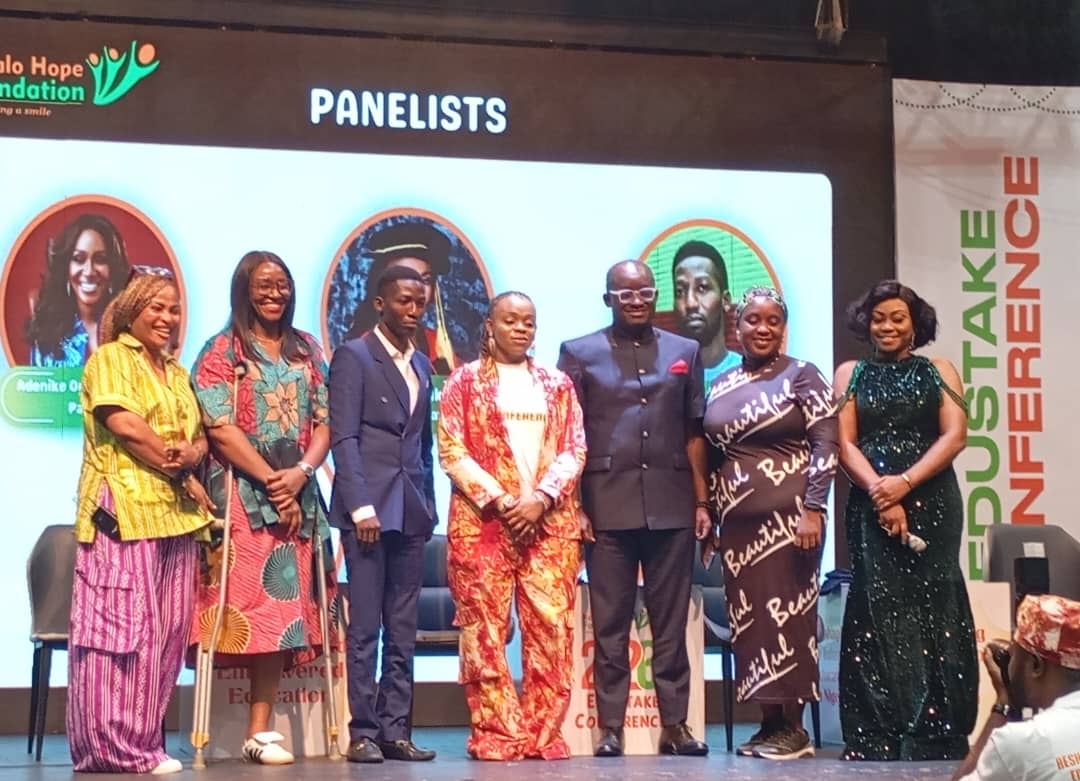
Stakeholders at the 2026 EduStake Conference have said it requires courage, collaboration and consistency to achieve inclusive education in Africa.
Speaking at the 8th EduStake Conference held in Lagos on Thursday, the Founder of Regalo Hope Foundation and convener of the Conference, Dr. Chinenye Onuorah, has said inclusive education is not a mere destination but a continuous commitment that requires courage, collaboration, and consistency.
According to her, “What started as a vision has grown into a collaborative space where educators, school administrators, policymakers, practitioners, advocates, and community leaders do not just talk about education, but actively build it together.
“The theme, Inclusive and Empowered Education, is not a new conversation, but a continuation of intentional work that has taken shape through our community engagements and previous EduStake conferences.
“Inclusive education is not a destination. It is a continuous commitment that requires courage, collaboration, and consistency.
“We brought together honest, raw, and solution-driven conversations through keynote sessions and panel discussions that challenged us to move beyond theory into practical, context-aware action. We are asked hard questions, shared lived experiences, and co-created pathways that made access, equity, and empowerment real in our classrooms and communities.
“This year is also particularly special as we celebrate the graduation of the first cohort of the Teachers’ Leadership Academy Associates.
“To our pioneering TLA Associates, you represent educators who are not only skilled in the classroom but also equipped to lead, influence policy, mentor others, and shape inclusive learning environments. Your graduation marks more than the end of a programme; it marks the beginning of a greater responsibility to lead with empathy, integrity, and impact.
“The conference is a reminder that when we invest in inclusive and empowered education, we are investing in people, in communities, and in limitless potential.”
On his part, an expert on sign language and convener of Seams Deaf-Pro Foundation, Mr. Samuel James, in his keynote address, noted that the importance of education is “way beyond the four walls of the classrooms.”
He said, “As a fellow believer in the power of education to change lives, restore dignity, and shape societies, I thank the organizers for sustaining the Conference as a space where conversations move beyond theory into responsibility.
“Education is not merely about classrooms, certificates, or curricula. It is about access. It is about belief. It is about whether a child, regardless of background, ability, language, or circumstance, is seen, heard, and given a fair chance to thrive.
“Over the years, EduStake has reminded us of something crucial: education does not belong to teachers alone, or government alone, or parents alone. It belongs to all of us. When one stakeholder fails, a child pays the price. When we collaborate, a generation benefits.
“As someone who works closely with Deaf communities, creative youths, and underserved populations, I have learned a powerful lesson. Talent is everywhere. Opportunity is not, and too often, our education systems reward those who already have access, while unintentionally excluding those who learn, express, or communicate differently.
“In many of our schools today, brilliance is sitting quietly at the back of the class, misunderstood. Potential is being labelled as weakness simply because it does not fit a narrow definition of intelligence. Creativity is being suppressed because it does not show up neatly on an exam sheet. Yet history has taught us that societies do not move forward by uniform thinking. They move forward because of diversity of thought, expression, and experience.
“This is why the conversation we are having today matters. Education must no longer be designed for the average learner. It must be responsive, inclusive, and human-centred. It must recognize that some learners think visually, some express physically, some communicate through sign language, some through creativity, and some through innovation that has not yet been named.
“Teachers play a central role in this transformation. To the educators being celebrated here today, you are not just instructors. You are translators of hope. You are often the first to notice potential before the world believes in it. And in low-tuition and government schools especially, you carry a burden that goes far beyond your job description. Your recognition today is not symbolic. It is necessary.
“To students, I want you to know your background does not define your ceiling. Your school does not limit your future. Your difference is not a disadvantage. It is a strength waiting to be understood. But you must be willing to learn, to ask questions, to collaborate, and to take responsibility for your own growth.
“To policymakers and decision-makers, the future of education will not be secured by policies alone, but by listening. Listening to teachers in the classroom. Listening to students in public schools. Listening to parents. Listening to communities that have historically been excluded from decision-making.
“And to fellow stakeholders and partners, let us move from pilot projects to sustainable systems. From good intentions to measurable impact. From isolated interventions to shared ownership of outcomes.
“At Seams Deaf-Pro Foundation, we often say that inclusion is not about bringing people into existing spaces and asking them to adapt. True inclusion is about redesigning the space so everyone belongs from the start. The same applies to education.
“The future of education in Nigeria will be determined not by how loud our conversations are, but by how intentional we are. Let us commit to education that empowers rather than excludes. When education works, society breathes easier. When education fails, no sector is safe.”
Disclaimer
Comments expressed here do not reflect the opinions of Vanguard newspapers or any employee thereof.