By Ibrahim Hassan-Wuyo
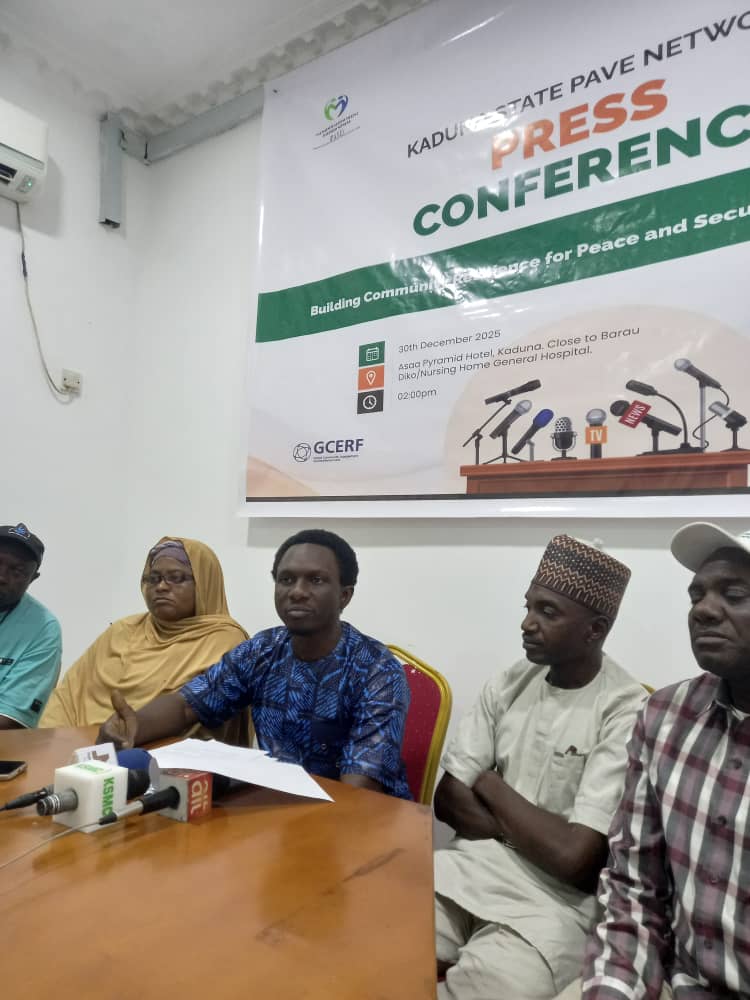
Kaduna State – The Kaduna chapter of the Preventing and Countering Violent Extremism (PAVE) Network has unveiled a community-driven strategy aimed at strengthening peace, security, and resilience across the state amid rising security concerns in the North-West.
Speaking at a press conference in Kaduna, Eric John, Chair of PAVE Kaduna State, said the organisation is intensifying efforts to tackle violent extremism through inclusive engagement, strategic partnerships, and locally led interventions.
John noted that Kaduna’s strategic location at the crossroads of Nigeria’s north and south has made it vulnerable to security challenges, including ethno-religious tensions, farmer–herder conflicts, and spillover banditry from neighbouring Zamfara, Katsina, and Niger states. He highlighted intelligence reports indicating the presence of Ansaru splinter cells in Birnin-Gwari and Giwa LGAs, alongside active criminal bandit groups in parts of Kajuru, Chikun, and Igabi LGAs.
“Porous borders, forest hideouts, and youth unemployment worsen these threats,” he said, stressing the need for coordinated prevention strategies that go beyond military responses.
Progress in PCVE Implementation
Despite security challenges, the PAVE Network has recorded significant progress across Kaduna and the wider North-West region. Achievements include:
Capacity-building programmes for Technical Working Groups, MDAs, security agencies, traditional institutions, women, and youth groups.
Community dialogue and consultation forums to co-create locally relevant action plans, emphasizing youth empowerment, early-warning systems, and resilience.
Peer-learning engagements with Kano and Jigawa states to share best practices and strengthen regional cooperation.
Advocacy visits to government and security institutions, resulting in political commitment and integration of PCVE priorities into state budget proposals.
Community resilience campaigns spanning 15 days focused on peace education, tolerance, conflict awareness, and countering extremist narratives.
These initiatives, according to PAVE, have fostered community ownership, trust, and improved early-warning and response mechanisms.
Gains and Opportunities
Key gains include strengthened collaboration among MDAs, security agencies, and civil society; progress toward developing State and Local Action Plans; improved alignment with the national PCVE framework; increased private sector participation; and empowered communities better able to detect early signs of radicalization.
The network also identified opportunities for deeper youth engagement, targeted economic empowerment, and institutionalisation of PCVE frameworks within government systems.
Persistent Challenges
Despite progress, challenges remain, including armed groups’ presence, youth unemployment, weak intelligence-sharing in some LGAs, and gaps in mainstreaming PCVE into sectoral budgets. John emphasized that violent extremism is a governance, development, and social cohesion challenge requiring collective responsibility.
Call to Action
Residents are urged to remain vigilant and reject extremist narratives. Traditional and religious leaders are encouraged to amplify peace messaging, while youth and women’s groups are called to champion inclusion and positive storytelling. Security agencies are tasked with deepening community engagement and upholding human rights, while the Kaduna State Government is urged to lead the PCVE process fully.
John concluded with a renewed commitment to inclusive, evidence-based peacebuilding, saying, “Peace and resilience are collective responsibilities. Together, we can prevent violent extremism, protect our communities, and build a future defined by stability and prosperity for Kaduna State and the North-West region.”
Disclaimer
Comments expressed here do not reflect the opinions of Vanguard newspapers or any employee thereof.