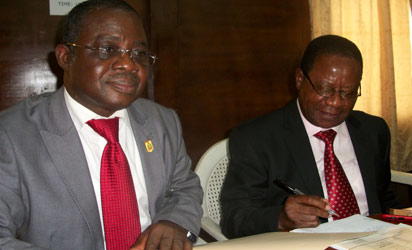
*Director General , NIMR, Prof Innocent Ujah and Former Acting DG, NIMR, Dr Philip Agomo, briefing the media on the symposiun on emergency prepardness and response to disease epidemics, last week in Lagos.
By CHIOMA OBINNA
Poor awareness of Nigerians, policy makers and organised private sector on the value of research in national development has been blamed for poor research findings in the country.
The Director General, Nigeria Institute of Medical Research, NIMR, Prof Innocent Ujah, who made the observation in Lagos regretted that health research in Nigeria had been relegated to the back ground by policy makers and organised private sector.

*Director General , NIMR, Prof Innocent Ujah and Former Acting DG, NIMR, Dr Philip Agomo, briefing the media on the symposiun on emergency prepardness and response to disease epidemics, last week in Lagos.
Ujah who spoke to pressmen on the institution’s symposium on Emergency Preparedness and Response to Disease Epidemics to mark his second year in office further noted that health research in the country was seriously challenged by poor and miserable funding allocation.
Other problems to research advancement in the country, the DG noted include; restricted number of research centres, apart from those of Kainji and Maiduguri, non-specific career progression of Research Fellows, which he said, acts a disincentive for young graduates from taking up research as a career.
Noting the importance of research and value placed on it by the international world, he disclosed that grants from donor agencies exceed the Federal Government budget.
Ujah said NIMR would sustain advocacy to policy makers, stakeholders and private sector on the role of health research in the socio – economic development of any nation.
Presenting the score card for the last two years, Ujah announced the successful completion of the 5- year strategic plan of the institute describing it as a paradigm shift from programme – based research to disease – based research.
He explained that nine research groups were approved and are headed by very senior and experienced researchers. The nine research groups include; malaria, HIV/TB, Non Communicable Diseases such as cancers, hypertension, malnutrition and obesity, Emergency preparedness and response to such conditions as cholera, meningitis, natural disasters, lassa fever etc.
Others are neglected Tropical disease such as Schistosomiasisi, lieshemeniasis, brucellosis, Chagas Disease etc, Maternal, Child and reproductive health, vaccinology and immunology, health policy and system research and clinical trials.
He said the plan would not only bring researchers from various disciplines together to brainstorm on research protocol but would enhance development of credible research activities with strong evidence – based outcomes enough to inform policy of government.
“We will continue to sustain the existing peace and tranquility currently exist in the institute for maximum productivity. Strengthen the capacity of research staff in the institute.”
Activities of the week would be graced by Senate Committee Chairman on Health, Dr. Gyang Dantong, the Minister for state for Health, Dr Ali Pate, House Committee Chairman on Health, Hon. Ndudi Elumelu and other research fellows across both in Nigeria and outside the country.
Disclaimer
Comments expressed here do not reflect the opinions of Vanguard newspapers or any employee thereof.