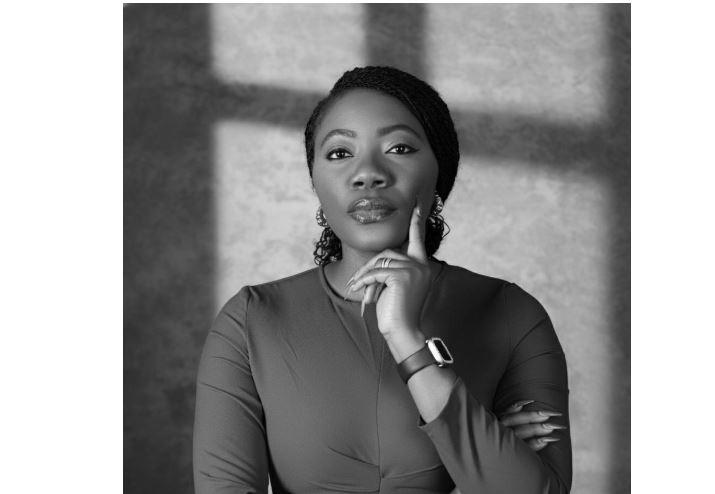
By Juliet Ebirim
As global streaming platforms continue to expand their footprints across Africa, media executive Ayomiposi Akinwale reflects on the evolution of Nigeria’s production landscape from the era of direct-to-video distribution to the emergence of internationally compliant studios. In this interview, she also examines the role long-running television projects like The Johnsons played in demonstrating Nigeria’s readiness for partnerships with global streaming giants.
Read on…
Your journey from production executive to becoming one of the architects of Nigeria’s streaming revolution is remarkable. Let’s start with The Johnsons, which has grown to become a cultural phenomenon. Can you tell us about creating it?
The Johnsons was truly special. As Head of Production at Native Media, I led the creation of the 260-episode comedy series that captured the everyday lives of Nigerian families. What made it extraordinary was its consistency. We maintained quality across hundreds of episodes, which is no small feat in television production.
The series won the Africa Magic Viewers’ Choice Award for Best Television Series three consecutive years. What did those awards represent beyond the accolades?
It signaled a shift in perception. Those awards showed that Nigerian studios could meet the technical and storytelling standards expected by international broadcasters while keeping local narratives intact. Back then, there was doubt about whether African creators could deliver at that level consistently. The Johnsons helped challenge that skepticism and demonstrated what was possible. We were building the infrastructure and demonstrating the capability that would later attract platforms like Netflix.
How did the 8-episode series by Native Media get commissioned by Netflix?
The commissioning was the culmination of years of groundwork. By the time Netflix was exploring African content partnerships, we had already proven ourselves with The Johnsons. When the opportunity came for that 8-episode series, we were ready. We weren’t being ‘discovered’, as we had positioned ourselves strategically so that when global platforms came looking for African partners, we were the obvious choice.
Before streaming platforms entered Nigeria, what was the state of the content distribution landscape?
The Nigerian entertainment industry operated on a direct-to-video model that had sustained Nollywood for decades. Content was distributed primarily through CDs and DVDs you’d see them sold everywhere, from organized retail stores to street vendors in markets. But this system had fundamental flaws that were suffocating the industry. The most devastating was piracy. It was absolutely epidemic. A producer could invest millions of naira into a quality production, and within days of release, pirated copies would flood every market in the country. There was virtually no way to protect your content or ensure fair compensation.
When did you realise that streaming platforms represented a transformative opportunity?
I saw it happening globally and understood its implications for Nigeria. Streaming solved almost every problem the physical distribution model created. It eliminated piracy through encryption and digital rights management. It removed geographic barriers a viewer in Lagos had the same access as someone in London. It provided data and insights about audiences. And it created predictable revenue models through licensing agreements rather than the uncertainty of unit sales.
But I also recognized that streaming platforms wouldn’t just automatically embrace Nigerian content. We had to prove we could meet their standards. That’s why the work we did on The Johnsons was so crucial it was building the technical capabilities and production infrastructure that would later enable us to partner with Netflix.
Other international streaming platforms have entered the Nigerian market, how has that expanded opportunities?
The arrival of Prime Video, Showmax, and others broadened the landscape. Each operates differently, but together they’ve created more pathways for producers. This has driven up content acquisition budgets and given producers negotiating leverage.
What were the most significant obstacles you faced in transforming Native Media into a platform-ready production house?
The technical upgrades were expensive and complex. Moving from broadcast television standards to streaming platform specifications required substantial equipment investments and team retraining. But the bigger challenge was mindset. The Nigerian television industry had developed certain production norms over decades quick turnarounds, budget constraints that led to production shortcuts, acceptance of “good enough” quality. Shifting to a culture where international standards were non-negotiable required changing how everyone thought about production.
Looking ahead, how do you see African content evolving on global platforms?
My vision is that within the next decade, African content becomes as central to global streaming platforms’ strategies as Asian or European content is today. We have the talent, the stories, and increasingly, the infrastructure. What we’re building now is the foundation for that future.
What’s your vision for the future of Nigerian content?
My vision is that Nigerian stories become as ubiquitous globally as Korean dramas or British series. We have the talent, the stories, and now we have the distribution infrastructure. The combination is powerful. I see a future where the distinction between “Nollywood” and “Hollywood” becomes less about geography and more about style. Where Nigerian producers routinely work with global platforms, where our technical standards match anyone’s in the world, and where our content authenticity remains uncompromised.
Disclaimer
Comments expressed here do not reflect the opinions of Vanguard newspapers or any employee thereof.