By Les Leba
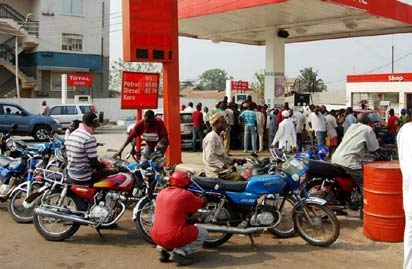
Over the years, the unyielding price of fuel products in Nigeria has instigated much acrimony between the government on one side and Labour and the people on the other. Fuel prices have risen steadily from less then 50kobo/litre to the current subsidized price of N97/litre; every government, be it military or civilian, has one time or the other had to contend with the threat or indeed a successful call for strike by Labour.
The government of Goodluck Jonathan insists that the current price of N97/litre accommodates a subsidy of about N55/litre. Some critics have, however maintained that there is in fact, no subsidy; others demand that even if it exists, it should be seen as the social benefit of having crude oil in our back yard.
What is clear, however, is that irrespective of one’s position, federal government annual budgets have always provided for subsidy; nonetheless, the huge difference between a subsidy budget of less than N300bn in 2011 and indicated actual payment in excess of N2 trillion has become a source of consternation to most Nigerians.
The huge discrepancies between the volume of fuel consumed and subsidies payable from the records of various government agencies, including the CBN, NNPC, PPPRA, etc, have not helped matters either; the ‘babel’ of statistics from these parastatals spoke volumes on the arbitrariness and insensitivity of governance of Nigeria.
The revised subsidy provision of about N700bn in 2012 budget may in fact be inadequate if the sum of over N2 trillion controversially paid out in 2011 is more accurate.
Indeed, the Governor of Central Bank, Lamido Sanusi and the joint Coordinating Minister of the economy and Minister for finance, Dr Okonjo Iweala, have both been reported to express their fear that the 2012 budget provision for subsidy would quickly run out before the end of the year!
Indeed, there will be a short fall in revenue expectation, if international crude oil price falls below the benchmark of $75/barrel and output projection of 2.5m barrels/day is not significantly exceeded. Fortunately, however, crude prices have hovered around $110/barrel for most of Q1 for 2012 and output has remained fairly stable around the budget benchmark.
If this trend continues, there will be no need for the government to lose sleep on our capacity to fund increasing subsidy values without the dismal prospect of further increasing our debt burden beyond the current level of about N5 trillion with over N500bn set aside as service charge in this year’s budget.
Paradoxically, however, the social welfare of most Nigerians may not see any improvement as the additional export revenue realized from crude prices in excess of the budget benchmark would have been channeled to fund increasing subsidy instigated by the same ‘favourable’ crude market.
The reason for such anomaly is quite simple; higher crude prices with outputs in excess of budgets benchmark will create a fortuitous windfall in export revenue; but the higher crude prices, which stimulated the increased revenue, will also translate to higher fuel prices domestically, as crude oil prices and exchange rate fluctuations are the major determinants of domestic fuel prices.
Meanwhile, the social and economic instability engendered by the January 2012 fuel strike is probably a red flag that Nigerians will not tolerate another price hike beyond the current N97/litre any time soon.
In this event, the lion’s share of increased revenue from higher crude prices will inevitably be absorbed in funding subsidy, with minimal leftover for other social welfare or infrastructural applications. Thus, if unexpectedly, crude prices rise above $200/barrel and domestic fuel price remains stuck below N100/litre, then we may discover to our utmost horror that we may have to borrow in spite of stupendous export dollar inflow to fund subsidy.
On the other hand, a fall in the output of crude with oil prices also much below the budget benchmarks would not give us respite either, as lower crude oil prices and output would similarly reduce revenue from oil exports. In the event that crude oil receipts account for over 80% of the total government revenue, the impact of a major fall in crude prices and output could have a disastrous impact on our economy.
In fact, government will find it expedient to formally devalue the naira, well below the current rate of N160/$1 if monthly allocations to the three tiers of government are to remain stable in nominal terms.
Regrettably, however, naira devaluation would inevitably trigger rising domestic fuel prices and inflation and thereby reduce purchasing power of all income earners. Maybe we can clarify this issue with a simple example; if for the sake of argument the international commodity price of a litre of petrol cost $1, then our domestic price would be about N160/litre, (at the rate of $1=N160).
If on the other hand, as a result of fall in revenue, government finds it expedient to devalue the naira, to, say, N200=$1, then, of course, domestic fuel price will also become N200/litre!, in which case subsidy value might be over N140/litre.
However if international petrol prices increase to $1.20/litre, while naira changes at an exchange rate of N200=$1, then it is evident that Nigerians will have to buy petrol at N240/litre with about N180/litre as subsidy if the domestic pump price remains stuck at N97/litre.
In such event, our economy will become trapped between the horns of a dilemma; increasing crude oil prices will produce higher domestic fuel prices, while on the other hand, reducing crude oil prices will lead to devaluation, and inevitable, higher fuel prices still.
So either way, we lose as a nation, as in both of the above scenarios, the resultant product is higher domestic fuel prices and steeply rising inflation! Thus, if the fortuitous scenarios of 2007/8, when crude oil prices approached $150/barrel returns, and government cannot adjust price, then subsidy values alone may well exceed 50% of the annual federal budget!!
Thus, in the current framework where recurrent expenditure alone already accounts for over 70% of the total expenditure, this would mean that there would be little or nothing left for capital and infrastructural enhancement and inevitably, negative growth in social welfare will become our portion!
Nigerians would naturally be alarmed at such a dismal prospect for our economy, but it is unlikely that the current economic management team can provide a reprieve without a radical departure from the existing framework of CBN’s monopoly of our crude oil export revenue.
In other words, it would be impossible for government to cancel subsidy; i.e. dismantle NNPC’s import monopoly without first dismantling the monopoly of the Central bank in the foreign exchange market, where CBN supplies over 80% of all the dollars in the market, while it concurrently maintains its constitutional monopoly of naira issues.
However, the seemingly intractable dilemma of crude oil fluctuation and domestic fuel prices will become effortlessly resolved once the CBN directly transfers export dollar revenue to the rightful constitutional beneficiaries without substituting naira allocations at rates of exchange, which are unilaterally determined by the apex bank.
If crude oil dollar receipts are paid to the three tiers of government with dollar certificates rather than bloated naira sums, the resultant impact will be as follows; if production remains constant or in fact, increases, Nigeria would be the beneficiary of increasing dollar revenue.
For example if crude oil prices rise to $150/barrel from say $100/barrel, with stable output, our crude exports dollar revenue will rise by at least 50%; this would pitch the increasing dollar receipts against the unchanged naira value in the market and thus strengthen the naira.
A stronger naira would mean cheaper domestic fuel prices, so long as international fuel prices remain denominated in dollars. In this event there will, in fact, be no subsidy whatsoever in domestic fuel prices; indeed there will be ample opportunity to impose a sales tax of about 10% and above on the domestic price of fuel.
So government will not only save over a trillion naira from non-payment of subsidy but may also be the beneficiary of petrol tax revenue of another one trillion naira as the nominal domestic price of fuel continues to fall with a stronger naira.
In the above event we can only hope that our economic management team will see reason and pull our economy back from unyielding economic crisis with a recognition that the current CBNs forex monopoly is the is poison in the system.
SAVE THE NAIRA, SAVE NIGERIANS!!
Disclaimer
Comments expressed here do not reflect the opinions of Vanguard newspapers or any employee thereof.