By Aminah Bashir, Student of Mass Communication, University of Maiduguri
MAIDUGURI:
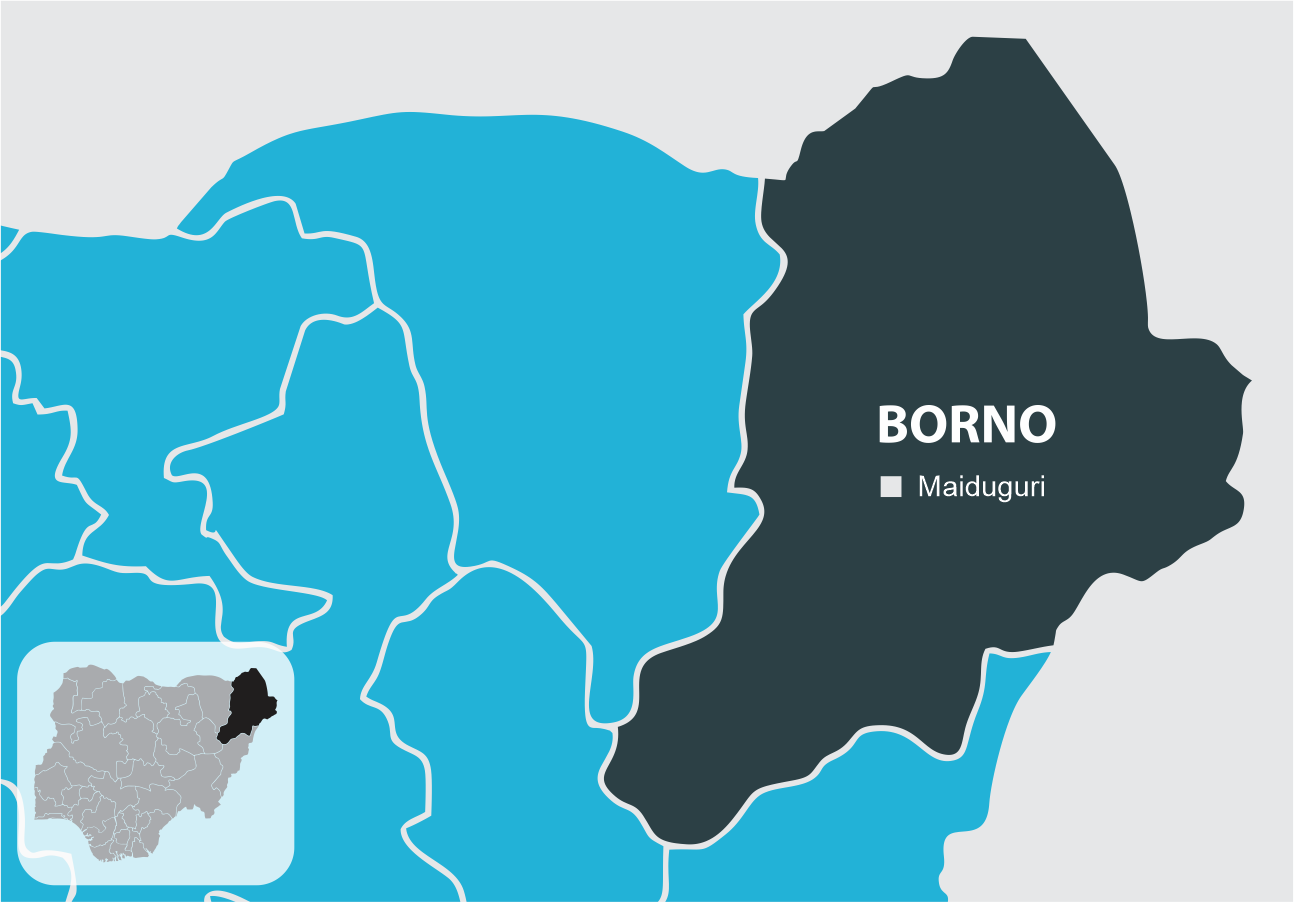
Fourteen-year-old Aminata sits in the dim light of a kerosene lamp in a cramped house on the outskirts of Maiduguri. A hand-me-down school book lies open in front of her, yet she is not in school any more. Her mother now asks her to help around the house and hawk goods in the nearby market. “If I go back to school,” she says quietly, “somebody might ask how I’ll walk through the military checkpoint again. And my mother worries for me.” Her story is one of thousands across Borno State where gender, conflict, displacement and poverty combine to push girls out of the classroom.
The concept of a Gender-Responsive Education Sector Plan (GRESP) is simple in theory: design, budget and deliver schooling so that the unique barriers facing girls, especially in crisis-affected settings, are recognised and addressed. In Borno, the state government has developed an Education Sector Plan and a 10-year strategic transformation agenda. Yet, on the ground, critics say the gender lens remains too faint and many girls continue to miss out. Nationally, approximately 10.5 million children aged 5-14 do not attend school and only about 61 % of 6-11-year-olds are regularly attending primary school. In the north-east and north-west the female primary net attendance rate is about 47.7 %. 
In Borno specifically, the challenges are deep. According to recent reports, of the approximately 700,000 out-of-school children in Borno State, about 60 % are girls.  Other data indicate that fewer than one-quarter of school-age children in Borno were enrolled in education in some periods, and the female secondary net attendance rate in the state was cited at only 29 % compared with a national average of 53 %.  The national figure for girls out-of-school is also sobering: at least 7.6 million girls are not attending school across Nigeria, with 48 % of those in the north-west and north-east zones. 
What’s causing this gap? For the girls in Borno, the layers of disadvantage are many. The insurgency by Boko Haram has destroyed infrastructure, for example, over 512 schools in north-east Nigeria including Borno have been damaged or destroyed.  Many families have been forced into displacement, living in camps or temporary settlements, which often lack safe and continuous access to schooling. In these contexts, girls are disproportionately at risk: abduction, early marriage, sexual violence, household obligations and stigma are everyday realities. A systematic review of studies across northern Nigeria found that poverty, cultural norms and early marriage/teenage pregnancy were consistently the strongest inhibitors to girls’ education. 
Take the case of Yagana, 16, displaced from her village in southern Borno after one raid. She spent two years in an IDP camp, missed four school years, and when she returned she found her friends gone, married or working, and the school had no separate girls’ latrine, no soaking up of trauma from the past, and no bridging class to catch up. Her family now asks her to bring in income rather than risk the trek to an unsafe school. Stories like hers reflect systemic problems: even when policies exist, the structures are not always responsive to girls’ specific needs.
A crucial missing piece is gender-tagged budgeting. In Borno’s education sector documents, funds are allocated to “education recovery” or “school rehabilitation,” but few lines explicitly target girls, such as scholarships for girls, safe transport for girls from remote or insecure areas, gender-sensitive sanitation facilities in schools, flexible class times tailored for girls with household chores, or programmes for girls who have missed years due to displacement. Without these intentional allocations the generic programming often reinforces existing inequalities. Moreover, data and monitoring are weak: many local education plans in Borno lack regular gender-disaggregated enrolment, retention and learning-outcome data for girls.
On the cultural front, social norms continue to weigh heavily. In Borno, girls are still often expected to marry young or help with domestic tasks. A 2023 study on gender inequality in Borno found that female literacy and educational attainment lagged significantly because of values and practices that subordinate females in education and development policy.  Families in rural and remote areas frequently prioritise boys’ schooling when resources are constrained. The poorest 9 % of girls in Nigeria attend secondary school, compared with 81 % of girls from the richest households, a stark inequality in access. 
Learning outcomes for those girls who do attend school are also troubling. In some studies of crisis-affected areas in the north-east, including Borno, more than 75 % of children who are formally in school could neither read, write nor solve simple arithmetic at expected grade levels. This means even when girls enter school, the quality of learning and the relevance of the schooling to their lives remain questionable.
So what can make the GRESP in Borno effective and meaningful rather than only rhetorical? First, budgeting must be done with a gender tag: for instance, girls’ scholarships, safe transport from remote or insecure zones, separate latrines and hygiene facilities for girls, support for girls returning after displacement, mentoring and peer groups to encourage retention. Second, the security and physical environment of schooling must be improved: schools must be rebuilt or rehabilitated to safe standards, located in secure zones or with transport support, and include psychosocial support for girls who have experienced trauma or disruption. Third, community engagement and norm change: working with traditional, religious and community leaders to shift attitudes about girls’ education, delay early marriage, and emphasise female schooling as a societal good. Fourth, data, monitoring and accountability: implement strong systems for collecting gender-disaggregated data on enrolment, retention, completion, transition and learning outcomes in each local government area; use that data to refine budgets and interventions. Fifth, scaling successful pilots: programmes such as the “Education for Crisis-Affected Girls (ECG)” project in Borno and Yobe show promise, when girls’ specific needs are addressed, their attendance and retention improved. 
For Aminata, and for thousands of girls like her across Borno, these are not abstract policy statements, they are make-or-break issues. An education plan that neglects gender realities is a plan that leaves behind its most vulnerable children. Girls’ education is not simply about literacy, it is about empowerment, delaying early marriage, improving health, breaking inter-generational cycles of poverty, and contributing to the rebuilding of a society wounded by insurgency. The stakes could not be higher. Unless the state’s education sector plan becomes genuinely gender-responsive, Borno risks perpetuating its silent crisis. The future should belong to girls like Aminata, but only if the plan maps them into the picture from day one.
Disclaimer
Comments expressed here do not reflect the opinions of Vanguard newspapers or any employee thereof.