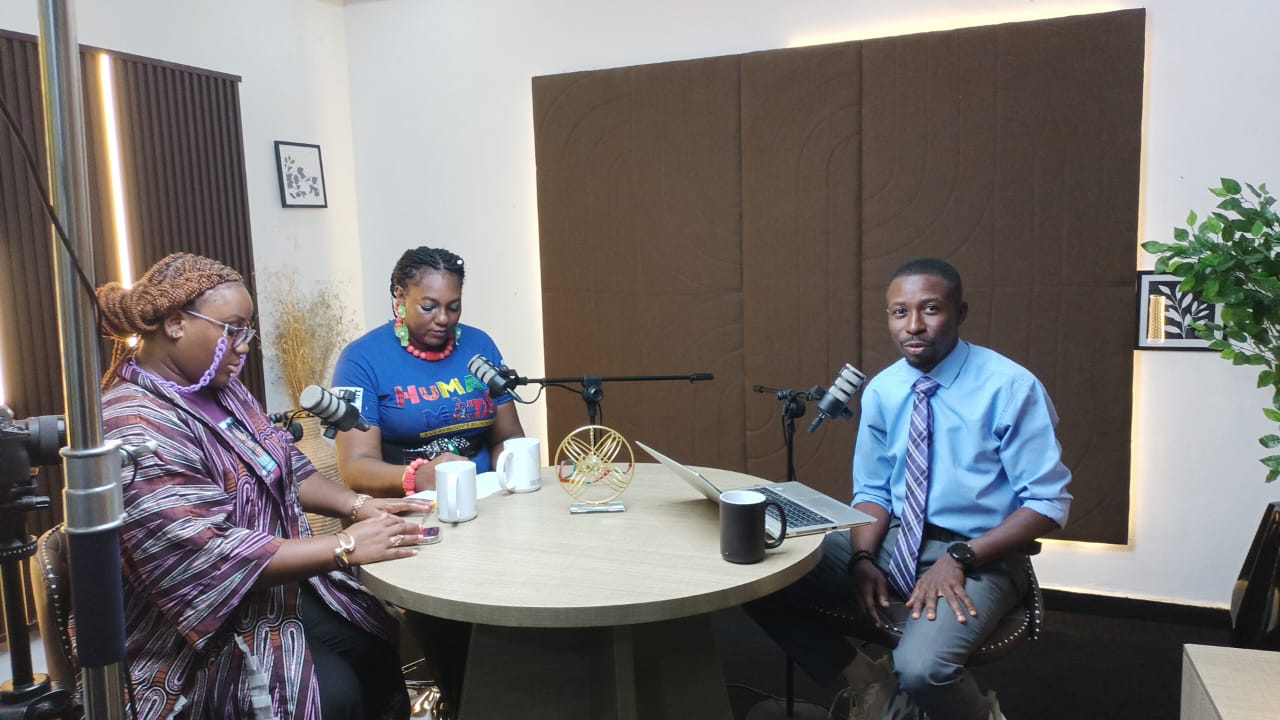
Dorothy Njemanze, a media and development strategist and Executive Director of the Dorothy Njemanze Foundation (DNF), says Nigerian women have been socialised to shrink themselves to fit into a system that rewards their silence.
Speaking on The Volume Pod alongside Priye Diri, a feminist film writer and director, Njemanze said Nigerian society defines women by their ability to serve rather than to lead.
“Because we are born in Nigeria, you know, that is the very first problem,” she said.
“And much as it’s a problem, it’s also a solution, because the audacity we have to challenge a lot of things is because we are Nigerians. We are resilient people and have a habit of not being swallowed,” she further stated.
She said the definition of a “good woman” in Nigerian society is rooted in subservience.
“For you to be good, you must be submissive and willing to relinquish the knowledge that you are human and let other people take decisions for you. You must be willing to be seen and not heard,” she said.
Njemanze argued that while women are responsible for nurturing life and maintaining families, their contributions are often ignored or devalued.
She stated that women are responsible for basic human processes, such as hygiene, nutrition, and care, but are often denied recognition or leadership opportunities.
Her words: “So many men have not learned to take care of themselves, so there’s little they can contribute.
“A child doing well is a good child to the father, but a child that has done wrong is proof that the mother is not doing enough.”
She added that the cultural and religious structures that perpetuate these gender biases have been passed down for generations, becoming deeply ingrained in society.
“If we don’t tell our stories, people will keep on saying things like, ‘But nobody’s limiting you’.
“We have had instances where cultural, traditional or religious inclinations are used as excuses to perpetrate injustices against us. These injustices have been inherited from generation to generation. There’s a need to disrupt them,” she said.
Diri, on her part, said the argument that women already have their “hands full” is rooted in politics and patriarchy.
Her words: “It is political. There’s a feminist statement that says the personal is political and the political is personal. When you say women’s hands are already full, my question is: full with what?”
She described domestic work as unpaid labour that sustains men but denies women autonomy.
She said, “If you were to get someone to cook and clean, you would pay that person.
“But I’m in the house because we’re supposedly married, doing all of those things as what I bring to the table. Oftentimes in those kinds of relationships, you see the men doing nothing. They’re just sitting down.”
Diri said many women are forced to stay home under the guise of “care” while men pursue careers, reinforcing economic and political inequality.
Her words: “It’s all politics as far as I’m concerned. Food is a political issue. Otherwise, why are men killing women who have not cooked food?
“You see on the news: a man killed his wife for not boiling rice. And you want to tell me that’s not political?”
She said the demand for inclusion in leadership and governance is about giving women equal access to decision-making spaces.
“Give me more to do, that’s inclusivity. Include me in conversations. Include me in your plans. Where conversations and decisions are being made, I’m not there.
“The fact that we’re even asking this question is further victimising women, putting them at the back so their voices will not be heard,” she concluded.
Disclaimer
Comments expressed here do not reflect the opinions of Vanguard newspapers or any employee thereof.