By Musa Ubandawaki
The Sokoto State Government, under the leadership of Governor Ahmed Aliyu, has unveiled a visionary strategy aimed at advancing Islamic affairs and uplifting the welfare of Muslim communities across the state.
In what many observers describe as one of the most comprehensive faith-based development plans in recent times, the government has implemented a series of social intervention programs that support religious leaders, Islamic organizations, and places of worship. These initiatives span financial empowerment, infrastructure upgrades, welfare packages, and Ramadan-centered assistance.
One of the central components of this intervention is the Ramadan Assistance Program, through which the state distributed food items and cash to Imams, Na’ibs, and Mu’azzims from 90 Jumu’at mosques. This effort was designed to alleviate the burden on religious leaders and communities during the holy month, ensuring their ability to perform religious duties with dignity.
To further strengthen Islamic scholarship and organizational activities, the government disbursed ₦20,000 each to over 300 Islamic scholars. Additionally, 300 senior ulama received ₦200,000 each, while another 100 scholars were given ₦100,000 each. This direct financial support is aimed at promoting religious education and deepening Islamic values in society.
Also noteworthy is the disbursement of ₦300,000 each to 150 Islamic organizations, empowering them to continue their community-based activities and spiritual guidance missions across the state.
The administration has undertaken the renovation and remodeling of 39 Jumu’at mosques, enhancing the facilities to accommodate worshippers comfortably and preserve the sanctity of Islamic worship centers. These efforts are complemented by the provision of 400,000 meters of carpeting and local carpets to 250 mosques to improve their internal aesthetics and usability.
A major highlight of the spiritual welfare drive is the establishment of 155 fully equipped Ramadan feeding centers and 300 smaller ones, collectively serving 31,000 people daily during the fasting period. This program has been hailed as a vital support system for the poor and underprivileged, especially during times of economic hardship.
Several new Jumu’at mosques have been constructed and commissioned across the state, including landmark projects such as the Abdullahi bn Fodio Ruggar Waru Mosque, Sheikh Abubakar Gumi Mosque (Acimarai), Unguwar Rogo Wamakko Mosque, and Izala Jumu’at Mosque Gwadabawa, among others. These are seen not only as places of worship but also as community unifiers and learning centers.
The government has further institutionalized monthly stipends for Imams, deputy Imams, Mu’azzims, and ulama, recognizing their roles as custodians of moral guidance and spiritual leadership. Each renovated mosque now also receives a monthly ₦500,000 maintenance allowance to ensure upkeep and functionality.
In addition to spiritual empowerment, the administration is sustaining its annual Ramadan feeding exercise across all 23 local government areas, providing food and relief to thousands. Ulama and religious leaders have also benefited from extensive food and cash assistance programs throughout the year, further reinforcing the government’s commitment to religious and social welfare.
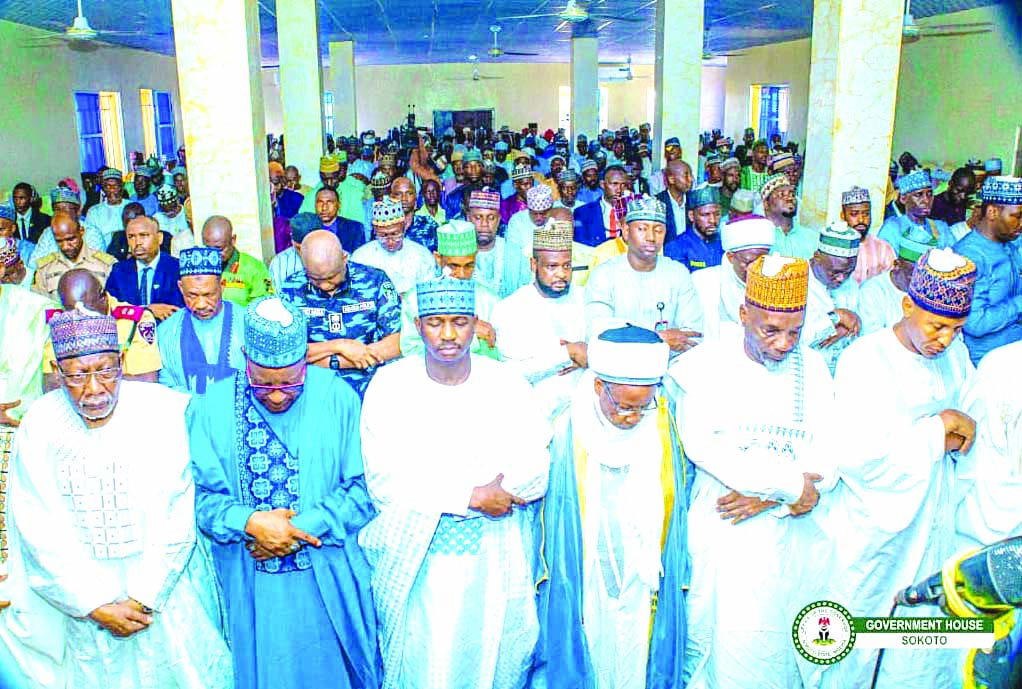
Speaking during the commissioning of one of the remodeled mosques, Nigeria’s Minister of Labour and Employment, Alhaji Muhammadu Maigari Dingyadi, commended the government’s initiative and described it as a model worthy of emulation across Nigeria.
This holistic approach to religious development reflects Governor Ahmed Aliyu’s broader vision of making Sokoto State a hub for Islamic scholarship, social harmony, and religious prosperity. By combining infrastructure development with social welfare, the administration is setting a strong example for how governance can blend with cultural and spiritual values to improve lives.
As Sokoto continues on this developmental path, the government has called on all Muslims in the state to embrace these initiatives, safeguard public infrastructure, and work collaboratively to build a spiritually sound and socially cohesive society.
Disclaimer
Comments expressed here do not reflect the opinions of Vanguard newspapers or any employee thereof.