From last week continues the narrative of the events that took place before General Gowon was overthrown, with particular reference to the early years when he ruled without a federal cabinet and had to deal directly with permanent secretaries.
General Gowon also worked with the members of the Federal Public Service Commission in which Alhaji Sule Katagum was the chairman. Other members were Dr. Samuel Manuwa, Alhaji Yusuf Jega and Dr. L.O. Wochia.
During General Gowon’s tenure, Nigeria had the finest civil servants that any country could boast of. At that time, they were the envy of Africa and the Commonwealth of nations.
Mention must be made of Chief Jerome Oputa Udoji, Chief Augustus Oladipo Adebayo, Chief Peter Odumosu, Chief Simeon Olaosebikan Adebo, Chief Christopher Sunday Olatunde Akande, Chief Samuel Oyewole Asabia, Chief Sam Epelle, Mr. M.I. Alege, Mr. L. A. Nsefik, Mr. Benjamin Akinnusi Osunsade, Dr. Christopher Kolade, Chief N.U. Akpan, Chief D.P. Lawani, Alhaji Ali Akilu, Chief (Mrs) Folayegbe Akintunde-Ighodalo (17 December 1923 – 14 February 2005), the first woman Permanent Secretary and lots of them.
There were other top officials like Mr. C. Olumese, Mr. Gboyin Alabi, Mr. Olufemi Akande, Mr. Nyalander, Chief Olu Awotesu (Registrar of Ships), Mr. Felix Bankole Cardoso (Accountant-General at that time), father of the present Governor of Central Bank of Nigeria, CBN; Chief (Mrs.) Ebun Oyagbola (Accountant), Mr. Adeyinka Samuel George Nelson (government’s Printer) and others.
On January 2, 1975, General Yakubu Gowon appointed the following as Permanent Secretaries: A.S.N.Egbo (Cabinet Secretariat), Yaya Abubakar (Political), Dr. J.O. Adekunle (Economic), Mrs. F.Y. Emmanuel (Public Service), M. Saidu Gwarzo (Police Affairs), B.S. Oloruntoba (Agriculture and Rural Development), F.M.C. Obi (Civil Aviation), I. Akade (Co-Operatives and Supply), S.A. Musa (Health), Festus I. Adesanoye (Housing, Urban Development and Environment), A. Fika (Internal Affairs), J. Taggert (Social Development, Youth and Sports), J. A. Adeyeye (Trade), M.E.P. Udebiuwa ( Works) and J.D. Ogundele (Justice).
Others were S. O. Williams (Communications), Sunday B. Awoniyi (Defence), I.J. Ebong (Economic Development), A. Lima Ciroma (Education), G. A. E. Longe (Establishments), J.T.F. Iyalla (External Affairs), I.M. Damcida, Ahmed Joda (Industries), A. Tatari-Ali (Information), S.O. Koku (Labour), G.A. Ige (Mines and Power), P.C. Asiodu (Petroleum and Energy), Y. Gobir (Transport) and Dr. Bukar Shaib (Water Resources).
In overthrowing General Yakubu Gowon, on the evening of July 30th, 1975, Brigadier General Murtala Ramat Mohammed (November 8, 1938 – February 13, 1976) declared: “Fellow Nigerians the events of the first few years have indicated that despite our great human and material resources, the government has not been able to fulfill the legitimate expectations of our people. Nigeria has been left to drift. This situation, if not arrested, would inevitably have resulted in chaos and even bloodshed.
“In the endeavour to build a strong, united and virile nation, Nigerians have shed much blood. The thought of further bloodshed, for whatever reason must, I am sure, be revolting to our people. The Armed Forces, having examined the situation, came to the conclusion that certain changes were inevitable. After the civil war, the affairs of state hitherto a collective responsibility, became characterised by a lack of consultation, indecision, indiscipline and even neglect.
“Indeed, the public at large became disillusioned and disappointed by these developments. This trend was clearly incompatible with the philosophy and image of a corrective regime. Unknown to the general public, the feeling of disillusionment was also evident among members of the armed forces whose administration was neglected but who, out of sheer loyalty to the Nation, and in the hope that there would be a change, continued to suffer in silence.”
“Things got to a stage where the head of administration became virtually inaccessible even to official advisers; and when advice was tendered, it was often ignored. Responsible opinion, including advice by eminent Nigerians, traditional rulers, intellectuals, et cetera, was similarly discarded. The leadership, either by design or default, had become too insensitive to the true feelings and yearnings of the people. The nation was thus plunged inexorably into chaos.”
To be concluded
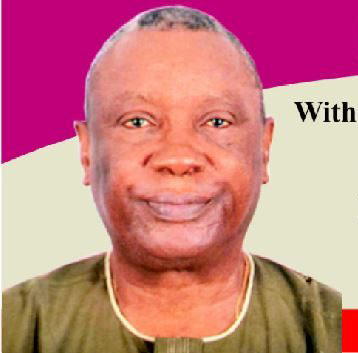
•Teniola, a former director at the Presidency, wrote from Lagos.
Disclaimer
Comments expressed here do not reflect the opinions of Vanguard newspapers or any employee thereof.