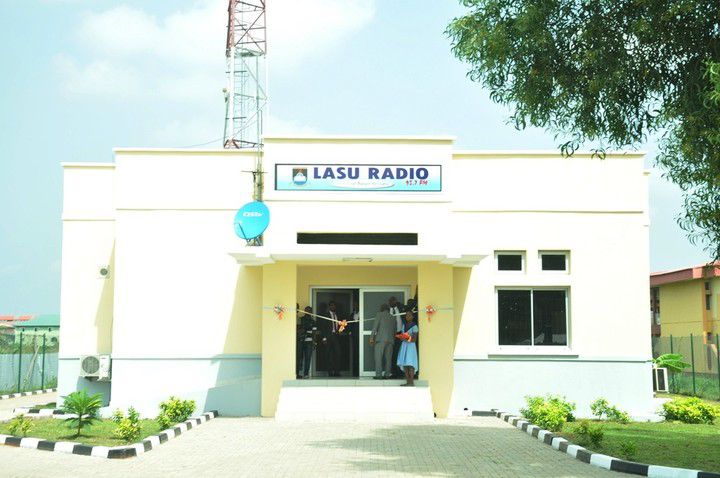
Lagos State University-owned campus station, LASU Radio 95.7FM, on Tuesday, May 26, 2026, celebrated its 10th anniversary with a high-profile gathering of broadcast industry leaders, academics, students, and media professionals at the Femi Gbajabiamila Conference Centre, LASU Main Campus, Ojo.
The event, themed “Campus Radio in the Digital Era: Celebrating the 10th Anniversary of LASU Radio,” marked a decade of the station’s contributions to broadcasting, practical media education, and community engagement.
The ceremony attracted the Vice-Chancellor of Lagos State University, Professor Ibiyemi Olatunji-Bello, mni, NPOM, members of the University Management, the donor of the LASU Radio facility and Chairman of the occasion, Sir Chief Kesington Adebukunola Adebutu, CON, KJW, as well as the General Manager of Cool FM, Wazobia FM and Nigeria Info, Mr. Femi Obong-Daniels, who delivered the keynote address.
Also in attendance were renowned broadcasters and media personalities including Charles Anazodo, Mozez Praiz, Steve Onu (Yaw), Dirisu Anselem, Chief Sup Chapele, Olayiwola Olakanmi, Saheed Fuhad, and Moseph Ekine, Editor for BBC Pidgin who participated in a panel discussion on the future of campus broadcasting in the digital age which was co-moderated by Cosmos Chukwuemeka Akisi, the Sports Head of LASU Radio and Zainab Aderounmu, a content creator and communication expert.
The Dean, Faculty of Communication and Media Studies, Professor Jide Jimoh, hosted the event, while Dr. Yahya Jamiu and Dr. Omolade Atofojomo served as co-hosts.
Delivering the keynote address titled “Campus Radio in the Digital Era,” Mr. Obong-Daniels, who was ably represented by Mr. Chuma Nnoli, the Head of Sports of Cool FM, Wazobia FM and Nigeria Info, described LASU Radio’s ten-year journey as a celebration of endurance, adaptation, voice and relevance.
According to him, despite the rapid evolution of digital media platforms and changing audience consumption habits, radio remains a powerful medium because of its ability to provide companionship, storytelling, immediacy, community engagement and human connection.
“The biggest question facing radio globally today is whether radio can still matter in the digital era. My answer is simple: yes, but only if radio understands that the world has changed permanently,” he said.
The media executive noted that while platforms such as TikTok, YouTube, podcasts, Instagram and Artificial Intelligence continue to reshape media consumption, radio must evolve to remain relevant.
“The real threat to radio is not social media; it is boring radio. The danger is not digital media; the danger is irrelevant broadcasting,” he stated.
He stressed that modern radio stations must move beyond traditional terrestrial broadcasting to become integrated content ecosystems capable of engaging audiences across multiple platforms.
“Radio can no longer exist only on radio. A modern radio station is now a content ecosystem, a social media brand, a podcast platform, a livestream hub, a community builder and a digital conversation engine,” Obong-Daniels added.
Speaking on the significance of campus radio, he described university radio stations as incubators for future communicators, journalists, creators, influencers and civic leaders.
“Campus radio is not merely training broadcasters; it is shaping communicators, thinkers, creators, journalists, digital strategists, influencers and civic voices. LASU Radio is not simply producing presenters; it is producing future media architects,” he noted.
Addressing students, the keynote speaker encouraged them to embrace emerging media skills including podcasting, digital storytelling, content creation, branding, audience engagement and the use of Artificial Intelligence tools.
He also urged LASU Radio to expand its digital footprint through stronger multimedia training programmes, podcasting initiatives, digital archiving, creator development pipelines, strategic partnerships and AI-assisted production systems.
“LASU Radio should aim not merely to be a campus station; it should aim to become a recognised media innovation hub in Nigeria,” he said.
The anniversary celebration also featured an engaging panel session where leading industry professionals shared insights on the evolving media landscape, the impact of digital technologies on broadcasting, and the opportunities available to aspiring media practitioners.
Over the past decade, LASU Radio 95.7FM has served as a practical training platform for students of communication and media studies while contributing significantly to information dissemination, education and community development within and beyond the university environment.
As LASU Radio begins its second decade of operation, stakeholders reaffirmed their commitment to innovation, excellence and digital transformation, positioning the station to continue serving as a model for campus broadcasting in Nigeria.
Disclaimer
Comments expressed here do not reflect the opinions of Vanguard newspapers or any employee thereof.