By Adesina Wahab
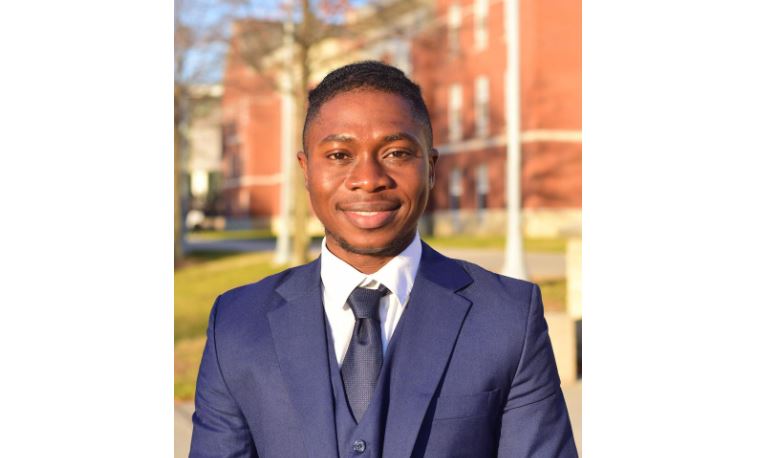
In a world urgently seeking solutions to the twin crises of climate change and industrial inefficiency, Dr. Babatunde Keshinro has emerged as a trailblazing force—a visionary whose work sits at the intersection of advanced manufacturing, artificial intelligence, and environmental sustainability. From his academic roots in Nigeria to his leadership in the United States’ high-tech manufacturing sector, Dr. Keshinro is not just following trends—he’s setting them.
With over a decade of relentless commitment to Industrial and Systems Engineering, Dr. Keshinro has dedicated his entire professional life to answering one question: How can we build smarter, greener, and more resilient systems for a sustainable world?
Today, he stands as one of the field’s most respected voices—a Fellow of the International Organization for Academic and Scientific Development (IOASD), an editorial leader in top-tier AI and sustainability journals, and a recipient of the prestigious Dean’s Circle Honor from North Carolina A&T State University, where he earned his Ph.D. in Industrial and Systems Engineering.
Engineering for Impact
Now at the forefront of electric vehicle innovation as an Inspection Engineer at Ultium Cells LLC, Dr. Keshinro leads initiatives to embed deep learning and computer vision into EV battery production. His systems ensure real-time defect detection, enhance production quality, and reduce waste—key steps toward achieving global net-zero goals.
But his impact reaches far beyond the production floor. His work embodies a systems-thinking approach, integrating data analytics, automation, human-robot interaction, and environmental ethics to create smarter infrastructures that serve both people and the planet.
A Global Researcher, A Local Changemaker
From autonomous sewer inspection systems designed to help cities optimize repair budgets, to data-driven food distribution models that reduced waste and fed more families across North Carolina, Dr. Keshinro’s projects demonstrate that engineering can and should solve real-world problems—especially those affecting vulnerable communities.
His research portfolio spans continents, tackling infrastructure decay, supply chain inefficiencies, and environmental degradation with a singular conviction: technology must be both intelligent and just.
A Champion for Ethics and Equity in Engineering
As a former Graduate Teaching Assistant in Engineering Ethics and Design, Dr. Keshinro has mentored the next generation of socially conscious engineers. “Engineering must begin with values,” he says. “Sustainability isn’t an afterthought—it’s a responsibility.”
He is also a committed advocate for diversity in tech. From judging national robotics competitions to contributing to the Black in AI Workshop at NeurIPS, and serving in professional societies like the Human Factors and Ergonomics Society (HFES), Dr. Keshinro ensures that innovation includes all voices—and serves all communities.
Scholarly Leadership on the Global Stage
Dr. Keshinro has authored over a dozen peer-reviewed publications in the fields of AI, smart manufacturing, and environmental systems engineering. He currently serves on the editorial boards of multiple international journals, and has reviewed several manuscripts—establishing him as a gatekeeper of scientific excellence.
His work has shaped global conversations on topics ranging from smart grid integration and robotics in clean energy, to lean production systems and zero-emission factory design.
Building the Future, Sustainably
Looking ahead, Dr. Keshinro is focused on fostering global research collaborations that bring AI-powered sustainability solutions to the regions that need them most—particularly in Africa, Southeast Asia, and underserved areas in the United States. “We need inclusive innovation,” he says. “Solutions must be culturally aware, context-specific, and designed to uplift communities.”
He envisions a future where environmental sustainability is embedded not just in policy papers, but in every line of manufacturing code, every machine sensor, every organizational strategy.
In Dr. Babatunde Keshinro, the world finds more than an engineer—it finds a systems thinker, a humanitarian technologist, and a leader of extraordinary ability whose work is helping humanity design a cleaner, smarter, and more equitable future.
In an age where climate resilience and automation are no longer optional, his voice is one we need—and his work, a roadmap for what’s possible.
Disclaimer
Comments expressed here do not reflect the opinions of Vanguard newspapers or any employee thereof.