By Chioma Obinna
Stakeholders in real estate have lamented that the sector has remained one of Nigeria’s most underutilised sectors despite its immense potential to transform the economy.
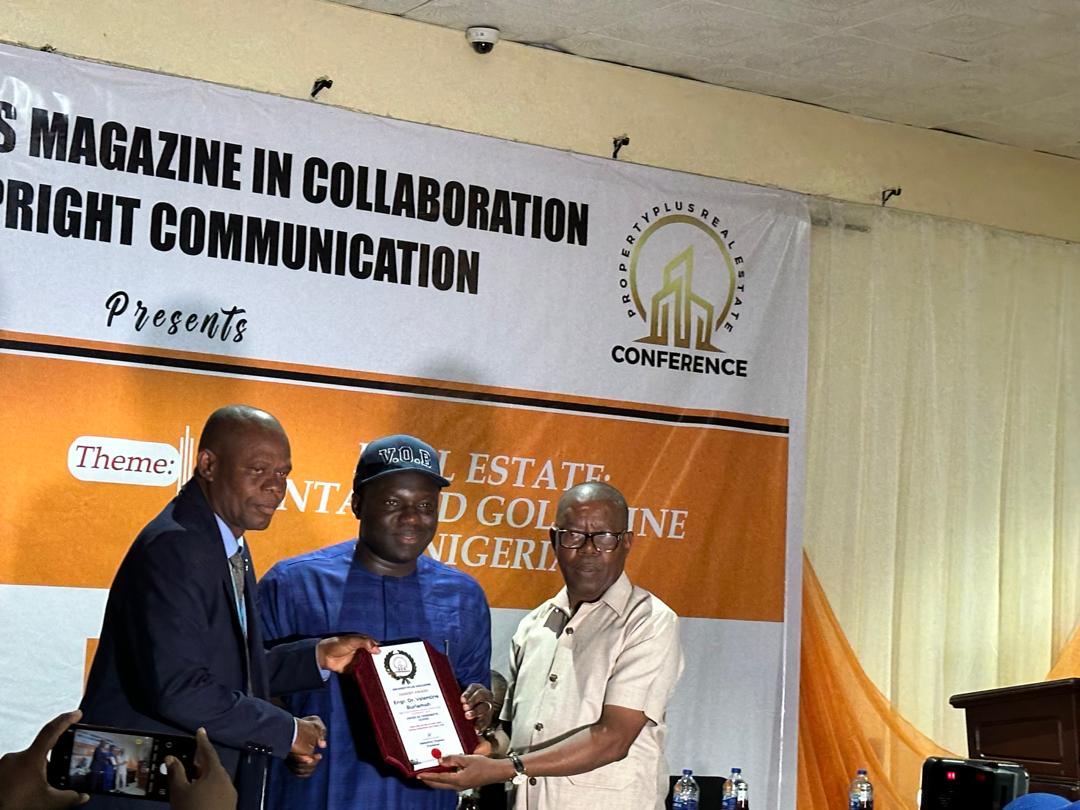
The key players in the industry who gathered at the Property Plus Magazine and Upright Communications Conference in Lagos, to dissect the challenges and opportunities in Nigeria’s real estate market, emphasised the need for strategic interventions to unlock its full potential.
In his presentation, titled:, “Real Estate: The Untapped Goldmine in Nigeria”, Ewenla Mustapha quoted Hakeem Ogunniran, CEO of Eximia Realty, that Nigeria’s real estate market is valued at $2.61 trillion, with residential properties accounting for $2.25 trillion.
He said despite these impressive figures, the sector contributes just 5% percent to the national GDP.
“Our potential is enormous, but we are barely scratching the surface,” he said, citing a housing deficit exceeding 21 million units as both a challenge and an opportunity.
“Residential real estate, in particular, has seen rising demand, driven by urbanization and a burgeoning middle class. Lagos, Abuja, and Port Harcourt lead in property appreciation rates, with annual growth of 5–8 percent. Commercial and industrial real estate are also promising areas, especially with the establishment of Special Economic Zones and logistics hubs. PropTech, a burgeoning segment, offers digital solutions that could revolutionize property management and transactions.
However, Mustapha said the challenges facing the industry are formidable. Land title acquisition and building approvals are mired in bureaucratic bottlenecks while overlapping government agencies slow processes further.
He said: “The Land Use Act remains a stumbling block. Reform is crucial if we want to achieve meaningful progress.
“Poor infrastructure, inconsistent policies, and high interest rates exacerbate these issues, leaving many Nigerians unable to access affordable housing.
“Another pressing issue is the exploitation of tenants by agents and landlords.
Mustapha further shared his frustrations: “Agency fees often surpass actual rents. A property renting for N40,000 annually might attract agency and agreement fees exceeding 200,000 Naira. This is untenable and further discourages potential tenants.”
He said trust deficits also plague the sector. “Diaspora Nigerians, who represent a significant funding source, are hesitant to invest due to fraudulent practices by relatives or developers. “We need transparency and robust systems to attract diaspora funding,” Mustapha said, adding that technology and a national tenancy database could address these concerns.
Drawing comparisons with other countries where real estate contributes significantly to GDP. He said: “In the United States, the sector accounts for up to 20 percent of GDP, supported by transparent policies and mortgage financing. The UAE and China have successfully tied aggressive real estate development to national economic strategies, showing Nigeria the possibilities of focused reforms.”
He proposed strategic interventions such as; amending the Land Use Act, streamlining land registration processes, and promoting public-private partnerships (PPPs) to improve infrastructure and housing. He said the digitisation of land registries and the adoption of PropTech are critical to increasing efficiency.
Mustapha highlighted the role of sustainable practices in modern real estate, emphasizlsing green building designs to reduce environmental impact.
Mustapha stated: “The time to act is now. With the right reforms and investments, we can transform this sector into a cornerstone of our national prosperity.”
In his welcome address, the Chief Executive Officer of PropertyPlus, Hon. Sabastine Onyewe, emphasised the importance of joint efforts. “This is the first time a conference of this nature not only honors distinguished personalities in real estate but also creates a platform for government and private operators to collaborate,” he said.
He referenced the federal government’s recent plan to construct 100 housing units in each of Nigeria’s 774 local governments as a critical step toward addressing housing shortages.
“The question is, what is our role as private operators? The government alone cannot solve the housing crisis. It’s up to us to seize this opportunity and address the gaps in housing and estate development,” he added.
Onyewe reinforced the need for investment in real estate, describing it as an untapped goldmine.
“This gathering encourages stakeholders to stimulate investment opportunities and contribute to making homeownership accessible to all Nigerians,” he noted.
The event celebrated industry leaders for their commitment to raising real estate standards.
He congratulated awardees and called on stakeholders to join forces in realising the sector’s potential. “Housing is essential infrastructure. Let us work together to ensure no one is left out,” he stated.
Disclaimer
Comments expressed here do not reflect the opinions of Vanguard newspapers or any employee thereof.