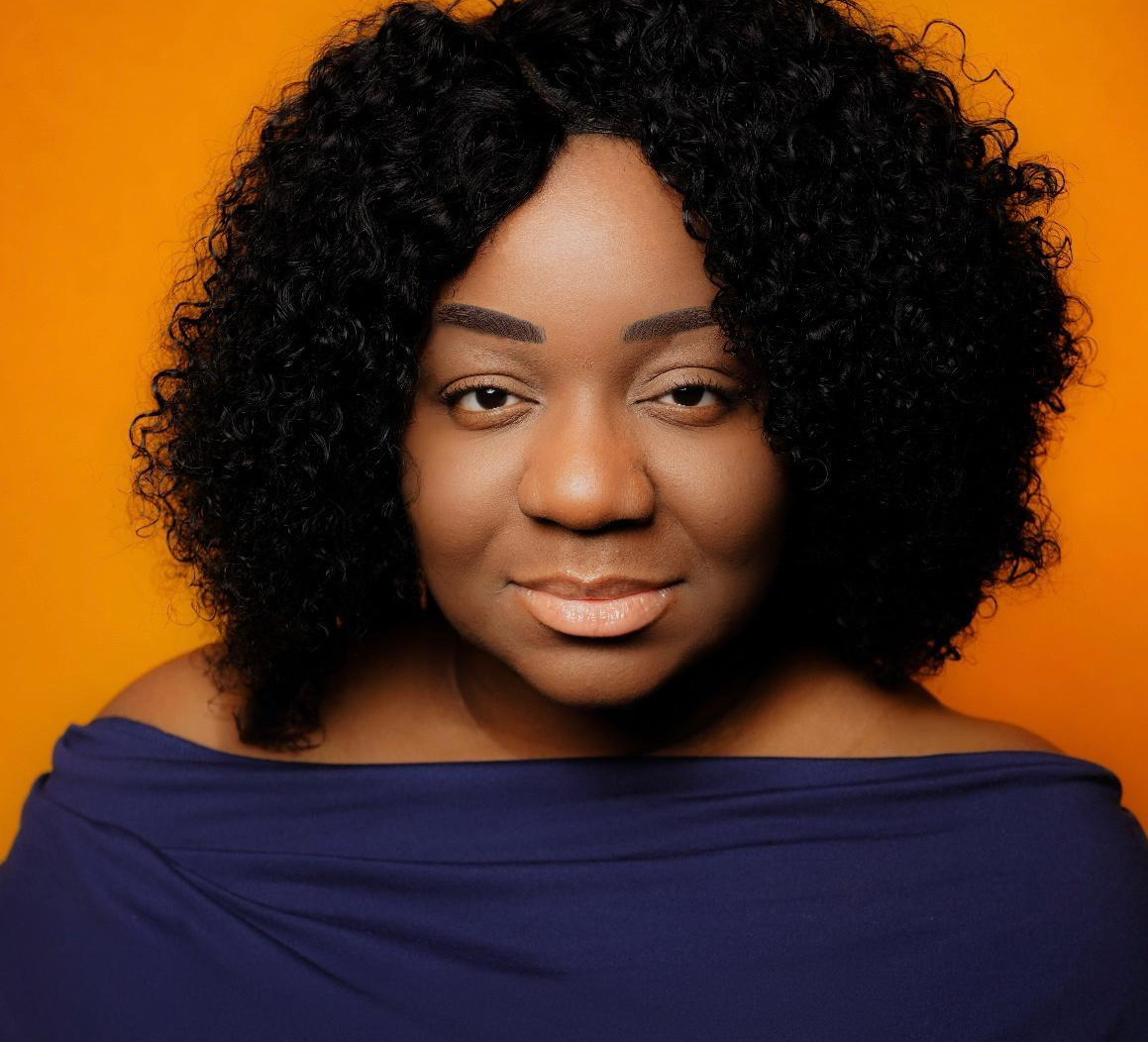
Chidinma Ifunanyachi is an actress and writer who is making a name for herself in the entertainment industry. While she initially aspired to become a teacher, her passion for education eventually led her to financial independence. However, her curiosity about the arts grew over the years, inspiring her to pursue a career in acting and storytelling—creating impactful narratives that resonate with audiences.
In this interview, she speaks about how her upbringing shaped her career, the inspiration behind her children’s book The Importance of Names, and the cultural identity misconceptions she aims to challenge. Excerpts:
How did your upbringing in a single-parent household influence your independence and career choices?
Watching my mother do it all by herself ignited a fire in my stomach. She has four university degrees—four! I don’t know a greater hustler than my mother.
I knew that whatever path I chose, I was going to defy the statistics that claim children from single-parent households don’t become as successful as those from two-parent homes. Watching my mother taught me strength and resilience through everything.
Education was what brought my mother to the UK, so naturally, I decided that education would be what lifted us out of poverty.
What motivated you to write a children’s book about The Importance of Names, and can you share how your own experiences growing up with a name that was not widely recognised influenced this decision?
Watching the experiences and ‘name trauma’ of Nigerian children while I was growing up shaped, a lot for me.
Firstly, it was rare to see a Black girl called ‘Cheryl,’ let alone a Nigerian girl. Because Cheryl is an Anglo-Saxon name, the assumption was that I was Caribbean—something that came with its own set of challenges. Growing up in the UK in the 90s, Caribbean children didn’t face ‘name bullying’ because their names were seen as easier to pronounce.
Having the name Cheryl allowed me to hide my African identity. For years, many of my peers didn’t even know I was Nigerian—until they heard my mother speak. ‘Cheryl’ kept me safe, while at home, Chidinma was almost like a little secret.
How have attitudes towards diverse names evolved, and what strategies can educators use to better support students with non-traditional names?
I don’t think it has, and this is the problem. This is why a book like mine is still needed in 2025. Things are not changing quickly enough.
Insist that children are addressed by their names and not by ‘variations’ or alternatives of their names.
How do your British and Nigerian experiences inform your work, and what cultural identity misconceptions do you aim to address?
Personally, it’s the best of both worlds—I see it as being able to eat from two pots. My life experiences as both Nigerian and British allow for duality, which is something you need as an actor. As a writer, it gives me flexibility. If I decide to write in a Nigerian tone versus a British tone, or even flow back and forth within a single piece, the result is something with many layers, like an onion. It’s a beautiful thing.
Nigerians aren’t just loud, shouty, or overly expressive. And not all of us are into fraud. We are hard workers, kind, and happy people, and I feel that isn’t always reflected in the media. I hope to change that.
What feedback have you received about The Importance of Names, and how do you hope it shapes the next generation’s understanding of cultural heritage and identity?
Feedback has been positive. The book has been really well received, with many people saying it resonated with them.
I hope my work creates more room for discussion and openness surrounding cultural heritage and makes things easier for the next generation.
I hope my story teaches young people that there is space for them and that they belong.
Disclaimer
Comments expressed here do not reflect the opinions of Vanguard newspapers or any employee thereof.