By Emmanuel Elebeke
ABUJA: The global digital economy is projected to hit $16.5 trillion by 2028, with digitally enabled platforms driving new value creation, according to Doreen Bogdan-Martin, Secretary-General of the International Telecommunications Union (ITU).
This growth is expected to surpass the global GDP, and will be driven by e-commerce, tech spend, and exports, with the top six digital economies by size being the US, China, the UK, Japan, Germany, and South Korea.
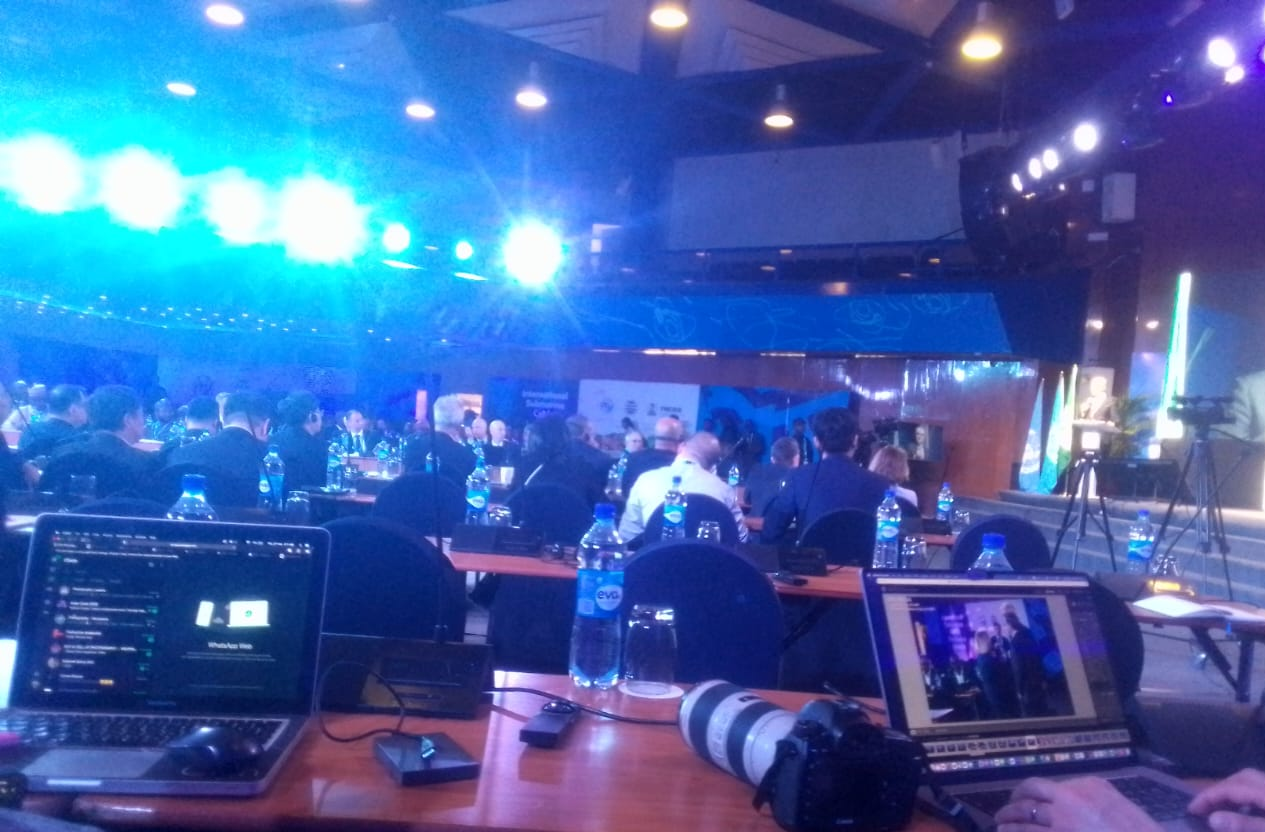
The ITU Secretary-General, spoke at the ongoing two-day first in-person meeting of the International Advisory Body Board and the International Submarine Cable Resilience Summit 2025 holding in Abuja.
She highlighted the importance of a holistic approach to submarine cable resilience, considering technology, business, and policy aspects. She announced the establishment of an advisory body on cable resilience, which will provide best practices for governments and industry players to ensure timely cable deployments and repairs, improve service continuity, and reduce the risk of disruption.
Bogdan-Martin emphasized the need for proactive, data-driven approaches to risk assessment and environmentally responsible strategies for sustainable digital infrastructure. She highlighted the Global Digital Compact’s commitment to ensuring digital infrastructure is sustainably designed to address environmental challenges by 2030.
The ITU Scribe further emphasized the importance of collaboration among governments, companies, and research communities to foster deeper cooperation and build consensus on cable resilience. She expressed confidence that collective efforts can ensure the long-term resilience of submarine cables and pave the way for a shared prosperity and robust digital future.
Nigeria’s Minister of Communications, Innovation and Digital Economy, Dr. Bosun Tijani, also stressed the importance of submarine cable resilience, noting that Nigeria is committed to strengthening its digital infrastructure and advancing policies supporting connectivity, innovation, and economic growth.
He said Submarine cables form the backbone of global digital connectivity, carrying over 95% of international data traffic, linking continents, and enabling the smooth operation of modern economies. “Despite their significance, these infrastructures remain vulnerable to disruption from natural resources, geopolitical tensions, accidental damage, or evolving cyber threats.
“The summit’s theme underscores the need for collaborative action to address these vulnerabilities and ensure a resilient, secure, and sustainable global communications network. This is not just a technical or industry-specific challenge but a global imperative affecting financial markets, digital trade, education, health systems, and governance.”
Tijani told the audience that under President Bola Ahmed Tinubu’s leadership, Nigeria is committed to strengthening its digital infrastructure and advancing policies supporting connectivity, innovation, and economic growth, adding that the government is taking decisive steps to recognize and protect telecommunications infrastructure as critical national infrastructure, aligning with broader efforts to enhance digital resilience across all sectors.
“As a government, Nigeria is deeply invested in leveraging digital public infrastructure, promoting open access, and expanding broadband penetration to ensure connectivity remains a catalyst for economic transformation and inclusion.
The summit’s outcomes will influence policy and investment decisions and serve as a foundation for global cooperation and long-term resilience planning.”
Professor Sandra Maximiano, Chair of ANACOM’s Board of Directors, Portugal, emphasized the importance of collaboration among stakeholders to enhance the resilience of submarine cables. She noted that the International Advisory Body for Submarine Cable Resilience, created by the ITU in partnership with the International Cable Protection Committee, fosters multi-stakeholder dialogue on a global scale.
She urged the International Advisory Body and the summit to focus on regions with lower submarine cable density, where economic incentives for prompt response mechanisms are lower, pointing out that submarine telecom cables remain the backbone of the modern global communication system, and interruptions can have significant economic impacts worldwide.
“Enhancing the resilience of submarine cables requires collaboration among stakeholders. The International Advisory Body for Submarine Cable Resilience, created by the International Telecommunication Union in partnership with the International Cable Protection Committee, fosters multi-stakeholder dialogue on a global scale.
“The advisory body promotes open conversation, builds trust, and ensures that submarine cable networks remain protected and resilient for the global community. By bringing together representatives from diverse regions, industries, and sectors, the advisory body ensures that discussions are based on technical merit and best practices.”
As co-chair of the International Advisory Body, Professor Maximiano emphasized the importance of collaboration, cooperation, and knowledge sharing in addressing the challenges of submarine cable resilience.
The Submarine Cable summit aimed to bring together leading stakeholders to address the challenges of submarine cable resilience and promote global cooperation and long-term resilience planning.
The summit highlighted the critical importance of submarine cable resilience in ensuring the stability and security of the global digital economy.
Disclaimer
Comments expressed here do not reflect the opinions of Vanguard newspapers or any employee thereof.