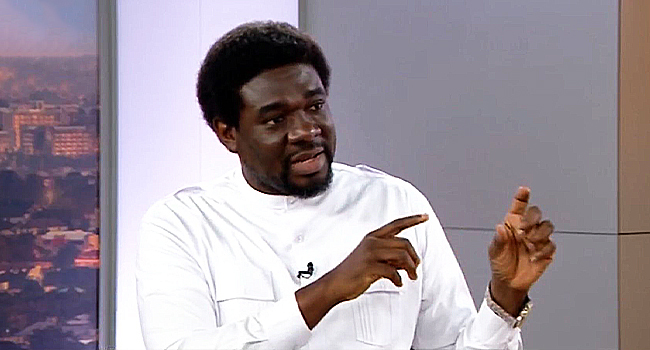
President of TUC, Festus Osifo
By Victor Ahiuma-Young
The problem of casualisation and contract staffing are among the worst forms of employment practices in the nation’s oil and gas industry perpetuated by management to pay slave wages among other deprivations.
In this chat, President of the Petroleum and Natural Gas Senior Staff Association of Nigeria, PENGASSAN, Festus Osifo, gives insight into how the union is battling this menace among other challenges.
Casualisation
The reason management in oil and gas companies moves into casualisation, and renew their contracts is to prevent them from joining the union. It is a way to pay them less than what employees are paid. Over the years, we have tried to stop the practice, but they called it outsourcing because we have weak government institutions that should have checkmated them but failed in their responsibility. What we did as PENGASSAN was that we changed our strategy. We decided to unionise these contract staff. As we speak, we have unionised quite a number and still pushing ahead with unionisation of the rest.
Some of the casual workers today have a collective bargaining agreement. For example, the labour contract staff, we ensured that in the last negotiation round we did, some of them had a combined increase of close to 150 per cent, some had a 160 per cent increment in salary. Our strategy is that if we cannot push that all of them should be converted today, because of the outsourcing regulations by government, what we decided to do was to improve their living standard.
Today, we brought a lot of them under the union. In fact, we would have had a huge industrial action from Friday January 24, 2025 because we are trying to negotiate a CBA for some of the contract staff in some of the International Oil Companies, IOCs, in the oil and gas industry. The management were resisting the negotiation of a CBA. We issued them an ultimatum. That ultimatum actually expired Thursday, 23rd night. We would have started picketing them Friday, 24th morning. To God be the glory, Wednesday, we received communications from these IOCs that they have asked their contractors to go and do CBA negotiations. So for us, making contract staff lives better is our focus now.
Why do you work? You work to be able to take care of your family, to be able to take care of your loved ones and meet the social needs that the environment has imposed on you. That is a strategy that we are pushing. We know that their remuneration, even as contract staff, is quite high. If their remuneration is commensurate with what you earn today in the oil and gas industry, even the companies that employ them will stop. But if their remuneration is quite abysmal, they will continue. So, the strategy that we have employed since last year is to make their lives better, and we are pushing through.
Management reaction
They were resisting. But just this week, the two principal IOCs that have been resisting, have communicated to the contractors that they should go and negotiate a CBA. We know that without such communication from them, the contractors do not have the leverage to negotiate.
They are all paymasters which we understand. They don’t have the leverage to get anything done because of the threat of an industrial action that would have commenced on Friday January 24 morning, so for them to avoid that industrial action, they now need them to communicate to the contractor, and they sent us a message confirming that they have communicated to the contractor to go and negotiate a CBA.
Remember we put a whole lot of others in place, but we still have quite some that we are pushing. We have now sent a message to them, fixing February 7, 2025, for the commencement of the CBA.
Deregulation/subsidy removal
PENGASSAN has not been absolutely opposed to the removal of subsidy because we feel that the downstream sector of the oil and gas industry did not develop as its upstream was developing because of that distortion that happened over the years.
Our pain is also that because the subsidy removal was not done on time, the gains that we saw in the past 20 to 25 years, when our leaders were clamouring that subsidy should go, we may not be able to realise those gains today. The reason is not far-fetched. About 30 years ago, the world was not talking about climate change. It was still very fashionable for a company like Shell, Total Energies and ExxonMobil to build refineries all over the world. If we had deregulated our sector like 30, 35 years ago, the downstream sector would have attracted a lot of investments in building refineries, in pipelines and all that.
But today, we will not really derive those benefits because most of these companies are now investing in renewables, hydrogen, solar energy, wind energy and all that. But overall, the subsidy removal has freed some of the setbacks we had in that sector. But the challenge that we face today is not really about fuel subsidy removal, it is about the flotation of the exchange rate. If we had removed subsidy and the exchange rate was still at N450 to $1, today we would be buying PMS at around N300. We would not have been buying PMS for N1,000 and above.
The real devil in the room is the exchange rate. It not just PMS. Can you tell me the cost of any item in Nigeria that has been static since June 2023? Everything has moved, not because of principally the removal of subsidy on PMS price, but majorly because of devaluation of the nation’s currency. If the dollar to Naira moved today to about N800 to $1, I can tell you comfortably that PMS will sell for around N500. So the problem that we are facing really is imposed majorly by the flotation of our Naira. Generally, all these have posed a socio-economic challenge to an average Nigerian. The cost of transportation has gone up.
The cost of television, cost of air conditioner, AC, and so on, have tripled and in some cases, quadrupled, because Nigeria is an import-dependent country. The dollar value of these products is still constant. Before now, let us assume for television, the importer was bringing it in at about $200 per set. Then maybe with logistics costs and everything, his markup would now be about $300 per set.
When the dollar was at $450, $300, by the time you check it, was less than N150, 000 for that set. But today, with a dollar to about N1,500, by the time you convert it, it is going to give you may be somewhere around N800,000. So you see, what you were buying before at less than N150, 000 , today you are going to pay over N800,000. What caused that is majorly the exchange rate.
Legacy, investment
In PENGASSAN, we are not too focused on investment. I will be very honest with you because we are not an investment house. Our core responsibility is to protect our members and enhance our members’ pay and that we have done judiciously. What I want to be remembered for is not the quantum of investment I was able to do as PENGASSAN president or as a leader of the current central working committee, CWC or the National Executive Council, NEC, of PENGASSAN. What I want to be remembered for when I exit this position is, that man, in the industry, that took over during COVID, that people thought there was going to be a layoff of workers, that there would be a reduction in salaries, that the oil and gas industry would suffer for it, none of such happened. But by the special grace of God, combining the COVID era and the economic turmoil that we passed through in the last two years, relatively, we are very, very stable, solid and strong.
I want to be remembered as a president who led PENGASSAN out of COVID without any casualty, or job loss. I can’t remember how many redundancies I have done since I became PENGASSAN president. One of the service companies wrote to us that they want to do redundancy.
We checked their staff strength and we said, no, you need these staff. We will not allow one person to be retrenched. For about a year, we were on it moving up and down. However, they later wrote back that they were no longer doing redundancy and that they were fine.
We have had some level of growth in membership. We have brought in over 50 different new branches to PENGASSAN since we came on board. That is growth. Again, we have also done a lot to increase the remuneration of our members. I can tell you that as of today, we have some branches whose remuneration has increased by over 200 per cent.
We have some branches whose remuneration has increased within one year by over 150 per cent. You know what the salaries are today in the oil and gas sector, when you benchmark it against other sectors.
So when you have a company that we are able to push to increase member’s salary by 250 per cent; 250 per cent means the member’s salary has gone up times 3.5 or thereabouts.
These are the legacies that we want to leave. I want people to check their payslip when they see where they were before now and where we are today. Benchmark that against the valuation and you see what we have been able to bring to bear. In 2016, we had some challenges in our economy as well. The Naira was devalued from about $180, gradually up to $360, which was about a 100 per cent change.
But it took us about five years in PENGASSAN to recover in terms of the value. But today, we have had Naira moved by, the exchange rate multiplied by three. Under a year, we have been able to restore the value to our members.
As at today, we don’t owe anybody. If I had been here for close to five years and we have not borrowed a dime to do anything, we don’t owe anybody. What that means is that the contributions of members were prudently managed. But that doesn’t mean that investment is wrong.
Recently, we informed our NEC and CWC that we want to do some investments on Federal Government bonds. We want to do some investments on treasury bills. These are risk-free instruments that we know that eventually, the yields that will come from there will help us. We are going to do that before the end of our tenure.
Divestments, Indigenous investors takeover
When divestment started and the indigenous companies were coming in, there was some palpable fears in the industry. The fear majorly stemmed from the fact that these indigenous investors didn’t have the financial strength to carry out the major investments that we need in the oil and gas industry.
“For us in PENGASSAN, we were concerned about the funding of the industry. Principally, we were wondering if the indigenous investors could sustain the membership strength that we have today. And if they would be able to keep the numbers of staff that we have in oil and gas in the respective companies? Also, we were worried about their ability to pay the wages and salaries that the IOCs were paying. Would they declare redundancies immediately after the divestment? These were the thoughts that we had.
“But first, we wish to thank the Chief Executive of Nigerian Upstream Petroleum Regulatory Commission, NUPRC, Gbenga Komolafe, because we sat down with him, and told him our fears. We informed him that there would be disruptions in the industry, and lot of industrial disputes , if our fears are not taken into consideration.
To God be the glory, he came up with a framework, like a regulation that guides divestment. Out of the six pillars that NUPRC came up with; one was employee issues and discussion with the trade unions to reach an amicable solution. Flowing from that, the divestment of former Nigeria Agip Oil Company to Oando Energy went seamlessly. As we speak, there is no single Nigerian that lost his or her job.
The existing CBA, (Collective Bargaining Agreement), was rolled over. Nobody has left Oando for about a year now since we completed that divestment conversation, and since they took over. We also had the divestment of Equinor Nigeria Energy Company, to Chappal Energies.
Today, the staff remain, and all our members remain. The same thing that we just concluded in the conversations around SEPLAT taking over the JV of ExxonMobil. As we talk today, there is no individual that has lost his or her job. The wages were even further enhanced instead of being reduced.
For us, that is a major win. We are currently discussing the divestment of Shell Petroleum Development Corporation, SPDC, which is the joint venture, JV, arm of Shell companies in Nigeria, to Renaissance. And we are in the middle of the discussion. I can guarantee our members, I can guarantee Nigerians, that no single Nigerian will lose his or her job as a result of that divestment. This is because of the strong collaboration between the association and the regulators of the upstream sector of the oil and gas industry. But what we are now looking at is to ensure that these companies develop the industry, secure the necessary funding to be able to bring about development.
“We are quite happy that the news we are getting from Seplat since they took over from ExxonMobil late last year is that some of the wells that ExxonMobil has abandoned over the years, that Seplat is currently putting technicalities and modalities in place to be able to feed them in. Invariably, they are expanding the production of the reserves that ExxonMobil before now neglected. That will add to the overall national production, and that will be positive for the economy. And more so, it will also reassure us that the company will be a growing concern and that our members will continuously have jobs.”
Disclaimer
Comments expressed here do not reflect the opinions of Vanguard newspapers or any employee thereof.