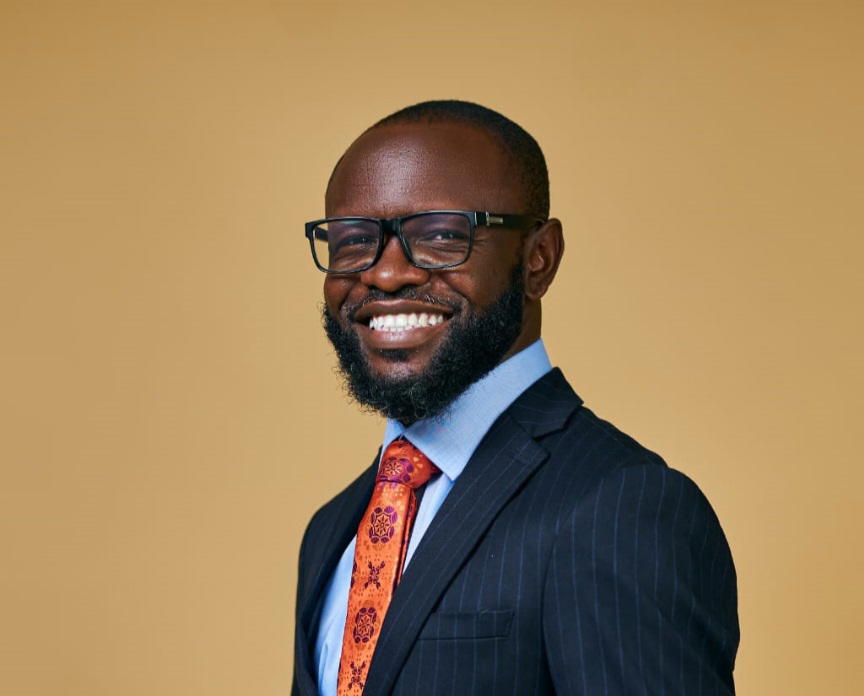
By Kenneth Oboh
Oludare Bodunrin, former Acting Director and Technical Lead at SPARC, is a name etched in the healthcare systems in Nigeria and Africa. His seamless transition from Geology to enhancing health equity and universal health coverage, a perfect tale of two cities, is one to be admired, commended, and emulated. While he continues to strive to make lasting change through seemingly impossible projects, he walks journalists through his over-a-decade career trajectory and unique leadership attributes in a Q&A session.
Can you share your journey and what led you to pursue a career in the health sector?
In 2012, I found myself in a non-profit sector focused on health after working for different organizations—retail banking, among others—upon graduation in 2009. The more I leaned into this health space, the more interested I became. That is because of its power to save lives. The thought that I could also help in saving lives—even though I’m not a doctor—by helping to shape policies that made healthcare accessible, affordable, and equitable without any discrimination. I became more intentional about it.
I soon discovered the chasm in this sector, especially in Nigeria. I saw how people died just because there are no good policies to ensure that doctors are in the right place and hospitals are in the right place. I knew something had to change. So, I decided that if this is the way I can be patriotic, at least contribute my quota to Nigeria and Africa at large, then count me in.
And then, in 2020, my mom passed on. We lost her because the health system was very weak. The doctors at a private clinic did not attend to her on time—despite being unattended to, she was later referred to a teaching hospital. She gave up on the way. At that time, government doctors were also on strike.
What are some of the most significant challenges you faced in your professional journey, and how did you overcome them?
My first challenge was having a degree unrelated to health. If I studied Microbiology or Biochemistry, that would make things easier. Geology deals with things that lived 4.5 million years ago (sigh). So, I developed imposter syndrome. I felt I didn’t belong there. Every time I had an opportunity, I was always watching my back, and I thought that maybe somebody would discover that I didn’t have a degree that belonged there.
Despite graduating with a third-class degree in Geology, I was determined to overcome this challenge. I wanted to prove that I am not what my certificate suggests. When I entered the healthcare sector, my goal was to let my work speak for itself, and it did. People noticed and were impressed.
I prefer to think outside the box. Health is a sector that is traditionally rigid, often sticking to already established methods. I faced opposition when I tried to introduce new ideas. Because I believe that if the old methods were effective, my mother would still be alive, and people around me wouldn’t be suffering. It’s time to move beyond outdated systems, theories, and approaches that aren’t serving us well.
How has your work impacted the communities you serve in the health space?
As one in the upstream side of the healthcare sector, a lot of the policies we do help people to access healthcare. In two instances, I led the design and implementation of the Kaduna State Health Insurance scheme and provided technical advisory to over 20 others in Nigeria. The Kaduna scheme registered over 100,000 enrollees. The project ended when I left.
When you design an effective health insurance system, typically, it takes about a year to 18 months. During this time, you work towards creating a solution that truly functions well. The real success is when you see the first enrollee benefiting from the system—someone who can access healthcare services without out-of-pocket expenses because their insurance premium has been paid in advance.
I once provided some management services in a hospital—then worked with a private equity firm that was acquiring and turning around hospitals. You do marketing campaigns through free healthcare outreaches and turn around the supply chain system to ensure drugs are available all the time. This approach increased the number of visitors to the hospital because they now believed that the hospital could take care of them.
I have helped policymakers in different countries make decisions that benefit their citizens. In Amref Health Africa, I supported over 15 countries with policymaking around healthcare. Most times, the policy reforms you support may not produce an impact while you are there, but when they eventually do, it’s such a fulfilling experience.
What specific achievements are you most proud of in your career so far?
The most recent was helping an organization build a portfolio around financing healthcare. We raised the investments from about $10 million to $38 million within 18 months. This is an organization that was doing other things in health policy areas but not in health financing.
Another example was bringing about 31 states together when I was in Nigeria, where state social health insurance was new and really helping them give it a thought. That work took about two years.
What I am most proud of are the achievements that continue to thrive even in my absence. For instance, today, I see many leaders of social health insurance schemes across various states who were once part of the training cohorts we organized. They are now making significant progress, enrolling hundreds of thousands of individuals—some as many as 400,000 or 300,000.
It’s gratifying to know that we played a crucial role in initiating this movement by leading a network to build capacity. Back then, out of 36 states (plus one), only about five had social health insurance schemes. Now, nearly all states, approximately 33 or more, have implemented such programs. I’m so fulfilled.
How do you stay current with trends and advancements in the health industry again?
One easy way to do that is to network. I maintain strong connections with friends in the industry, and we often have informal chats to catch up on the latest developments, discuss who’s doing what, and share insights. Whenever the opportunity arises, whether someone is visiting or I’m in town, we make time to meet and attend conferences together.
I’ve had the privilege of attending and speaking at various conferences, both as a panelist and a speaker. It gives you an opportunity to learn from others.
My involvement in professional associations keeps me informed. I’m a member of the Health Systems Global Symposium and the International Health Economics Association, which provide access to journals and publications that enhance my knowledge.
What role do you believe technology plays in improving health outcomes today?
Technology plays a very significant role in everybody’s everyday life now. And it’s getting better; it’s becoming more significant with artificial intelligence coming up.
Improved technology, particularly artificial intelligence (AI), enhances ultrasound analysis and accelerates accurate diagnoses. Health outcomes rely heavily on data, and without it, optimal decisions cannot be made.
Technology is advancing to make data more accessible, especially in low-income countries. For example, OCR technology can convert handwritten reports into digital formats using mobile phones, streamlining data entry and analysis. AI also aids in interpreting this data, identifying disease hotspots, and determining resource needs. By integrating multiple data sources with AI, it makes decision-making more efficient. It also allows for timely resource deployment and improved health outcomes.
How do you approach collaboration with other professionals and organizations in the health sector?
The health sector is an ecosystem that can only function when people work together effectively. So we can run fast when we go alone, but you can go far when we go together.
As a health policy advisor, our goal is to ensure that any policy reform or intervention we engage in, we seek out others who are involved or interested in similar initiatives to work together for greater impact.
Can we collaborate and achieve bigger outcomes? While collaboration can be challenging in the private sector due to financial interests, there are opportunities for shared values without compromising the primary goal of saving lives.
In the nonprofit sector, where I’ve worked extensively, collaboration is often easier because the focus is on impact rather than profit. However, challenges arise with attribution as organizations seek recognition for their contributions to gain visibility and attract donor funding. This can lead to competition over who gets the credit. To address this, governments can establish frameworks that emphasize contribution over attribution. The government can claim overall success, while organizations highlight their specific contributions.
What are your future goals or projects that you hope to accomplish in the health space?
I’m at a point where I often ask myself, “What is missing?” What are we not getting right in Africa that can help us advance healthcare or universal health coverage in Nigeria and in Africa at large? I’ve often wondered how things might change if those of us currently outside the government were to step into roles within it.
First, I’m interested in exploring opportunities to contribute to government roles and focusing on how evidence and data can inform policy and reforms. I aim to bridge the gap between generating evidence and translating it into actionable policy changes. By leveraging rigorous data analysis and advanced technologies similar to those used in the retail sector, I hope to simulate policy actions and advocate for evidence-based decisions. My goal is to play a pivotal role in shaping policy advocacy through the effective use of data on the continent.
And finally, I really want to help other nonprofit organizations that are focused on health and social sectors and social impact to grow. I want to use my experience to help them to make and deepen their impact both in Nigeria and abroad.
Disclaimer
Comments expressed here do not reflect the opinions of Vanguard newspapers or any employee thereof.