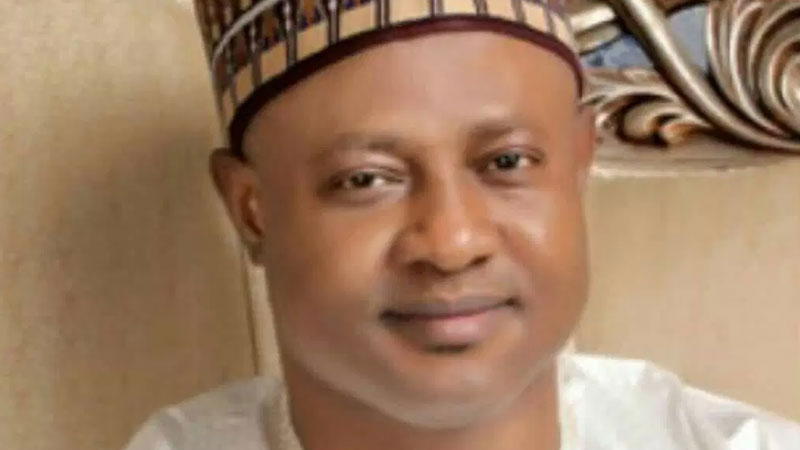
Gov Uba Sani
By Ibrahim Salisu
The Governor of Kaduna State, Uba Sani, was very clear of what he intended to achieve before he sought for the exalted office of the state. He came to heal wounds caused by religious and ethnic disharmonies that almost crushed the state. Unlike his immediate predecessor, who stoked fire of religious discord by openly supporting a preferred faith against another, even in the conduct of government business.
It was a sad reality in the recent history of the nation’s democracy. When he assumed office, Governor Sani knew that sustainable development and shared prosperity for all the people will be impossible without creating an atmosphere of love and unity among the people, regardless of their faiths. This he has sustained over time and he has earned the respect and cooperation of the people as he navigates various challenges he inherited.
Kaduna State has long been a microcosm of Nigeria’s religious and ethnic diversity. Historically, the state has been both a melting pot and a flashpoint for conflicts tied to ethno-religious differences. Recognising the need for peace to achieve sustainable development, Governor Sani has made fostering religious tolerance a cornerstone of his administration.
Central to this effort is the Kaduna State Bureau for Interfaith, a government body tasked with promoting dialogue and understanding among the state’s diverse religious communities. Through this critical agency, the governor launched initiatives that encourage collaboration between religious leaders and provide platforms for discussing common challenges.
In recognition of his efforts on religious harmony, some Muslim clerics in the state recently presented him as a worthy example to other governors in the Northern region, urging them to enhance religious tolerance in their respective states.
According to them, there was a need for Northern leaders, especially the governors, to find ways for the region’s religions to coexist peacefully, in the collective interest of the region.
They gathered in Kaduna at an event to express their satisfaction with Governor Sani’s policies promoting religious unity and harmony among residents, regardless of their sect affiliations through the Bureau for Interfaith.
Shaikh Haruna Rashid Munji, one of the Imams at Dantata Mosque in Abuja, emphasized the importance of state governors emulating Kaduna by taking the recommendations forward and ensuring religious unity in Northern states.
“No leader or governor would want to see a crisis in their domain. This is why we urge the 19 Northern governors to organise similar conferences that promote religious tolerance and unity, just as Governor Sani and the DG of the Bureau for Interfaith, Tahir Tahir, did through the recently concluded conference,” he said.
Similarly, Shaikh Gwani Idris Suleiman Maizube, chairman of the Tsangaya Clerics in the State, commended Governor Sani for hosting the Regional Conference on climate change-induced conflicts in Northern Nigeria through the Bureau of Interfaith which brought together Muslims and Christians.
According to the scholar, such gatherings will no doubt help address some of the major conflicts in the region.
He added that the conference would also unite religious groups and sects across the North and, by extension, the country.
“There are lessons to learn from such a conference, especially given the calibre of people who attended, including the Sultan of Sokoto, Sa’ad Abubakar, and the CAN President, among others.
“Conferences like this, under the Bureau for Religious Affairs, deserve further government support to enable them to achieve their mandate of promoting peace, unity, and harmony in the state,” he said.
One of the most notable achievements of the Kaduna State Bureau for Interfaith under Governor Sani was hosting the Regional Conference on Climate Change-Induced Conflicts in Northern Nigeria. This groundbreaking event addressed a pressing issue that transcends religious and sectarian divides: the impact of climate change on community stability.
As expected, the conference brought together a wide array of stakeholders, including religious leaders from various sects and faiths, policymakers, environmental experts, and community representatives. Notable attendees included the Sultan of Sokoto, Sa’ad Abubakar, and the President of the Christian Association of Nigeria, CAN. This diverse gathering underscored the potential for interfaith collaboration in addressing shared ethno-religious related challenges.
Discussions at the conference highlighted how climate change exacerbates resource-based conflicts, particularly in agrarian and pastoral communities. By framing these conflicts as a common enemy requiring collective action, the religious leaders exemplified how religious harmony can be a tool for broader societal progress.
The pivotal role of religious tolerance in stabilising the Northern region can never be over-emphasized. Religious tolerance is not just a moral imperative—it is essential for the North’s socio-economic and political stability. The region has a long history of interfaith coexistence, but this harmony has been tested in recent decades by a combination of factors, which include weaponising religion for selfish political gains, economic disparity, among others.
Therefore, the lasting peace which the religion craved which the dynamic governor of Kaduna State is championing largely rests on maintaining peace on the religion front. Religious disputes, often fueled by misinformation or external influences, can quickly escalate into violence. These conflicts destabilise communities, disrupt livelihoods, and hinder development. Gov Sani’s emphasis on interfaith dialogue demonstrates that proactive engagement can prevent such disputes and promote peace.
Also, unity among diverse religious groups fosters social cohesion, creating an environment where communities can work together to tackle shared challenges. This cohesion is essential for addressing issues such as insecurity, poverty, and education.
The success of Kaduna’s interfaith initiatives has prompted clerics and stakeholders to urge other Northern governors to adopt similar strategies. Shaikh Haruna Rashid Munji called on governors to organise conferences and forums that promote dialogue and unity, while Shaikh Gwani Idris Suleiman Maizube emphasized the broader impact of such programmes on peace and development.
Obviously the North needs more visionary leaders like Governor Sani, who are selfless and patriotic, with passion to lead the people through difficult situations. The Kaduna example under his leadership will be a reference for many leaders not only in the Northern region, but across Nigeria.
*Salisu writes from Abuja
Disclaimer
Comments expressed here do not reflect the opinions of Vanguard newspapers or any employee thereof.